



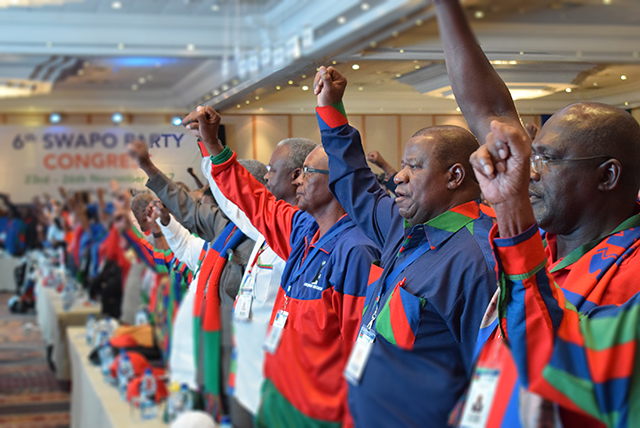
THE ruling Swapo party will get about N$60 million from the national budget as its allocation this year.
The ruling party’s seats in the National Assembly were reduced from 77 it won in 2015 to 63 – a reduction of 14 seats.
Swapo has been the biggest beneficiary of the funds allocated to political parties by the government since independence due to its overwhelming majority in parliament.
From 2015, the ruling party has been receiving more than N$78 million from treasury annually.
This year, the government will allocate a total of N$103 million to the eleven political parties that won seats in the National Assembly during last year’s elections.
The allocation is based on the number of seats political parties occupy in parliament.
From 2015, a parliamentary seat was worth around N$960 000, a rise of more than 50% from the N$400 000 the government paid in 2014.
The Namibian reported last year that parties gobbled up about N$282 million between 2000 and 2014.
Taxpayers started paying about N$116 million a year to political parties in 2015 after the number of seats in parliament increased from 72 to 104.
Finance minister Ipumbu Shiimi who announced the funding for political parties in the National Assembly this week, however, did not explain the slight reduction in the funds allocated to parties.
The official opposition in parliament – the Popular Democratic Movement (PDM) – will see its share of the national budget increase by more than N$11 million from N$5 million they got annually from 2015 to 2019.
PDM got 16 seats in parliament, an increase of 11 seats from the five seats the party had from 2015.
The Landless People’s Movement (LPM) which is the youngest party in parliament will get about N$4 million from the N$103 million budget announced by Shiimi. LPM has four seats in the National Assembly.
Other parties will get less than N$2 million depending on the number of seats they occupy in the NA.
The money paid to political parties is mainly meant to keep the parties functioning in between elections and to carry out several election related campaigns such as voter and civic education.
Political parties are obliged by the Electoral Act to submit annual audited financial reports to the Electoral Commission of Namibia.
However, most political parties have not complied with this obligation over the years.
It was only from 2017 that some political parties started submitting their audited financial reports.
The Institute for Public Policy Research in its report on political party funding last year said the continued reluctance from political parties to account for public funds, was motivated by the lack of action from electoral authorities such as the ECN and parliament.
The report states that these electoral authorities have not been fully exercising their regulatory and enforcement powers to ensure that the use of public funds is effectively safeguarded and accounted for.
“It is against this backdrop that warning flags have to be raised, as the amounts of money paid out to political parties by the state are enormous by Namibian standards, and are meant to buttress some of the fragile pillars of Namibian democracy – political pluralism, public participation and representation and legislative oversight,” the report states.
In an age of information overload, Sunrise is The Namibian’s morning briefing, delivered at 6h00 from Monday to Friday. It offers a curated rundown of the most important stories from the past 24 hours – occasionally with a light, witty touch. It’s an essential way to stay informed. Subscribe and join our newsletter community.

The Namibian uses AI tools to assist with improved quality, accuracy and efficiency, while maintaining editorial oversight and journalistic integrity.
Stay informed with The Namibian – your source for credible journalism. Get in-depth reporting and opinions for
only N$85 a month. Invest in journalism, invest in democracy –
Subscribe Now!