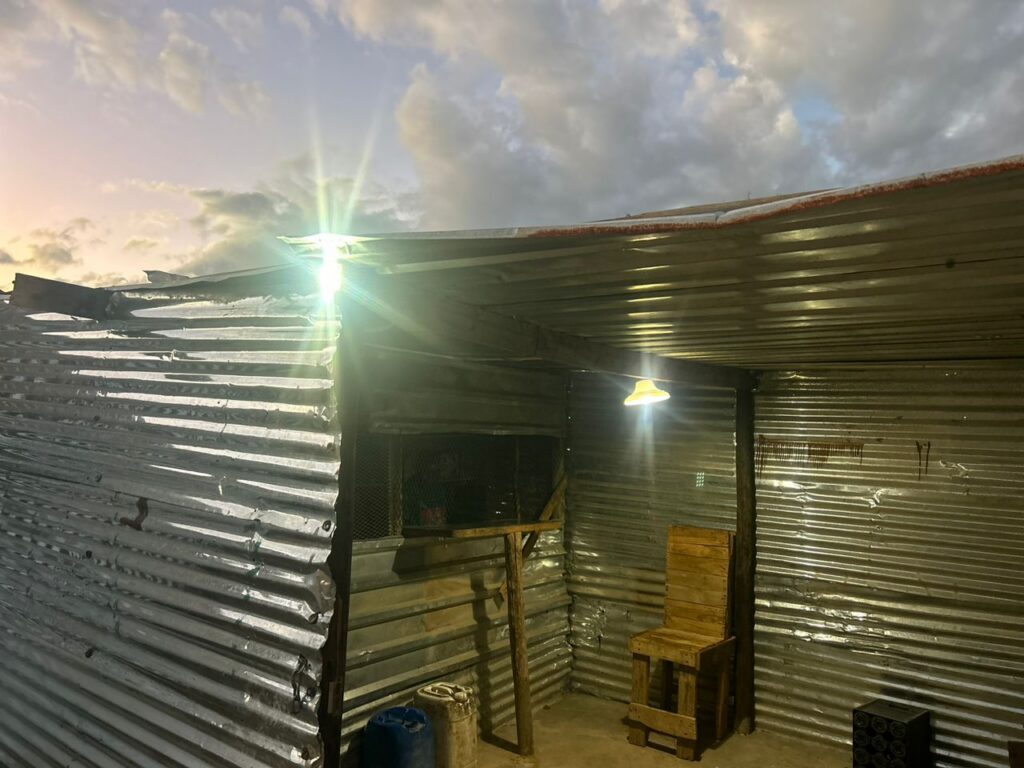
When night falls, the Groot Aub settlement, about 56 kilometres south of Windhoek, becomes a ‘dark city’ except for a few pockets of old houses and government institutions.
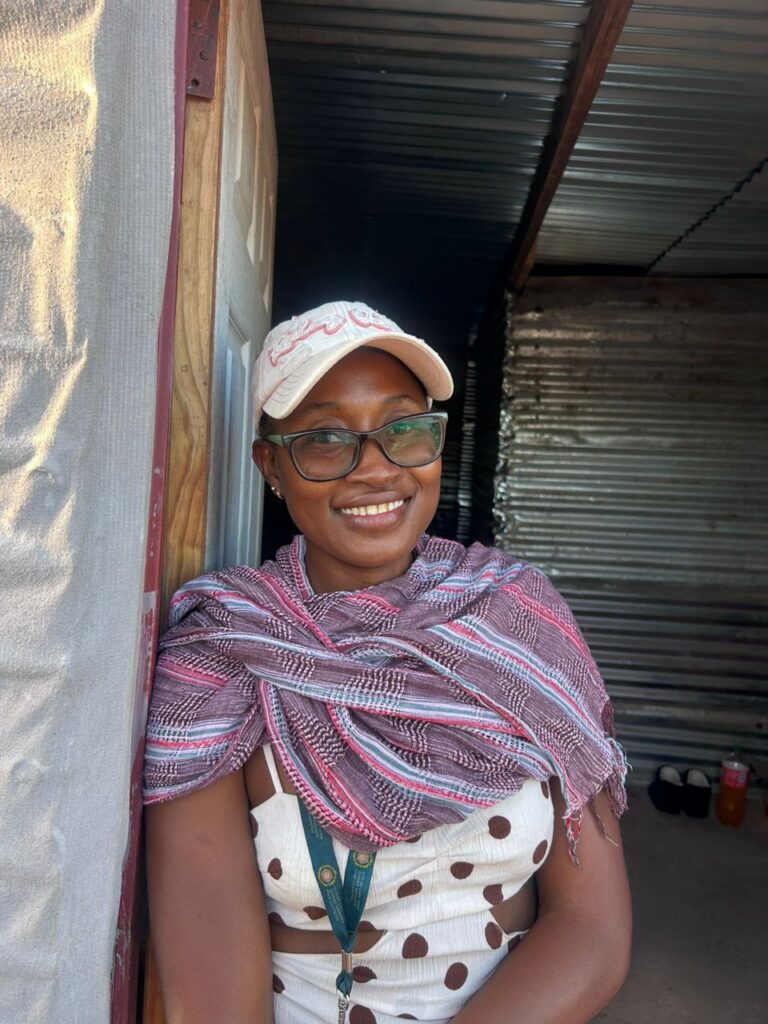
This has not deterred University of Namibia business administration student Magdalena Ndivayele from realising her business dream.
The self-funded student, who has lived at Groot Aub for two years, runs a cuca shop at the California section of the settlement where she recently installed a solar system. She sells basic household items, including sugar, salt, vegetables and traditional ginger brew.
“It has enhanced safety in our section as well as helped my business to function better,” she says, adding that more patrons now come to the shop because of the conveniences and the music. She also rents two other cuca shops in the location.
She plans on expanding her stock to include fresh meat, fish, chicken and other perishables once she saves enough money to buy a freezer.
Ndivayele decided to install a solar system after the City of Windhoek, under which Groot Aub falls, repeatedly promised to connect erven to the national grid but has not done so, despite electricity power lines running through the settlement.
“And for now, the city council does not allow us to build permanent structures on our erven,” she says.
The entrepreneur says she was not aware of the Solar Revolving Fund run by the Ministry of Industries, Mines and Energy, otherwise she would have applied for assistance to light up her home.
The fund was established in 1996 by the ministry as a credit facility promoting renewable energy, specifically for off-grid and rural areas.
It provides subsidised loans to Namibians at a 5% interest rate, repayable over five years, for technologies that include solar home systems, photovoltaic pumps and solar water heaters.
According to the ministry, the fund is designed for rural residents in off-grid areas, farmers, and urban residents in informal settlements needing access to energy.
Ndivayele urges people who can afford to install solar systems at their houses to do so as it has many advantages.
“The system lasts the whole night and I can study late into the night after closing the shop at 21h00. Besides lighting my yard and those of neighbours, customers can also see their way home,” she says.
According to the Electricity Control Board (ECB), urban areas have a 71% electrification rate, while rural areas lag behind at approximately 20%.
The ECB says while 50 500 rural houses were electrified by 2023, rural electrification remains low, with over 80% of rural households still relying on wood for cooking.
The government aims to electrify 6 000 rural and 13 000 peri-urban households through initiatives like the Harambee Prosperity Plan II and the Off-Grid Energisation Master Plan to improve energy access.
Ohengo Investments solar systems consultant Lilongeni Unoovene says: “We need to uplift remote areas with solar power for the economic and social upliftment of the people in those areas.”
He urges Namibians in off-grid areas to utilise the Solar Revolving Fund to get connected instead of suffering in darkness.
“The fund addresses high up-front costs of solar power, allowing individuals to acquire the systems,” he says.
– email: matthew@namibian.com.na