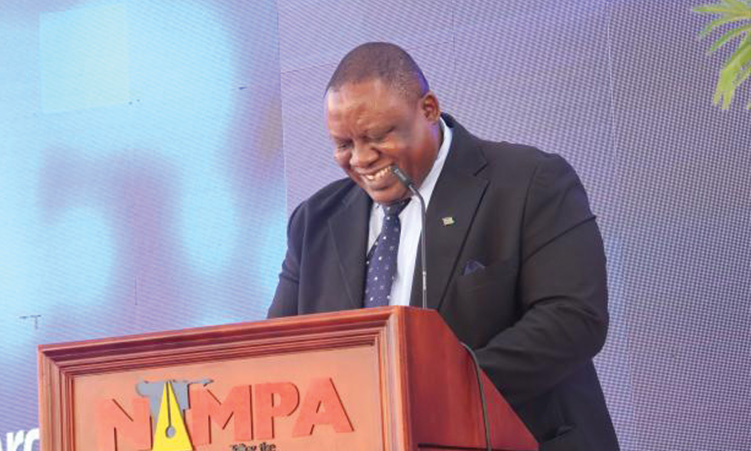
AMIT Mohan is the Acting Head of Commercial and Investment Banking at Standard Bank Namibia. Here he reviews the current economic and investment environment in Namibia.
What is investor sentiment like towards Namibia at the moment?
AM: Investment sentiment towards Namibia is quite positive. Examples are the over subscription of the sovereign’s inaugural Eurobond in 2011, as well as the significant foreign investment in the country across a host sectors particularly in the mining sector. Namibia is politically and economically stable, with the ease of doing business in Namibia ranked amongst the highest on the continent. The country’s existing infrastructure is excellent (similar to South Africa’s) and continues to be developed and upgraded. Namibia also has a foreign current investment grade rating of –BBB (by Fitch) and Baa3 (by Moody’s).
How can institutional investors get exposure to Namibia?
AM: Through the services of investment banks, asset managers, direct access to equity and capital markets on the Namibian Stock Exchange and respective sectors.
How sophisticated are the local capital markets?
AM: Capital markets are reasonably sophisticated. However, due to a general shortage of quality local assets, the market is not as liquid as others in Sub-Saharan Africa. We expect the capital markets to gain some momentum with the increased investment in mineral and energy resources and infrastructure projects.
What are the main risks of investing in Namibia?
AM: Namibia’s economy is significantly influenced by the mining sector, which can be very volatile. Labour disruptions and increased labour costs could have an adverse effect on Namibia’s mining sector. Namibia is highly dependent on foreign imports, in particular food and oil and
Namibia has a significant dependence on Southern Africa Customs Union (SACU) revenue. Namibia conducts the majority of its trade with South Africa and is therefore, reliant on the performance of its neighbour’s economy. Similarly, Namibia’s monetary policy is dependent (directly pegged) on South Africa, which may affect its ability to react to stresses in its economy and may subject it to economic policies that are not in its best interests. Stability in Namibia may be threatened if the government fails to address the high levels of poverty, unemployment and inequality in income. However, we are confident that the Namibian authorities will actively promote an environment for future investment and business development.
How do you see the capital markets developing over the next 5 years?
AM: Capital markets are fairly well developed and sophisticated and we expect the market to grow in terms of the number of issues as well as number of issuers. This coupled with increasing local investment requirements for asset managers is expected to enhance the capital markets as a whole. We also expect the capital markets to gain some momentum with the increased investment in mineral and energy resources and infrastructure projects.
What needs to be improved to make Namibia more appealing to investors?
AM: Namibia needs to increase the required investment in infrastructure development for mining exports and agricultural expansion. Improving labour conditions in the mining sector so that disruptions are minimized would increase appeal to investors. Lastly, reducing poverty, unemployment and wage inequality is essential to guarantee social cohesion and stability.
Namibia’s growth will be dependent on investment in the key economic sectors, like mining and oil exploration, and related infrastructure development.