The Raod to failure is often paved with good intentions.
In politics, as in life, good intentions are never enough. Policies must be grounded in facts, evidence and careful planning.
When leaders rely on intuition, a hunch or guesswork and what some may call “thumb-sucking”, the results can prove costly for governance and society.
Sometimes the costs are measured in money. Sometimes they are measured in inconvenience.
Sometimes they are measured in damaged vehicles, injuries and even lives.
On Monday, 8 June, I listened to works and tranport minister Veikko Nekundi being interviewed by Jane Kandetu on Desert Radio. I could not help but notice a worrying pattern.
The minister appears increasingly attracted to quick-fix solutions that sound impressive on paper but seem unsupported by data, research or clear evidence.
A few months ago, the minister suggested using animal reflectors and drones to reduce road accidents.
It sounded innovative. Creativity in the government should be welcomed.
Leaders should think outside the box and without the box.
However, creative thinking without evidence is merely experimentation on the public.
What statistics were presented to show that a significant number of road accidents in Namibia are caused by collisions with donkeys, cattle, kudus or elephants?
How many accidents occur because drivers fail to see animals at night? What percentage of road deaths could realistically be prevented by reflectors?
Without answers to these questions, the proposal remains little more than a guess dressed up as policy.
KEY QUESTIONS
The same applies to drones.
Drones may indeed assist with monitoring traffic and identifying dangerous situations. But public policy is not a science fiction movie.
Drones cost money. They require trained operators, maintenance, software, infrastructure and ongoing funding.
Where will these resources come from? Will taxpayers carry the burden? Will the benefits justify the costs? These are fundamental questions.
Now we are confronted with another policy intervention.
Speed humps have been installed on the B1 highway near the Western Bypass in Windhoek.
This is a highway where motorists have become accustomed to travelling at speeds consistent with a 120 km/h road environment.
Whether one agrees with the speed humps or not is beside the point.
The real issue is how the decision was implemented.
Reports indicate that two accidents have already occurred following the installation.
If true, these incidents should concern every policymaker.
They represent what economists and public policy experts call unintended consequences.
CONSEQUENCES
Every action has consequences. Some intended. Others not.
A government may introduce a policy with the best of intentions only to discover that the solution creates a new problem.
A speed hump designed to improve safety can create confusion.
Drivers unaware of the new obstacle may brake suddenly. Vehicles behind them may collide.
Traffic flow may be disrupted.
Congestion may increase. Frustration may rise. Emergency response times may be affected.
This is why policy should never be made in haste.
The first question should never be “what can we do?” The first question should be, “what does the evidence tell us?”
Were traffic studies conducted before the speed humps were installed? Were engineers consulted?
Was there a public awareness campaign? Were warning signs sufficient and visible enough? Were alternative measures considered?
These are not academic questions. They are practical questions that determine whether a policy succeeds or fails.
EFFECTIVE ACTION
Too often in Namibia, we fall in love with solutions before we fully understand the problem.
A speed hump is visible. It creates the appearance of action.
Politicians like visible action because it allows them to demonstrate that something is being done.
The danger of policy by intuition is that it confuses activity with results.
Governance is not a guessing game. It is not a laboratory for personal theories.
Public officials are custodians of public trust.
Their decisions affect millions of people who have no choice but to live with the consequences.
Globally, the most successful policies emerge from data, consultation, testing and evaluation.
They are adjusted when evidence shows they are not working.
They are improved through feedback. Above all, they are guided by facts rather than feelings.
Namibia deserves that standard.
Nobody doubts that road safety is a serious issue, and certainly not me.
Nobody questions the need to reduce accidents on our roads and save lives.
Nekundi’s objective is noble. The concern is the method.
A country cannot solve complex challenges through policy improvisation.
Today’s brilliant idea can become tomorrow’s expensive mistake.
That is why leaders must learn a simple but powerful lesson: every policy casts a shadow.
INTENTIONS AND CONSEQUENCES
Behind every intended benefit there’s a possibility of unintended consequences.
The two accidents reported after the installation of the speed humps should serve as a warning.
They should prompt reflection, not defensiveness.
Policymakers must ask whether proper planning occurred and whether sufficient public awareness was created before implementation.
Road safety requires more than dramatic announcements. It requires evidence.
It requires planning. It requires consultation.
Most importantly, it requires humility – the humility to recognise that good intentions alone do not guarantee good outcomes.
In the end, roads are built with asphalt, not assumptions. Public policy should be built the same way.
Facts first. Evidence first. Planning first.
Everything else is just a bump in the road.
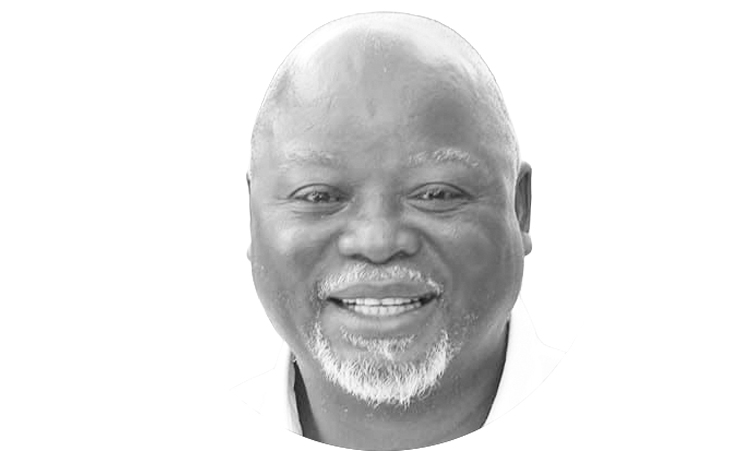
*Ndumba Kamwanyah is a public policy expert focusing on the interplay of social welfare policy, development and democracy.