A SPECIAL grant set up by the Namibia Students Financial Assistance Fund (Nsfaf) will sponsor 28 students living with disabilities.
The programme, which has received N$2,5 million in resources from the Department of Disability Affairs in the Office of the President through the ministry of finance, was started in September 2018.
During the launch held last week in Windhoek, NSFAF acting chief executive, Kennedy Kandume, said persons with disabilities often face barriers that prevent them from fully participating in many aspects of society, including access to tertiary education.
“We believe that this funding initiative will increase access to inclusive quality education. Therefore, working with other institutions in Namibia will improve social protection, empowering people with disabilities to get higher education and ultimately securing employment,” he said.
Through this initiative, Kandume said, the student fund is stepping up its efforts to assist those in need with additional financial assistance, apart from the normal funding which is provided.
Kandume said the students’ fund will provide implementation support, adding that the programme is funding 28 students at tertiary and vocational institutions.
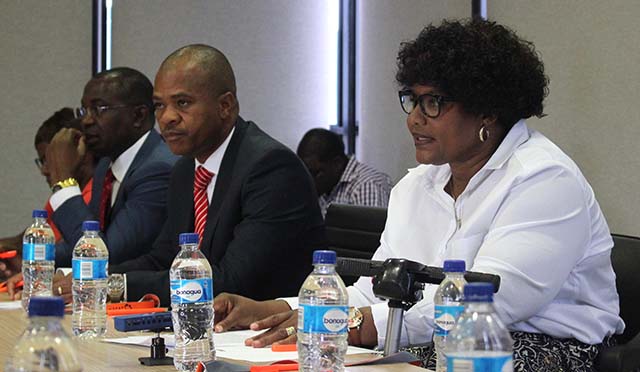
Deputy minister of disability affairs Alexia Manombe-Ncube said the programme strives to make equal opportunities for people with disabilities to allow them to participate and be competitive in the labour market.
“The mission is to improve the quality of life through enhancing the dignity, well-being and empowerment of persons with disabilities,” she said.
The deputy minister said the grant is opened to Namibian citizens with disabilities, who have passed Grade 12 or Grade 10.
Applicants must have provisional acceptance from an approved institution of higher learner, demonstrate high academic performance and an excellent academic record.
“This initiative is meant to ensure that persons with a disability complete their tertiary education and after that participate fully in the job market,” she said, adding that without education, persons with a disability will be left behind and not participate fully in the socio-economic space of the country.
During the event, Peter Uushona (29), a second-year student at International University of Management, said he struggled last year with an interpreter as he is hearing impaired, which forced him to miss lessons.
He previously had interpreters who assisted on a volunteering basis, but now has someone permanent helping him.
Uushona is studying towards a bachelor in education and also teaches at the National Institute for Special Education, a school for the hearing impaired.
He said with this programme, people living with disabilities can now access tertiary education.
“This programme is not only beneficial for myself, but other hearing impaired students can also take part. The level of many hearing impaired students is very low, just basic, but now they can continue with their studies as their needs are fully catered for,” Ushona said.
Aina Mwalya (27), who is also hearing impaired, said she struggled during her first year because she did not have a sign language interpreter and funds to pay for her education.
She appealed to various government departments and private companies, but received no assistance.
“I was in a class alone, and I could not understand what the lecturer was saying. Then [during] my second year, there was an interpreter, and that was such a relief because I could even improve my marks. If you look at my marks in the third year, you will see that I improved,” she said.
Mwalya added that she was the first hearing impaired student in her class, but now she also sees other students who have joined her.
She is a third-year student studying towards a bachelor degree in finance management.
Emilia Matia (28) who is partially sighted, said she struggled to get employment with her previous qualifications. However, she is hopeful that this will now improve.
Matia has a diploma in Bible studies, a certificate in sewing and another in counselling.
She further said that the grant will allow her to further her studies as she pursues a qualification in primary education at the International University of Management.
Manager of awards at the student fund, Alushe Hitula-Nditya, said the grant funding is also dependent on the students’ needs and can include equipment such as hearing aids and special optical ware, laptops, Wi-Fi access, interpreters, personal assistance and technical assistance.
“It is important that the programme observes regional representation and gender,” she said.