



Namibia is depicted as a safe and peaceful environment in the opening shot of the documentary ‘The Witness: Skulls of My People’.
“You know there is a church where the Germans said people should come and we will pray,” a female voice says during the brief silence. “My people closed their eyes to pray, but they never said their last amen.”
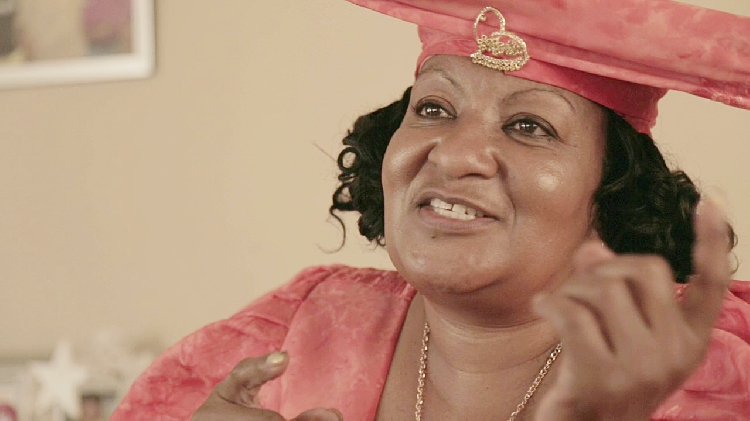
The voice belongs to Utjiua Esther Muinjangue who speaks on behalf of the Ovaherero Genocide Foundation (OGF) in the documentary as she shares her side of the struggle to retrieve the skulls of the Ovaherero people from the genocide in the early 1900s.
Over 100 000 Namibians were killed during that era through torture, hanging, violence and murder and to add insult to injury, their skulls were taken abroad for examination – particularly to discover if Africans were truly inferior to that of westerners.
The memories are bitter. Muinjangue sheds light on her ancestors’ history, saying that when Germans arrived in Namibia, priests would not know how to pronounce the African names, so their second names were ‘Christian’ or simply made easier.
Uahimisa Kaaphi, one of the living Ovaherero chiefs, also appears in the documentary wearing traditional attire and walking into the same church.
“What happened in that church those years is painful. A pregnant woman was given the head of her husband or the head of a small kid. The wife must take the meat out of the head so that the skeleton is put into a box and taken a Germany. It’s not easy,” he says, wiping tears from his face.
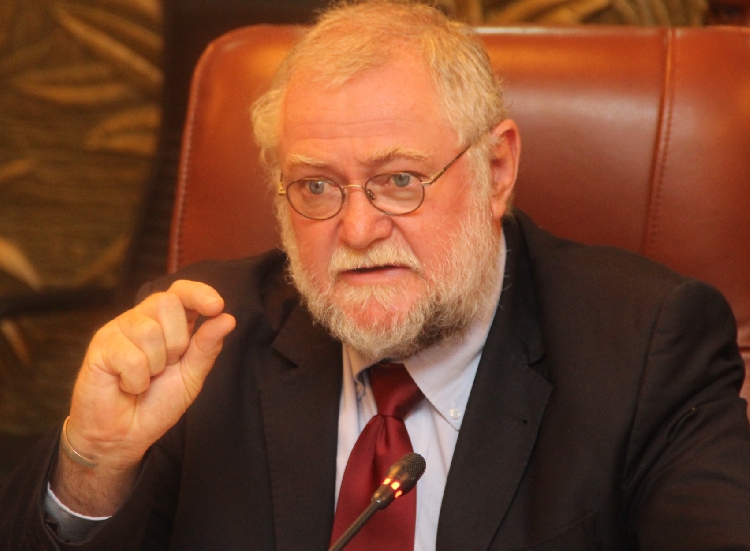
The scene moves on to the Okeseta settlement where the Ovaherero reside and celebrate their tradition. “We would light the holy fire and connect with the spirit of our ancestors,” paramount chief Vekuii Rukoro points out.
In this setting, preparations are made before negotiations with the German government. On 2 October 2016, a due date was announced, coinciding with the 111th anniversary of the Battle of Ohamakari, for the Germans to pay reparations.
It is revealed that the German Bundestag (parliament) acknowledged the genocide, but the request for reparations was aptly denied. Despite protests in Windhoek by the OGF appealing to the German ambassador to Namibia, the requests fell on deaf ears.
Community members occasionally consult the ancestors for guidance, visiting the chiefs’ pillar-like graves located in the capital, including those of Katjinda Tjiho and Kuaima Riruako, which shows how deeply rooted this issue is.
Muinjangue is one of the people who wrote to the German government, asking for the skulls back, however, the same government replied that they did not deal with individuals, only groups.
Eventually, the OGF received the support of the Namibian government and left to Berlin to retrieve the skulls. A commotion occurred, more people demanded answers. In 2011, after “drawn out” negotiations, about 20 skulls were brought home and it was a tragic, yet relieving event.
“We do not deny that this is the Ovaherero people’s struggle only because this was war so other people could have been killed as well. But we are saying that our case is based on the extermination order, so it is totally different from the Aawambo or Damara killed in the war. There was no extermination order for them and there was no intention from the Germans to wipe them out.”
In fact, it is revealed that Namibia is the biggest recipient of German government aid, but many believe that this is simply a way to hush the struggle. However, the Ovaherero aren’t going to stop until they get what is theirs.
The thought-provoking documentary was directed by award-winning South African Vincent Moloi as part of Al Jazeera’s ‘The Witness’ programme.