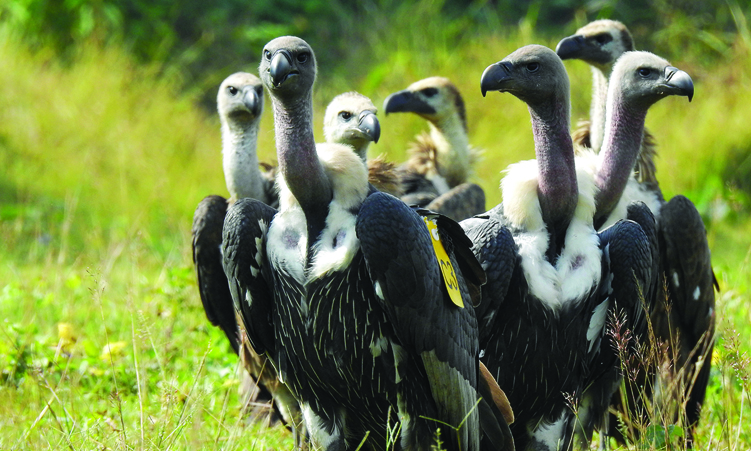
Six southern African countries recently launched the Vulture Safe Zone Alliance and the Vulture Safe Zone guidelines, signalling an important step towards the protection of vultures in the region.
The alliance and guidelines were launched at the Global Flyways Summit held virtually on 11 September.
The six countries include Botswana, Zambia, Zimbabwe, Malawi, South Africa and Tanzania. Botswana joined the alliance through BirdLife Botswana and Raptors Botswana, South Africa through BirdLife South Africa and the Endangered Wildlife Trust, Zambia through BirdWatch Zambia, Zimbabwe through BirdLife Zimbabwe, Malawi through the Wildlife and Environmental Society of Malawi and Tanzania joined the alliance through Nature Tanzania.
Bird conservation organisations say vultures are essential for maintaining ecological balance by scavenging on decaying carcasses. However, they have experienced alarming declines, with African vulture populations plummeting by 80 to 97% over the last five decades.
These declines are driven by several factors, including intentional and unintentional poisoning linked to belief-based use, the poisoning of megaherbivores, and human-wildlife conflict. Other major threats include infrastructure collisions and electrocutions, such as with power lines, and habitat loss.
Today, six of Africa’s 11 vulture species are classified as endangered or critically endangered on the International Union for the Conservation of Nature Red List, highlighting the urgent need for coordinated conservation action across the continent.
At the summit, BirdLife International launched the State of the World’s Birds Report, the first edition devoted to migratory birds and the flyways they depend on.
According to the report findings, 45% of the world’s migratory bird species are in decline.
It found that one in nine species is threatened with extinction. Furthermore, the extinction of the slender-billed curlew, last recorded at a Moroccan lagoon in February 1995, marks the first global extinction in mainland Eurasia and Africa in recent centuries, with six other migratory species confirmed or suspected lost in the last 150 years.
Species dependent on marine habitats, forests and coastal wetlands are faring particularly poorly. According to the report, seabirds and shorebirds are among the most threatened.