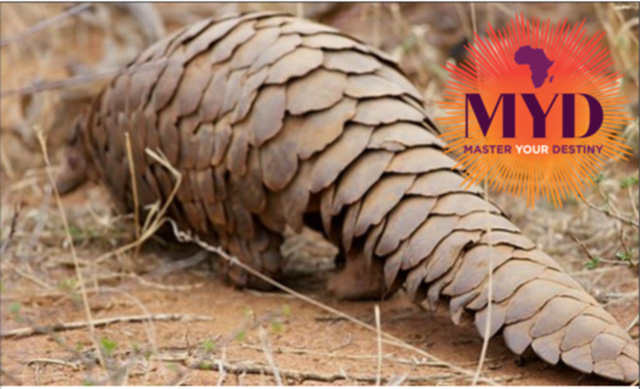
Pangolins have walked the earth for 80 million years, yet because of their loner status they are possibly some of the world’s least understood animals. Namibia is a global leader on pangolin research just as they have been internationally declared as the most trafficked animal on earth.
Rapidly facing extinction in our time, pangolins are trafficked for their scales, which, like human fingernails and rhino horns, are made of keratin. In some Asian countries, pangolin scales, like rhino horns, are falsely believed to have medicinal value.
The Rare and Endangered Species Trust (REST) have a list of firsts when it comes to pangolin research and have received international acclaim for the valuable research they have generated, and that is helping the global community better understand pangolins.
Maria Diekmann, founder and director of REST, shares details of their research and information on why the pangolin is worth protecting: “Globally, there are eight species of pangolin, four in Africa and four in Asia. In Asia they are almost extinct, and we have serious problems in Africa too. In Namibia, we have the ground pangolin – the only one that can survive in arid areas. They are mainly nocturnal, shy, curl up into a ball when threatened, and are the most illegally trafficked animal in the world.
“The pangolin is such a shy animal that you can’t follow it very well, and if you do, it won’t exhibit its natural behaviour. Only three people in the world have successfully raised a pangolin, and only two, including us, have ever successfully raised a baby,” says Diekmann who adds that pangolins have never been bred in captivity. “We don’t know how long they live. We don’t know how long babies stay with mothers. We don’t know how long they are pregnant. We could be facing the extinction of an animal we know virtually nothing about.”
Dr Chris Brown, chairman of the Namibian Chamber of Environment (NCE), says; “In Namibia, we knew there was some trade but we are probably still underestimating the extent of the problem.”
He explains that pangolins perform an important function in our ecosystem. “Their food focuses on ants and termites, and if you add up all the termites and ants eaten by pangolins and convert that to the amount of grass eaten by termites and ants, you come to know the important role pangolins play in our ecosystem by keeping grasses available for wildlife and stock,” he says.
The NCE has been educating the public on the capture, mistreatment or trade in pangolins. A reward system has also been set up to put a stop to the trafficking. Despite the work of these organisations and individuals however, it is up to each and every Namibian to get involved and be part of the solution to protect our pangolins.
– Master Your Destiny