





Player, referee, referee co-ordinator, and match commissioner – few people in Namibian football have worn as many hats as former Eleven Arrows winger and chairman Frans ‘Killa’ Samaria.
His legacy isn’t just the matches he played or officiated, but also the match officials he has trained as well.
Samaria celebrated goals as an electrifying young winger for Arrows, cancelled them as a referee, and afterwards decided who gets to make those calls as a referees instructor.
After retiring as a referee, Samaria became a match commissioner and the official representative of the Namibia Football Association (NFA) domestically and the Confederation of African Football (CAF) at continental competitions.
For much of his life, Samaria has lived inside every aspect of Namibian football. It’s a rare path.
Samaria was born at Katit Pos, about 2km from St Michael’s Roman Catholic Primary School near Outjo in the Kunene region.
“We didn’t play a lot of football at St Michael’s. I was sent to the school because my grandfather worked there for the Catholic Church. I later moved to the Katolieke Inboorling Skool at Otjiwarongo,” he says.
“From there I proceeded to Döbra High School after completing my Standard 5 [Grade 7].”
Samaria showed versatility at a younger age already as he, apart from being the school team’s first choice goalkeeper, also played as a fullback, wingback or as an outright winger on both flanks.
He played for Life Fighters during his first school holidays at Otjiwarongo, but would later move to Walvis Bay to stay with his elder brother after his mother’s death.
“My spell with Life Fighters was very brief,” Samaria says.
“My football career took a serious turn after I joined my other brother, Bossie Samaria, at Arrows.
“Breaking into the Arrows team was not easy. I was still a schoolboy and the team was full of great players of yesteryear. I patiently waited for my chance.”
Samaria says he eventually got his first chance to play thanks to the team’s regular leftwinger being injured.
The schoolboy found himself in the company of big names like dribbling ace Amos ‘Nangy Watch’ Nickel, Gabes ‘Flying Fish’ Mupupa, Job Nehoya, Bossie, and speedster Tommy ‘Madala’ Uushona.
“I was having fun playing with such great players. They made life very easy and pleasant because of their over-protective nature. I formed a deadly combination with Nickel,” he says.
“We used to communicate in code. There was a certain name he called me and I responded with a burst of speed from the midfield and found myself in a very good scoring position most of the time.”
Samaria’s playing career was abruptly ended by a back tackle from an opponent, which led to him tearing his knee’s meniscus.
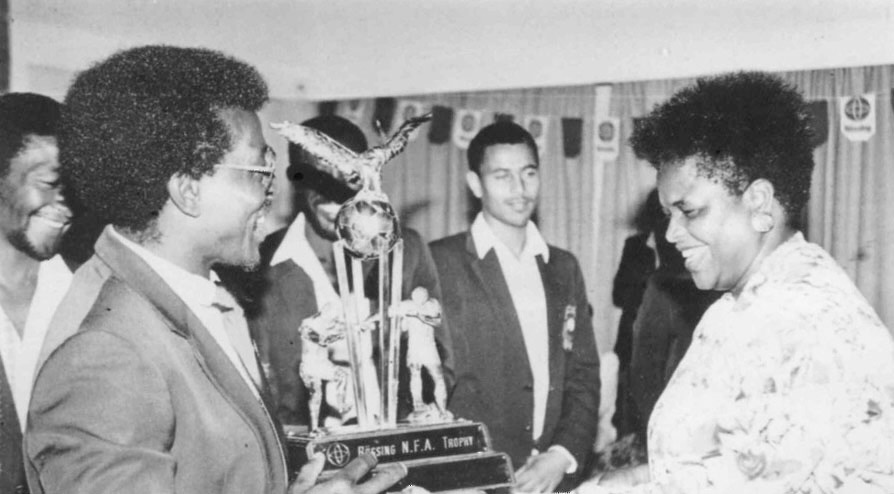
He did not leave football empty-handed as he managed to win the Hoveka Cup with his beloved Arrows in Windhoek in 1970.
The former winger was persuaded by Eberhardt Zage, who was a referee at Walvis Bay, and Harald Schmidt from Windhoek to become a referee.
“Becoming a referee was another turning point in my football career. I can say with a smile on my face that becoming a match official was the best thing that happened to me after quitting playing,” he says.
“One thing I can say about myself as a referee is that I conducted myself professionally. I interpreted the rules perfectly, and fair play was my watchword. I made crucial decisions that even shocked my friends.”
TOUGH DECISIONS
Samaria says one of the hardest decisions he ever made was awarding a penalty against the Namibian under-23 national team against their Zimbabwean counterparts.
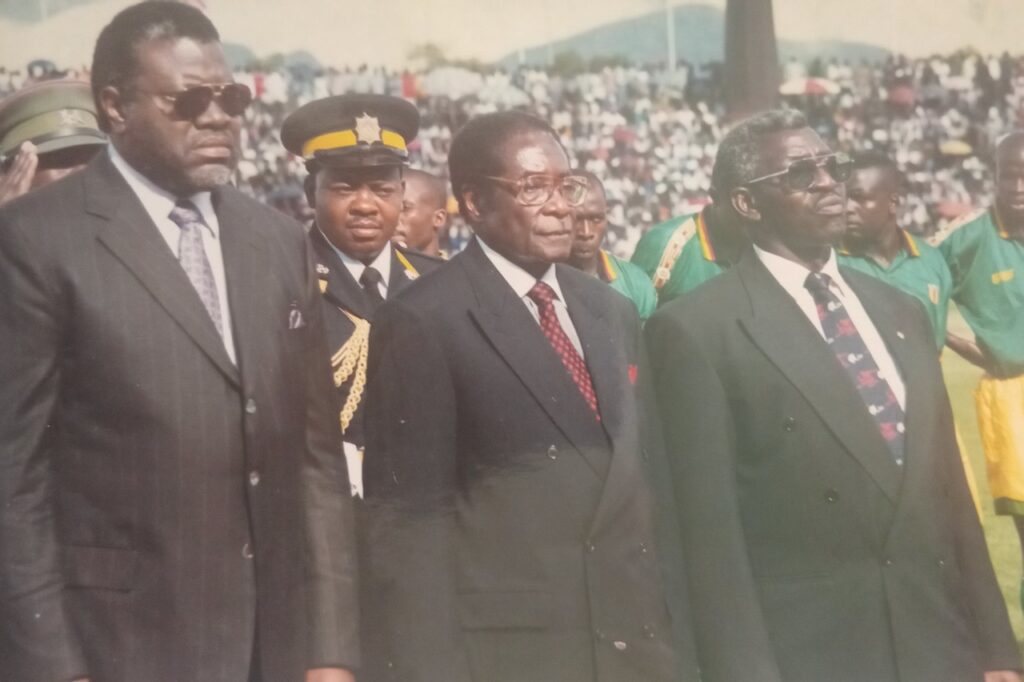
“It was not just another friendly match. It was the reintegration of Walvis Bay into Namibia, and the who’s who of the Namibian government, including founding president Sam Nujoma, were all present,” he says.
“Namibian goalkeeper Ronnie Kanalelo made a dangerous tackle on a Zimbabwean player and I was left with little choice but to award a penalty. Mind you, Kanalelo was even an Eleven Arrows player.”
Samaria says another difficult decision he had to make was sending off his brother, Carpio Kavendji, during a league match between Black Africa and African Stars in Windhoek.
“The African Stars players and supporters were against the fact that I was the appointed referee for the match. They knew I had friends and family in Black Africa,” he says.
“My brother made a tackle that could have ended the career of the Stars player, and I only applied the rule as prescribed and it was to send him off. I received backlash from my family, but we all laughed about it later. “
Samaria says he won the respect of every neutral football fan on the day, but at the end of the day, football was the actual winner.
He officiated the Africa Zone Six Under-23 Championships in Lesotho as well.
Samaria became chairman of the referees committee of the Western Football Association before independence, and also chaired the referee’s committee on the NFA’s executive committee under president Petrus Damaseb.
He attended a CAF referee instructors’ course in Cairo, Egypt, in 1995, which he followed up with another one in Birmingham, England.
He quickly became one of the most sought-after team managers in the game, while he also managed the Tisan team up to the Cucsa Games in Malawi.
He managed almost every junior national team outside the Namibian borders, including the Brave Warriors, and later became a seasoned match commissioner travelling all over the continent.
ENJOYING RETIREMENT
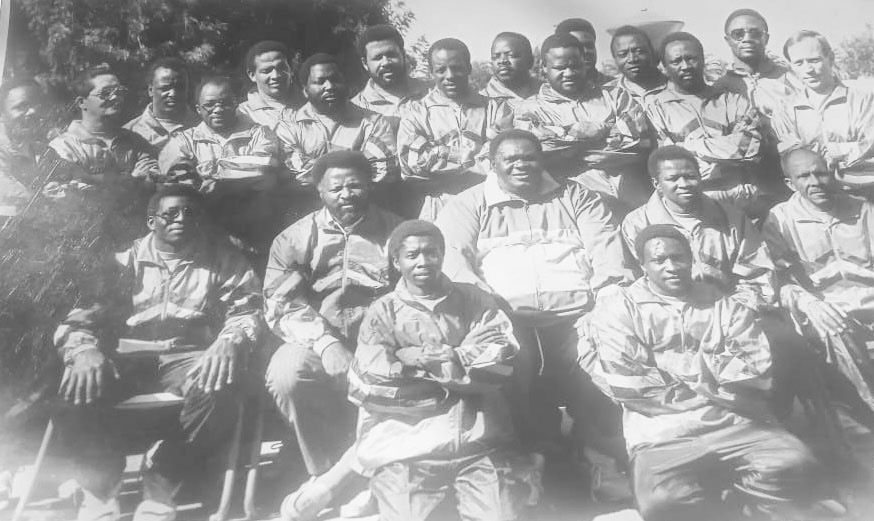
Samaria, who is currently enjoying his retirement at Walvis Bay, seems unable to detach himself completely from football as he is serving on the backbench of Arrows, together with Frans Shimbuli and Joseph Damaseb.
The married father of nine is advising young football players to be disciplined.
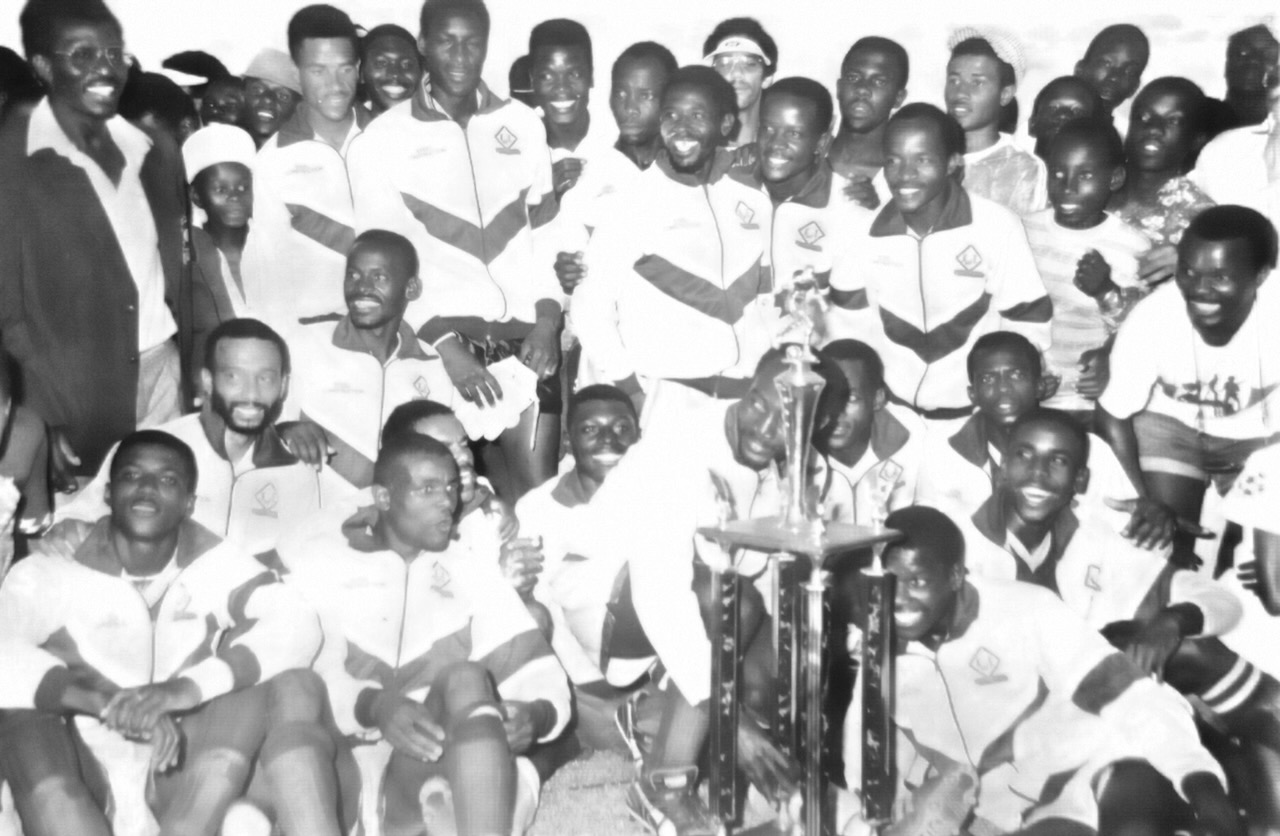
“At Arrows the motto during my tenure as chairman was discipline. Discipline and punctuality is what made us win the first post-independence league title in 1990.”