




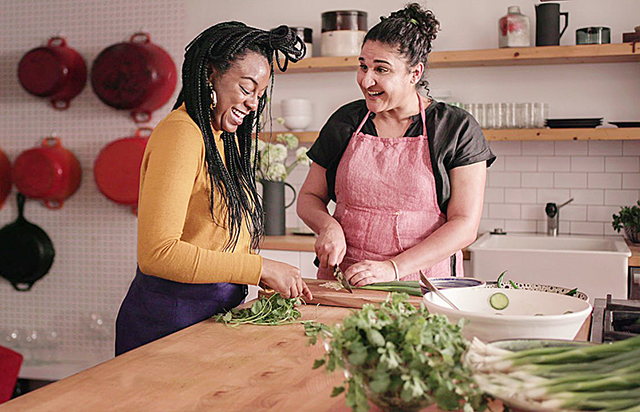
A dab of miso, a pat of butter, a splash of lemon and a leap of fire. This is ‘;Salt, Fat, Acid, Heat’; (2018).
Described by Samin Nosrat as the four basic elements that can make or break a dish, the American chef and food writer reintroduces audiences to these ingredients in her four-part Netflix series based on her book of the same name.
Beginning with fat which gives texture, amplifies other flavours and makes food delicious, Nosrat travels to Italy where Italians are masters of using fat to make food mouthwatering. See salami, focaccia, pesto and gelato.
The takeaway here is that the essential flavour of any dish starts with the fat it is cooked in. In fact, many cuisines are defined by the preferred fat. Southern cooking uses bacon fat and lard while French cooking is defined by the rich taste of butter.
Choosing the right cooking fat is important when building a dish and creates five distinct textures – creamy, flaky, crisp, tender and light.
“Texture makes a meal delightful and surprising,” says Nosrat whose charm, infectious laughter and unbridled joy is the ingredient that makes this travel and cooking show hybrid such a special addition to the genre.
“Food doesn’;t have to be complicated to be delicious.”
Introducing salt as fundamental to good cooking as it enhances flavour, makes food taste more like itself and brings food to life, Nosrat travels to Japan where she suggests that salt is one of the few elements that unites all cuisine.
The education here is to salt meat in advance to enhance flavour and tenderness and that the size of the crystal determines the saltiness. Small crystals dissolve fast and the taste of saltiness is immediate while bigger flakes tend to be less intense.
“The more I travel and taste the different cuisines of the world, the more I realise that good cooking is universal,” says Nosrat. “The ingredients may change but the fundamentals are the same and it all begins with salt.”
As for acid, it can be found in lemons, kale, coffee and even chocolate, honey and bananas and is used to balance a dish.
“It’;s the pucker in a lemon, the sour in sour cream, the tart in cranberries,” says the Chez Panisse alum.
“It really makes mouths water. Acid brightens food and creates contrast. Most importantly, acid does the absolutely necessary job of balancing flavours which makes it indispensable to cooking delicious food.”
Travelling to Mexico where she connects the Iranian love of sour foods such as lime, pomegranate and yogurt to Mexico’;s own embracing of acidity, Nosrat explains how a little acid can elevate any dish before ending the series considering heat, the element of transformation.
“Heat takes food from raw to cooked, flabby to firm, pale to golden brown,” she says. “Sizzles, splatters, crackles, steam and aromas are the result of applying heat to food.”
Advising paying attention to food and not the fire, creating different heat zones on a grill as well as looking, listening, smelling and tasting to master this final element of good cooking, Nosrat drops plenty of cooking wisdom such as bringing meat to room temperature before cooking and preparing a whole chicken with the legs at the back as it is hotter and they take longer to cook.
Ending the series in California using two different types of heat to cook Tahdig (scorched or crunchy rice) with her Iranian mother, Nosrat urges viewers to cook for friends and family and to make sure there is always a little something for them to do in the kitchen because it helps build confidence.
“Making good food accessible is really important to me,” she says. “Good cooking is within reach for everyone.” And if you commit to mastering the four basic elements of salt, fat, acid and heat, you can not only become a good cook, but a great one.