



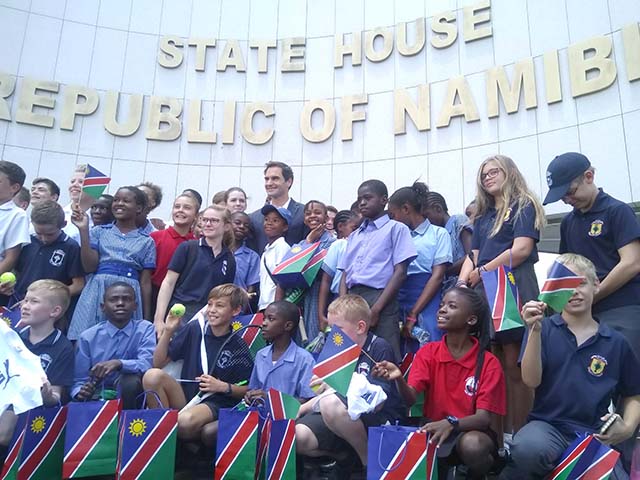
Roger Federer, the professional tennis player from Switzerland was in Namibia for a one-day visit last week. Federer is ranked third best in men’s singles tennis by the Association of Tennis Professionals.
His visit coincided with the School Readiness Initiative programme that his organisation, the Roger Federer Foundation conducts in schools.
The visit included one early childhood development centre and one primary school where Federer had the chance to experience first hand the effectiveness of the programme.
The foundation aims to assist children from impoverished areas, giving them the chance to take control of their own futures and be able to shape it in their own manner.
According to the foundation, education is a priority in combating and reducing poverty, to improve preventative healthcare methods and to support the greater community that they operate in.
“The main goal of the foundation is to be a positive, tangible and systematic change in the lives of the children that are part of the initiative,” Martha Khonje, regional representative of the foundation adds.
“Our foundation carefully selects local organisations with whom to develop long-term partnerships. This allows for engagements through mobilising and empowerment of the local communities, the teachers and children represented by the organisations,” Khonje states.
The Roger Federer Foundation has been in Namibia since 2014, which has seen it investing directly in early childhood education in the country. Notable partners of the foundation are Lifeline Childline, The Churches Alliance for Orphans and Women’s Action for Development.
“So far, a N$90 million initiative for a period of seven years is running in Namibia. This is co-funded with another organisation that aims to reach 3 000 institutions to give the poor and vulnerable young pupils a good start in education,” Khonje adds.
The foundation was started in 2003, with four of the Federer family members on the board of trustees. There are 24 local partners that the foundation works with in seven southern African countries.
Approximately 1,5 million children have benefited from the initiatives that the foundation has introduced, that includes 7 000 pre-schools and primary schools.