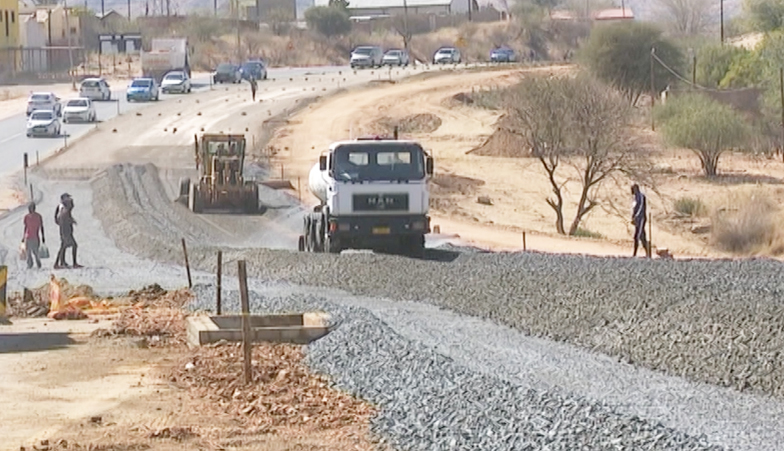
The transformation of Eneas Peter Nanyemba Road from a local artery into a dual carriageway should be a milestone of progress for Windhoek, yet the current implementation of high, restrictive kerbs suggests a design philosophy that prioritises high-speed transit over local economic vitality.
As a Namibian entrepreneur, I contend that we are witnessing a disconnect between civil engineering and economic reality, where the physical barriers being erected serve to ‘de-link’ established businesses from their customers.
When we look at the historical success of Independence Avenue, its prosperity is rooted in accessibility and the seamless integration of the road with the sidewalk. By contrast, the current trend of installing impenetrable kerbs along Nanyemba Road effectively turns a community-based economic corridor into a sterile ‘drive-through’ zone, suffocating the very enterprises that have long been the heartbeat of some areas.
The closure of once-thriving businesses in these sectors is a direct consequence of road designs that treat local commerce as an afterthought or a nuisance rather than a partner. If our national goal is truly economic emancipation, then our infrastructure must facilitate trade rather than obstruct it.
High kerbs do not just block tyres; they block the flow of capital. We must shift toward a standardised model where road reserves are maintained, but pavements are lowered or levelled, allowing for controlled yet easy access to business frontages.
To ensure aesthetic and structural integrity, the responsibility could even be shared, with business owners mandated to pave their access points according to city standards. This creates an environment of shared investment and mutual benefit, ensuring that the road serves the people living alongside it, not just the commuters passing through it.
Furthermore, we must address the overlooked safety hazards inherent in these rigid, elevated barriers. While engineers may argue that high kerbs protect pedestrians, they simultaneously create a ‘trap’ for motorists.
In an emergency, a driver has no ‘escape route’ to pull off the tar safely.
Instead, they are forced into a high-impact collision with a concrete barrier that can cause vehicle rollovers or severe structural damage, turning a minor swerve into a major tragedy. A road that offers no shoulder or mountable kerb is a road that leaves no room for human error or emergency manoeuvrability.
Ultimately, the development of Eneas Peter Nanyemba Road should be a catalyst for environmental and community growth, not a domestic form of economic colonisation that favours distant destinations at the expense of local livelihoods. We are currently spending millions on what amounts to ‘decorative’ infrastructure that effectively silos our neighbourhoods.
Our planners, consultants, and ministries must recognise that a road is only as successful as the prosperity it generates for the people it passes. We call for a design reconsideration that balances the need for a dual carriageway with the absolute necessity of accessible, business-friendly urban planning.
If we continue to build walls where we should be building gateways, we are not developing our nation; we are merely paving over its potential.
– Moses Aipinge