



TWO STORIES about men abusing women have captured wide public attention over the past two weeks. Another two, rooted in the same phenomenon (perhaps worse because of physical violence), have largely gone unnoticed.
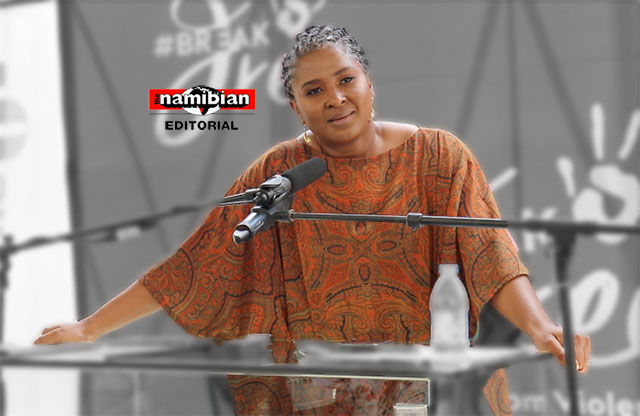
First lady Monica Geingos and self-styled socialite-influencer Betty Davids got tongues wagging after they rightly tackled the ‘slut-shaming’ of women.
There can be no doubt that many of our societal values on the treatment of women versus men are primitive and in need of an urgent overhaul.
If men’s demeaning attitude, as exhibited lately on social media platforms such as Facebook, Twitter and WhatsApp is worrying, then the role of state institutions like the police and courts in cases involving violence against vulnerable women is downright scary.
The Namibian reported at the beginning of this month that Rosalia Ndiitu, who barely survived a panga attack nearly nine years ago, is once again living in fear following the release of her assailant, Asser Fundila, who is threatening to finish her off. https://www.namibian.com.na/99488/read/Panga-attacker-back-at-victims-village
Ndiitu’s fellow Onamahoka villagers in the Ohangwena region say they have been reporting the ex-convict’s latest threats but the police have done nothing to thwart the danger Fundila poses towards his ex-girlfriend.
Similarly, a gang of serial rapists have been marauding and killing people in the informal townships of Katutura for the past couple of years. The police have been unable to even get close to identifying the culprits. A lack of resources?
By contrast, a detective and five police officers were allegedly dispatched to track down politician Imms Nashinge reportedly for libelling Beata Siteketa, who goes by the moniker Betty Davids in social circles and on digital platforms.
The police supposedly got involved because Siteketa laid a crimen injuria charge. Crimen injuria is a criminal offence based on an idiosyncratic South African and Namibian common law that covers road rage, stalking, racist language and emotional or psychological abuse.
Nashinge should no doubt answer for his actions. Yet, in a country where violent crimes proliferate and police constantly complain about a lack of resources, vulnerable women and children suffer more from the lack of responsiveness by the law enforcement agencies.
Despite media reports, it is likely the police have yet to attend to Ndiitu’s request for protection from a man who has already chopped off her fingers and left her for dead nine years ago.
Women in townships such as Havana in Windhoek live in constant fear of rapists on the loose.
The deployment of the justice system in the Siteketa vs Nashinge defamation case points to how class determines the use of state machinery while the poor get little protection, despite needing it the most. Preferential treatment (deliberate or incidental) will only diminish trust in public institutions and lead to accusations of abuse of power.
New plans and resources should be devised to tackle deep-rooted patriarchal emotional abuse of women and children in order to free up an already clogged justice system. Mass mobilisation and systematic education towards change of culture and tradition should take precedent.
Punishment through the legal system can also go a long way, but access to the courts should be made easier so that even people who cannot afford lawyers need not follow the High Court route as Siteketa has decided. Otherwise, blunt force of the law alone will yield few results.
Cultural and ethnic institutions are crucial because it is at that level that traditions must change. Currently, a woman is more likely to be punished by tribal court systems when accused of being a witch or prostitute. The abusers, often men, are held in high esteem. Such twisted logic that still exists in many Namibian communities while the world becomes modernised and progressive will persist unless our approach to tackling it has changed.
The police report that 139 women were murdered by their romantic partners between 2014 and 2019.
The first lady’s decision to use her personal experience to address inherent male domination and abuse towards women will have better results if there is a concerted effort on all fronts. Our public institutions need to be geared to serve the most vulnerable first and foremost.
In an age of information overload, Sunrise is The Namibian’s morning briefing, delivered at 6h00 from Monday to Friday. It offers a curated rundown of the most important stories from the past 24 hours – occasionally with a light, witty touch. It’s an essential way to stay informed. Subscribe and join our newsletter community.

The Namibian uses AI tools to assist with improved quality, accuracy and efficiency, while maintaining editorial oversight and journalistic integrity.
Stay informed with The Namibian – your source for credible journalism. Get in-depth reporting and opinions for
only N$85 a month. Invest in journalism, invest in democracy –
Subscribe Now!