About 71% of the earth’s surface is covered by water, and around 10% of the world’s population lives within five kilometres of the coast. Many of them depend directly or indirectly on the ocean for their livelihoods.
As pressure on marine ecosystems increased, the blue economy emerged to promote the sustainable use of marine and freshwater resources while supporting livelihoods, economic growth and healthy ecosystems.
In Namibia, where the ocean is vital for the economy and food security, the blue economy is implemented through an integrated management approach.
It promotes sustainable use of marine resources, supports local communities and aims to share economic benefits fairly while protecting ocean health.
Current ocean industries include fishing and aquaculture, mining, shipping, water desalination and tourism.
Future opportunities include renewable energy, marine biotechnology and carbon trading.
EMPOWERMENT
There are several examples of how Namibia is putting the blue economy into action.
The Meme Itumbapo Women’s Group produces tori lines, which are used by fishing vessels to scare seabirds away from fishing gear and reduce bycatch.
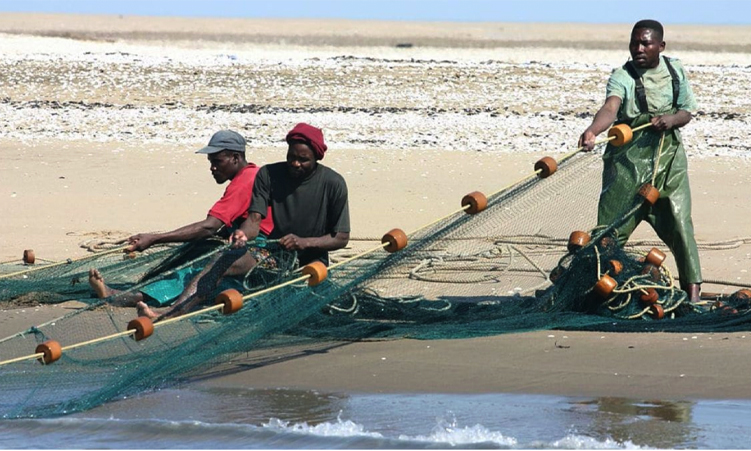
For their part, the Hanganeni Artisanal Fishing Association and other similar associations work to improve conditions for artisanal fishers and build a local value chain, creating more income opportunities for small-scale fishers.
These are important steps towards empowering coastal communities, especially women and young people, by creating income opportunities.
It helps them benefit from the blue economy while also helping to protect marine biodiversity.
In the commercial fishing sector, the government aims to process 60% of marine products in Namibia by 2030 instead of exporting them in raw form. This will help keep more value and jobs in the country.
To achieve this, Namibia plans to invest in infrastructure and skills development for catching, processing, packaging and branding seafood locally.
Proposed projects with France include a marine training institute, a Blue Corridor linking Walvis Bay with Dakar, Abidjan and Marseille, hydrogen-powered vessels, and a joint Blue Investment Fund to support local businesses and attract investment. In terms of research and technological monitoring, Namibia is exploring the use of satellite tracking and artificial intelligence (AI) to combat illegal, unreported and unregulated (IUU) fishing.
These technologies can help authorities detect suspicious activity more quickly.
IUU fishing is considered one of the biggest threats to Namibia’s marine resources.
Namibia’s Islands Marine Protected Area (Nimpa) is the second-largest marine protected area in Africa, protecting endangered seabirds and rich marine biodiversity.
However, it faces threats from resource exploitation, pollution, habitat degradation and climate change.
The Nimpa+ project, led by the Namibia Nature Foundation and partners, further aims to strengthen its management and protect marine biodiversity and coastal livelihoods.
Although Namibia is making progress in advancing the blue economy, there is still room for improvement.
Rapidly growing coastal tourism needs stronger oversight, while powerful private interests can pressure governments to overlook sustainability principles for short-term gains in sectors such as fisheries, aquaculture, mining and shipping.
KEY PLAN
Another important step is the long-awaited government approval of Namibia’s Blue Economy Policy and Marine Spatial Plan.
The plan would identify areas where ocean activities overlap, reduce conflicts between industries and establish clearer, enforceable rules for areas that are poorly regulated at present.
If a blue economy policy had already been in place, the recently approved and widely criticised Sandpiper marine phosphate mining project may have faced greater hurdles, with stronger enforcement of environmental and sustainability principles.
A strong blue economy can unlock Namibia’s ocean potential, but only if the Benguela Current remains healthy and resilient.
Protecting marine biodiversity, building local skills and sharing economic benefits fairly are key to long-term sustainability.
– Damian Schreiber, is a publicist, educator, seal rescuer and junior researcher at Ocean Conservation Namibia. He has a master’s in ecology and society from Costa Rica’s University for Peace.