






Windhoek, 17 September 2026.
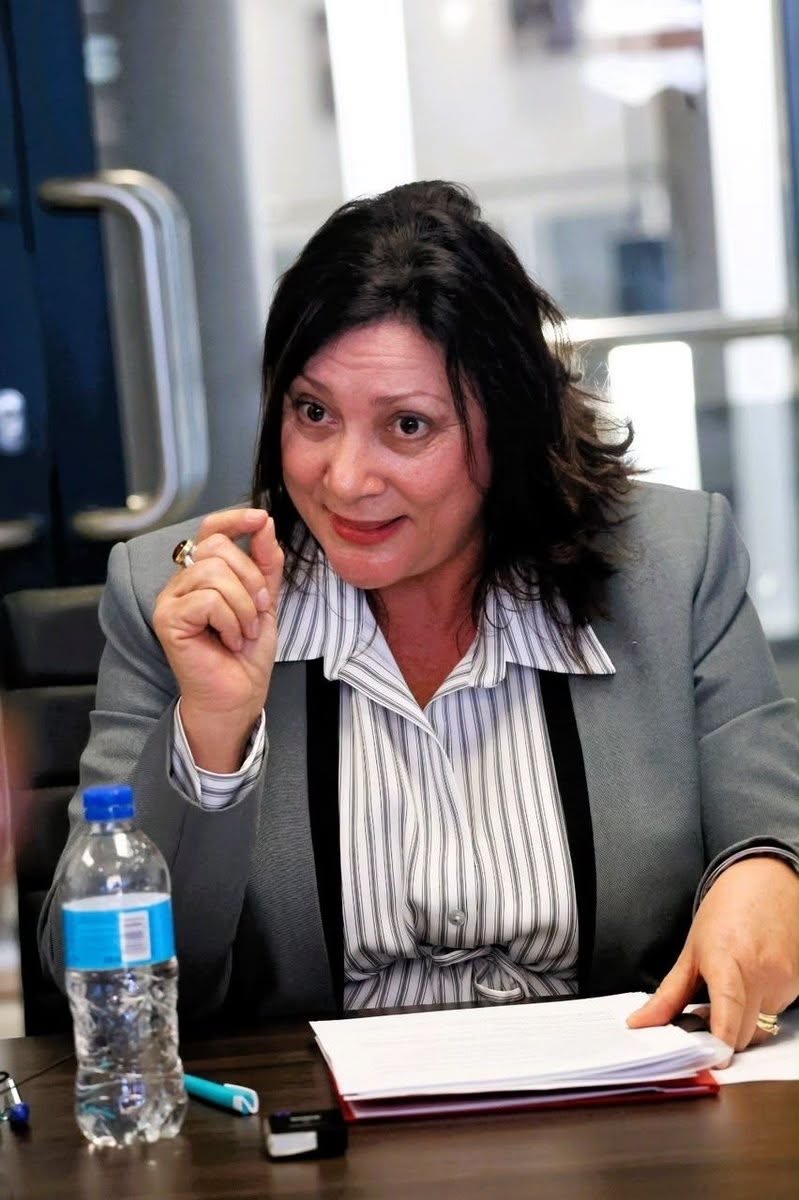
Keynote address by Dr. Sanet L. Steenkamp, MP, Minister of Education, Innovation, Youth, Sport, Arts and Culture, at the Sports Seminar “Unlocking Namibia’s Sport Economy” and launch of the Namibia Country Sport Profile Research Publication.
Hon. Dino Ballotti, Deputy Minister of the Ministry of Education, Innovation, Youth, Sports, Arts and Culture
Ambassador Emilia Mkusa, Secretary to Cabinet
Executive Directors of Various Ministries
Captains of Industry and SOEs
Government officials
Esteemed Researchers and Academics
Representatives of the Namibia Sports Commission, the Namibia National Olympic Committee, Namibia Paralympic Committee, National Sport Federations, Coaches and athletes
The entire sport ecosystem
Distinguished Guests
Members of the Media
Ladies and Gentlemen
Good morning to you all, and thank you for gathering here on what, for Namibian sport, is a truly significant morning.
It is an honour for me to join you today as we launch the Namibia Country Sport Profile, a document that is far more than a collection of statistics. It is a mirror held up to our sporting nation, reflecting, with honesty and with care, where we truly stand.
Before I go further, Ladies and Gentlemen, allow me a moment to say thank you. To the research team who brought this Profile to life, Mr Irvine Ndjavera, Mr Simon Uusiku, Ms Ndawana Haitembu and Ms Sofia Simon, your diligence and dedication over many months have given Namibia something we have long needed, and we are deeply grateful. My appreciation extends also to our partners who walked this journey with us: the UNESCO Chair for Sport, Development and Peace at the University of the Western Cape, and in particular Professor Marion Keim and Professor Christo De Coning, as well as the African Union Sports Council and the International Olympic Committee. It is through partnership such as this that meaningful work becomes possible.
Ladies and Gentlemen,
For much of our journey we have guided Namibia’s sport sector on passion and instinct and it is that very passion that has carried us so far. What has been missing is the insight to match it: the data to understand the ecosystem behind our victories, and to learn fully from our setbacks. This Country Sport Profile now gives us that insight.
Data must now become the foundation on which we build the future of Namibian sport. The Namibia Sport Development Index, which this Ministry has championed, is designed to capture the extent to which sport contributes to our socio-economic development, to track our progress honestly, and to help us identify where investment is most needed. And this Profile, Ladies and Gentlemen, also points us gently toward an opportunity: strengthening our legislative framework, the Sport Act No. 12 of 2003 and the Sport Policy of 1993, with the kind of monitoring and evaluation mechanisms that will give our sector the compass it deserves.
The findings before us are open, and I welcome that openness. This Profile shows us an ecosystem still finding clarity in the roles and responsibilities of its many stakeholders, still building the funding and commercialisation strategies it needs, and still working to bring its legislation fully in step with the times. I do not share these findings with you as criticism, I share them as an invitation to act together, with purpose and with hope.
Ladies and Gentlemen,
When we speak of professionalising our sport sector, we speak of something deeply human: the dignity of a career. We speak of a sector where our athletes can earn a livelihood from their talent, where our coaches can build sustainable careers, and where our administrators can serve with the same professionalism expected of any other industry.
Under the Fifth National Development Plan, we set ourselves the ambitious target of having sport contribute 2% to employment creation. While we have not yet fully realised that target, our resolve has not wavered, indeed, it has grown. As we move into NDP6, we are setting our sights higher still, projecting that the professionalisation of sport will contribute 3.5% to Namibia’s employment sector. This is a deliverable we intend to honour, and we are backing that intention with resources. For the 2026/27 Financial Year, this Ministry has allocated N$327,022,000.00 (Three hundred and twenty-seven million, twenty-two thousand Namibian dollars) towards the development and promotion of sport. This allocation comprises N$103,422,000.00 (One hundred and three million, four hundred and twenty-two thousand Namibian dollars) as the Operational Budget, and N$223,600,000.00 (Two hundred and twenty-three million, six hundred thousand Namibian dollars) as the Development Budget. This investment must, and will, yield results we can all be proud of: jobs created, careers launched, and lives transformed through sport.
Professionalisation will ask more of us than funding alone. It calls for sound frameworks, close inter-ministerial collaboration, and genuine corporate partnership. It calls on us to carry forward the revision of the Sport Act, a process under review since 2017, to a successful conclusion. It calls for policies that protect our athletes’ rights and recognise sport as legitimate labour. And it calls for governance structures that uphold transparency, integrity, ethical leadership and accountability at every level.
Commercialisation, too, deserves an honest conversation, Ladies and Gentlemen. It is not a term to be approached with suspicion, it is, quite simply, a survival strategy for our sector. As this Profile documents, Government remains the largest funder of sport in Namibia, currently investing below 1% of total public expenditure, while corporate investment, though growing steadily, still has considerable room to grow further. This tells me not that the appetite is lacking, but that the incentives to unlock it are still ahead of us to build.
This is an area where I believe we can, and must, do better together. We should explore purpose-built financial instruments, athlete development grants, sport venture capital, facility investment funds, and tax incentives that encourage private equity to enter our sector. We should give serious consideration to a national sport levy, following the example set by other African nations. And we must operationalise the Sport Development Fund, so that it can support the infrastructure and employment creation that professionalised sport requires. Done well, commercialisation means sport contributing meaningfully to our Gross Domestic Product, not as a footnote, but as a genuine economic sector in its own right. It means Namibian sport becoming an export of pride, with our athletes and our events drawing international attention, and investment, back to our shores.
This, Distinguished Guests, has already been a remarkable year for Namibian sport. We proudly took part in the Commonwealth Games, and we look forward to representing our nation at the Youth Olympics and the AUSC Region 5 Youth Games. In October 2027, Namibia will have the honour of co-hosting the ICC Men’s Cricket World Cup alongside South Africa and Zimbabwe. These are not simply events on a calendar, they are catalysts. They give us the opportunity to showcase our nation to the world, to build infrastructure of lasting value, and to inspire a new generation of Namibians to dream beyond their circumstances. But we must not wait for the next major event to drive the change our sector needs, Ladies and Gentlemen. That change can, and should, begin today, in this very room, with this very document.
The Namibia Country Sport Profile is, above all, a call to action. It asks of us the courage to move from rhetoric to reality, from aspiration to implementation. This Seminar offers us a valuable opportunity for panel discussion and wider stakeholder consultation, so that the reforms we pursue are aligned across Ministries and shaped by the voices of all who serve our sport ecosystem.
Ladies and Gentlemen,
It is in that spirit of partnership, that I wish, through this consultative Seminar, to commit this Ministry to the following actions in pursuit of sport reform:
- Structural re-alignment, to clarify the roles and functions of all stakeholders across the sport ecosystem;
- Prioritising the review and amendment of the Sport Act and Sport Policies, so as to close existing policy gaps and provide a fit-for-purpose legislative framework for modern sport;
- Creating Sport Governance Standards linked to a compliance mechanism that tracks the delivery of our strategies, plans and budgets, with integrity and accountability at their heart;
- Investing in data infrastructure, through the operationalisation of the Namibia Sport Development Index and an integrated sport data management system;
- Developing commercialisation strategies that attract private sector investment, strengthen collaboration across Government departments, and create sustainable revenue streams to unlock our sport economy; and
- Promoting professionalisation that creates jobs, builds careers, and gives due recognition to sport’s contribution to our national economy.
As I conclude,
Our sport federations, our athletes, our coaches, and every stakeholder gathered here today: please know that this Ministry stands with you, as your partner. We are committed, together with you, to building a sports sector that is professional, commercially sustainable, and guided by good data.
Let us not allow this Profile to gather dust on a shelf, Ladies and Gentlemen. Let us instead treat it as the roadmap it was always meant to be. Let us build a Namibia where sport is not merely a pastime, but a profession. Let us build a Namibia where our athletes are celebrated not only on the podium, but supported throughout their careers and well beyond them. Let us build a Namibia where sport contributes meaningfully to our economy, our society, and our national pride.
I thank you.