






Windhoek, 12 September 2026.
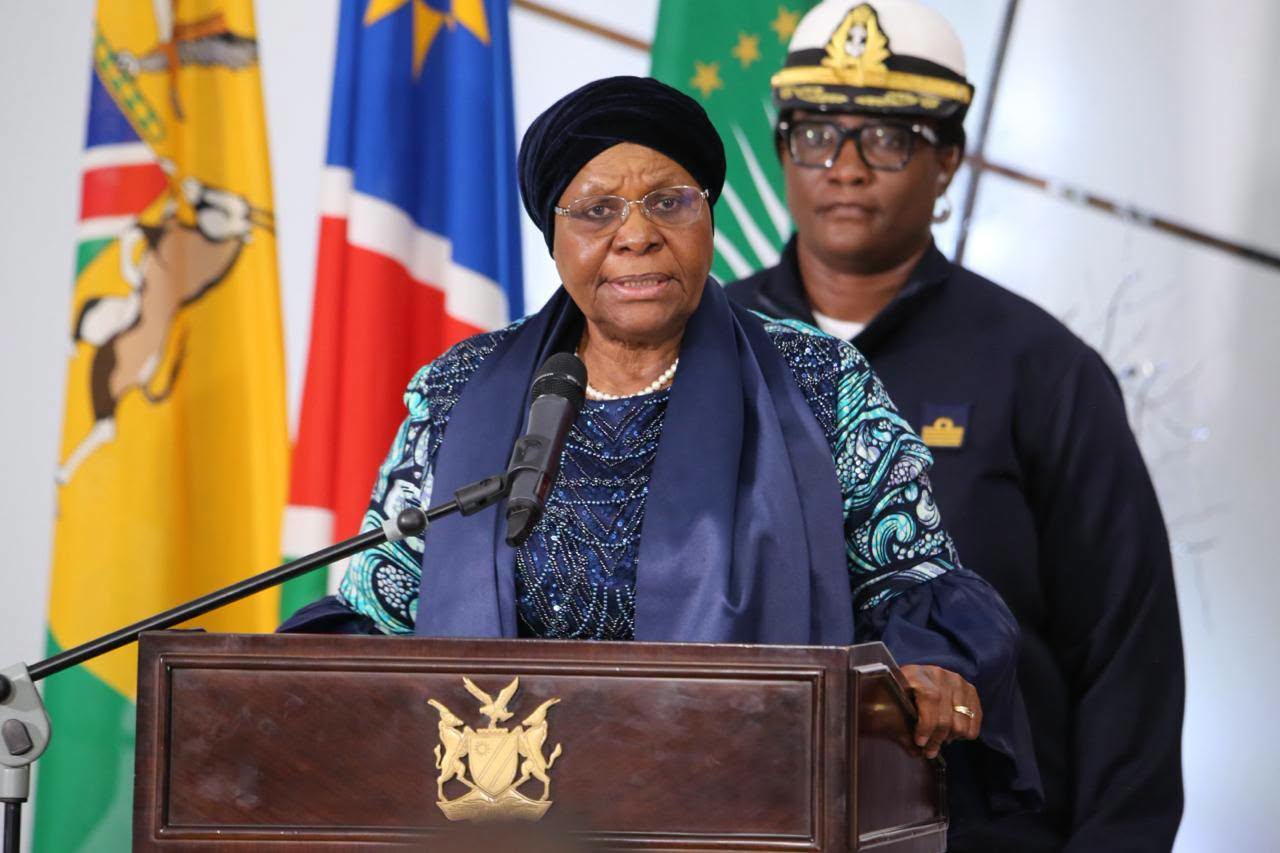
Statement by Her Excellency Dr Netumbo Nandi-Ndaitwah, President of the Republic of Namibia, at the State Memorial of Comrade Helao Joseph Shityuwete.
Director of Ceremonies;
Madam Jane Shityuwete, the Widow, the Children of Cde Helao Shityuwete and the family;
Your Excellency Lucia Witbooi, Vice President of the Republic of Namibia;
Right Honourable Dr. Elijah Tjitunga Ngurare, Prime Minister;
Ministers and Deputy Ministers present;
Members of Parliament present;
Amb Emilia Mkusa, Secretary to the Cabinet;
Diplomatic Corps;
Chiefs of the Service;
Hon. Sam Shafiishuna Nujoma, Governor of Khomas Region and other Governors present;
Cde Monica Geingos, Former First Lady of the Republic of Namibia;
Leaders of various Political Parties present;
Your Worship Cllr. Sakaria Uunona, Mayor of the City of Windhoek;
Regional and Local Authority Councillors present;
Veterans of the Liberation Struggle;
Fellow mourners;
Members of the media.
We are here to mourn and bid farewell to another distinguished gallant son of Namibia, a freedom fighter, a workers’ rights advocate, a nationalist and a veteran of the liberation struggle whose dedication helped lay the foundations of our Republic.
Comrade Helao Joseph Shityuwete, like many young people of his time, was among those who decided to say no to the colonial occupation of Namibia by the racist apartheid regime of South Africa.
Besides his traditional work of looking after family livestock, Comrade Shityuwete also yearned for education and went to St Mary’s Odibo School, where he met comrade Andimba Toivo ya Toivo, who became one of his teachers and later a lifelong comrade. That bond, forged in youth and tested by struggle, would endure through the darkest years of colonial oppression.
Comrade Shityuwete entered the colonial contract labour system, the only available opportunity for young male blacks from northern Namibia to enter the labour market. That is where he experienced first-hand humiliation, exploitation and injustice. Those conditions did not make him surrender or despair. They awakened in him a lasting commitment to workers’ dignity and his people’s freedom.
The contract labour system took him to Walvis Bay. There he joined other workers in engaging in political activities under the guidance of the Ovamboland People’s Organization (OPO), which later became SWAPO.
When senior SWAPO leaders were banned, restricted and watched, young party activists, including Comrade Helao, travelled the difficult routes between northern Namibia and other parts of the country, including Windhoek, carrying messages and helping to keep the movement connected. Considering the viciousness of the apartheid regime at the time, a single intercepted message could cost lives. For people who strongly believed in what they were doing, like Comrade Shityuwete, his courage was matched by discipline and trustworthiness.
He later left the country and joined other SWAPO members in exile. While there, he was sent for military training. After military training, he returned back home as part of the generation prepared to confront colonial occupation directly. In the process of engaging the enemy, he was captured, prosecuted under the Apartheid Terrorism Act, and sentenced to 20 years’ imprisonment after an extended trial period of 2 years while in detention, and served 16 years’ imprisonment on Robben Island.
Fellow mourners,
Robben Island was intended to isolate freedom fighters and reduce them to numbers. Instead, it became a meeting place for predominantly Africans, such as Namibians and South Africans. Among those who were imprisoned from Namibia and South Africa, were Andimba Toivo ya Toivo, Eliaser Tuhadeleni, John ya Otto Nankudhu and Gerson Veii, Nelson Mandela, Walter Sisulu and other giants of the anti-apartheid struggle.
While in prison, they did not all live in the same section, nor did they all share the same daily routines. But they shared one prison, one system of oppression and one conviction that injustice could not rule forever. Across prison sections and national borders, a fellowship of purpose took shape. The Namibian prisoners earned respect because they had come from a small and occupied country, yet stood without fear against the mighty machinery of apartheid South Africa.
The courage of Comrade Shityuwete and his fellow Namibians announced to the wider liberation movement that the measure of a people is not the size of their country, but the strength of their convictions. Their conduct on Robben Island spoke to who we were becoming as a nation, resilient in adversity, loyal to one another and unwilling to accept racial discrimination and colonial oppression.
All the years in imprisonment did not break his spirit. Neither hard labour, deprivation, nor separation from home. Even behind prison walls, he and his comrades found ways to follow developments at home, discuss politics, and keep alive the belief that freedom would come.
Upon his release in 1984, Comrade Shityuwete returned to the motherland, Namibia. He later went to United Kingdom to further his study where he and other Namibian students continued to mobilise international support for independence.
In 1989, as the implementation of United Nations Security Council Resolution 435 opened the final road to freedom, he was among the Namibians who returned home to participate in the political mobilisation that led to the first elections and finally independent Namibia.
Independence did not end his service to his people. In 1990, he became one of the officials who helped establish the Ministry of Labour, serving as Deputy Director of Human Resources until his retirement in 1996. He contributed to the work that culminated in the enactment of the Labor Act of 1992. There is a fitting completeness in that journey. Comrade Shityuwete, a contract worker who had personally endured an unjust labour system, helped a free Namibia construct a legal order founded on the dignity and rights of workers.
His public service extended beyond government. Comrade Shityuwete, as national coordinator of the Namibian Former Robben Island Political Prisoners Trust, helped preserve the history and fellowship of those who had endured imprisonment for our freedom.
He understood that liberation must not only be won, but its story must also be safeguarded and passed faithfully to those who will come after us.
His life after independence also revealed the man behind the public record. He was a husband to Madam Jane, a father, a grandfather, and a man deeply rooted in family. He reminded the youth that his generation went into exile not for themselves, but for the people. He urged the youth to use the opportunities made possible by freedom and to acquire knowledge and skills with which to uplift society. That message remains important now and in future.
Comrade Shityuwete also believed that political differences should never cause Namibians to regard one another as enemies. His life affirmed the democratic principle that differing views must be met through dialogue and debate, while our common identity as Namibians remains greater than that which divides us.
Fellow mourners,
As we lay him to rest, we are reminded how far we have come as a people. A child who began school late, a contract labourer denied dignity, a political prisoner whom apartheid sought to silence, lived to see a sovereign Namibia and helped build its institutions. His life is therefore, not only a record of suffering, it is a record of triumph.
Honouring Comrade Helao Joseph Shityuwete requires more than recalling his sacrifice. It requires us to protect the peace and democratic stability secured by his generation, to defend the dignity of workers, to expand opportunity for our youth and to build an economy in which Namibia’s natural resources are transformed into broad and lasting prosperity for the Namibian people.
The greatest tribute we can pay him is to sustain the ideals for which he fought and to carry them forward with integrity. Let us draw from his courage, discipline, tolerance and nationalism as we continue the unfinished work of building a united, just and prosperous Namibia.
Madam Jane Shityuwete, the children, grandchildren and the entire Shityuwete family, thank you for sharing your husband, father and grandfather with the Namibian nation. We know that public honour cannot replace the presence you have lost. We also thank you for the care you have given to Cde Shityuwete during his illness. May you find comfort in the fullness of the life he lived and in the knowledge that his name and service are permanently inscribed in the history of our country together with many other Namibians.
On behalf of the Government and people of the Republic of Namibia, and indeed on my own behalf, I extend to you our deepest condolences. May God Almighty comfort and strengthen you during this time of bereavement.
May the courageous soul of Comrade Helao Joseph Shityuwete rest in eternal peace.
I thank you.