President Netumbo Nandi‑Ndaitwah has praised the garlic trial at Sikondo Green Scheme, saying farm workers’ efforts are key to food security and rural economic growth in the Kavango West region.
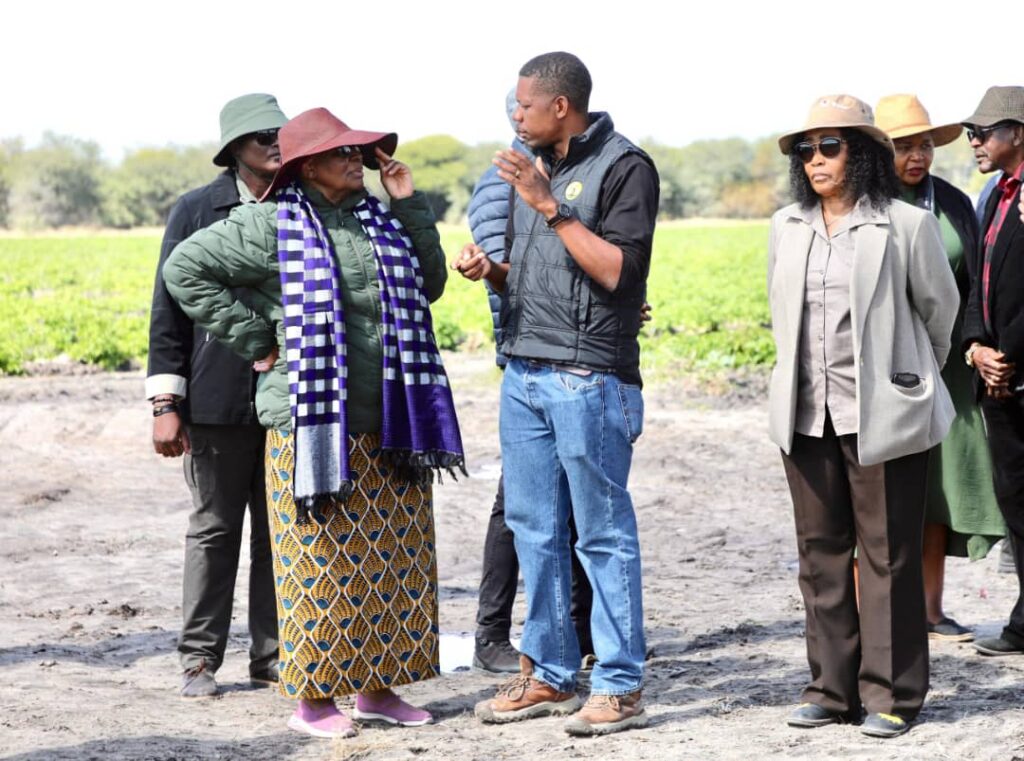
The president was speaking during her visit to Sikondo Green Scheme in the region’s Kapako constituency on Monday.
Acting farm manager Maxwell Nghidinwa told the president that Sikondo is piloting garlic on one hectare, with 0.5 hectares already under net shade and the rest still to be transplanted.
“This is the first time Sikondo has produced garlic,” Nghidinwa said. “Garlic is a high‑value, low‑maintenance crop. We import most of what you see in the shops, yet per gram it fetches a good price, and it has high potential for processing.”
He said cloves from the current harvest can be saved as seed, cutting input costs while keeping quality high.
“You can preserve some cloves for the next season and still receive the same quality of product because it is from the mother plant,” he said.
Nghidinwa added that garlic is being introduced alongside other crops.
“We also have green pepper and our third cycle of cabbage in the summer crop,” he noted.
The farm is beautifying its entrance with flowers and trees to improve staff welfare. President Nandi‑Ndaitwah welcomed the efforts.
“I appreciate the work the farm workers do in feeding the country. Rural economies are key drivers to economic growth,” she said.
Alongside garlic, Sikondo is running a rice research and development trial under a centre pivot.
Three hectares have been planted to test whether rice can grow under pivot irrigation as part of a plan to diversify staple food production and increase revenue.
The trial has confirmed proof of concept, with the crop reaching maturity and showing that rice can grow under pivot. The long‑term vision is to plant 200 hectares and supply the harvest to the Kalimbeza rice project for processing and packaging.
Nghidinwa said the trial is now focusing on identifying suitable upland varieties with partners like the University of Namibia, and on testing herbicides compatible with rice under pivot.
The next steps are to source certified seed, complete herbicide trials and then scale up beyond 10 hectares.
– Nampa