



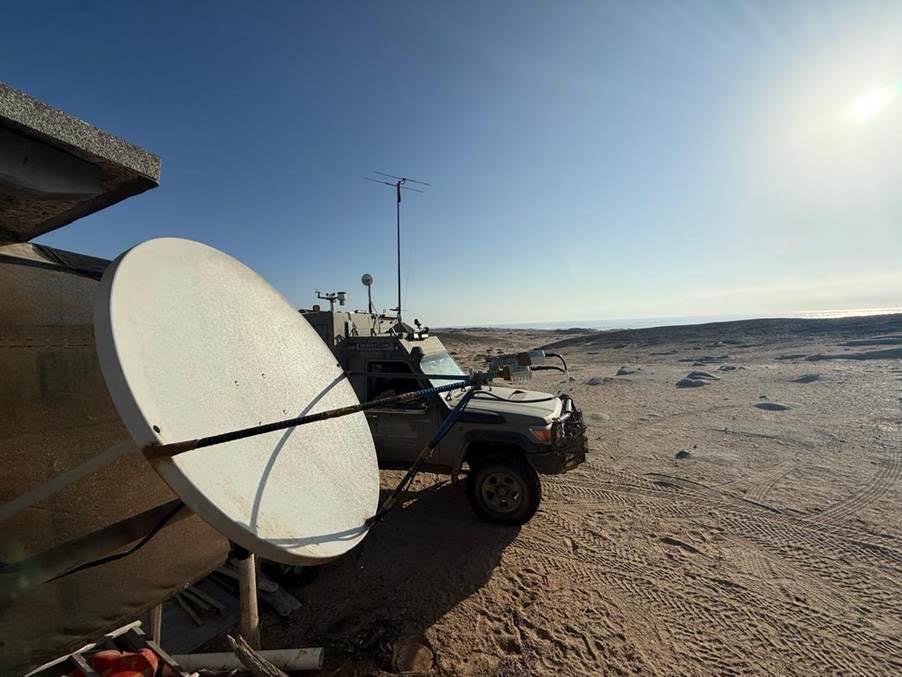
Paratus Namibia is helping researchers monitor Namibia’s desert-adapted lions by providing satellite internet at the Desert Lion Conservation Trust’s (DLCT’s) research station at Möwe Bay.
The area, located in the Skeleton Coast area, has mobile network coverage.
The DLCT has monitored desert lions in north-western Namibia for the past 20 years. Fewer than 100 of the lions are believed to remain.
The lions move across large areas, including communal farming land, where they sometimes come into conflict with people and livestock.
The trust works with the Ministry of Environment and Tourism as well as local partners to reduce these conflicts and protect both lions and farming communities.
The satellite connection at Möwe Bay allows researchers to communicate with field teams, share information and coordinate conservation work.
At the base camp, researchers process tracking data from collared lions and stay in contact with lion rangers working in areas such as Purros and Sesfontein.
The tracking system sends alerts when collared lions move into areas where they could come into contact with livestock. This allows rangers to respond quickly and help prevent conflict.
“This is about more than connectivity. It is about enabling conservation and helping the work of the DLCT remain vital and effective. We are proud to support the protection of a unique and vulnerable lion population while helping those on the ground respond where it matters most,” says Paratus Group chief development officer Barney Harmse.
DLCT founder Flip Stander says reliable communication is important because researchers spend long periods working in remote areas.
“Having reliable communication at Möwe Bay allows us to coordinate our work, manage data effectively and support rangers in key areas,” he says.