







OVARIAN cancer killed about 30 women in Namibia in 2024, while 50 new cases of the disease were recorded during the same period.
Cancer Association of Namibia (CAN) chief executive Rolf Hansen has shared these figures in the association’s statement on Ovarian Cancer Awareness Month, which is observed in September annually.
“Ovarian cancer remains an important global health concern. According to the latest Globocan 2024 estimates from the International Agency for Research on Cancer, 330 731 new ovarian cancer cases were recorded globally in 2024.
“Some 203 850 women died from ovarian cancer globally in 2024. It ranked about 18th among cancers for incidence and 14th for cancer mortality worldwide,” he says.
The figures show that Namibia recorded 50 new ovarian cancer cases in 2024, while 109 women were living with ovarian cancer in the previous five years.
Ovarian cancer represented 1.2% of all new cancer cases in Namibia and ranked 16th among all cancers by incidence in the country, according to the estimates.
The estimated age-standardised incidence rate was 4.4 cases per 100 000 women, while the estimated age-standardised mortality rate was 2.6 deaths per 100 000 women.
CAN says the 2024 Namibia incidence estimate is based on the national cancer registry, while mortality is modelled using national incidence and registry-based mortality/incidence relationships.
The association says ovarian cancer also contributed to cancer deaths among Namibian women, accounting for 4.7% of reported cancer deaths among women in 2020 and 2.5% in 2021, according to national mortality data.
“Although ovarian cancer is not among the world’s most frequently diagnosed cancers, it accounts for a substantial number of cancer deaths,” CAN says.
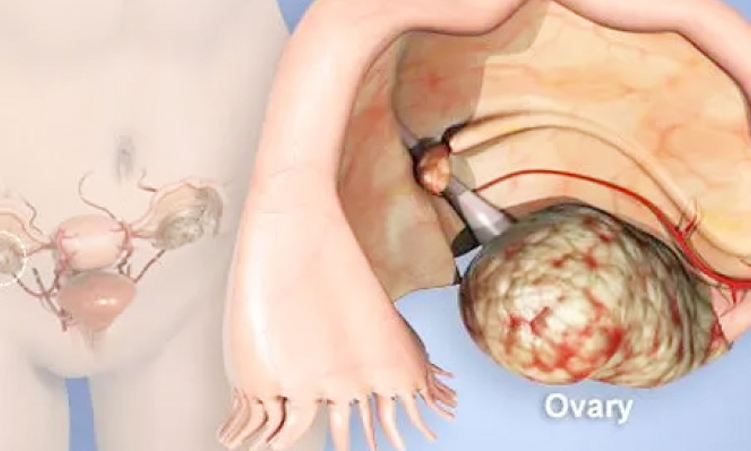
Ovarian cancer begins when abnormal cells in or around the ovaries grow and multiply uncontrollably. The cells can form a tumour, invade surrounding tissues and, in some cases, spread to other parts of the body.
The ovaries form part of the female reproductive system and are located on either side of the uterus, where they produce eggs and the hormones oestrogen and progesterone.
CAN says ovarian cancer can affect women at different stages of life, although the risk generally increases with age.
NOT OBVIOUS
One of the challenges with the disease is that it may not cause obvious symptoms in its early stages. When symptoms do occur, they can be mistaken for digestive, urinary or hormonal conditions.
The association says there is currently no reliable routine screening test recommended for women at average risk of ovarian cancer, making awareness of symptoms particularly important.
Women with a significant family history of ovarian or breast cancer, or known hereditary cancer-risk mutations such as BRCA1 or BRCA2, should discuss their individual risk with a healthcare professional, CAN says.
The association identifies persistent bloating or abdominal swelling, feeling full quickly, unexplained weight loss, pelvic or abdominal discomfort, changes in bowel habits, frequent or urgent urination, persistent fatigue and back pain as symptoms that may warrant medical attention.
CAN stresses that one symptom on its own does not necessarily mean a woman has ovarian cancer, as the symptoms could have many causes.
However, it advises women not to ignore symptoms that are new, persistent, unusual or getting worse.
CAN says: “The exact cause of ovarian cancer is not fully understood, but factors associated with increased risk include age, inherited genetic changes, family history, endometriosis, certain hormonal and reproductive factors, being overweight or obese, and some forms of postmenopausal hormone replacement therapy.”
The association says a risk factor does not necessarily lead to developing ovarian cancer and that the disease can occur in women with no known risk factors.