Opposition leaders and political commentators have urged the government to broaden its national honours criteria beyond liberation struggle figures to recognise ordinary citizens and diverse leaders.
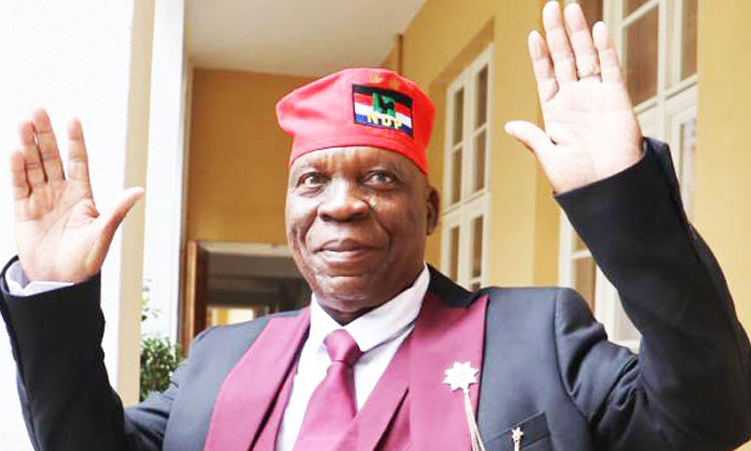
Official opposition (Independent Patriots for Change) leader Imms Nashinge and National Democratic Party (NDP) leader Martin Lukato say the state should recognise the contributions of Namibians who continue to build the country 36 years after independence.
Nashinge says while recognising those who fought for Namibia’s freedom remains important, the country should also celebrate people contributing to modern Namibia.
“What needs to be clear to all of us is that we are now 36 years into this independence and self-rule. Namibia is no longer moving forward based on liberation struggle credentials,” he says.
Their comments follow a ceremony held at Heroes’ Acre on Sunday, during which hundreds of Namibians were recognised for their contributions to the country.
“There are many men and women, black and white Namibians, who are contributing to modern Namibia, to a free Namibia, so the state has an obligation to recognise and celebrate them as well,” Nashinge says.
‘MANY HEROES’
He asks when nurses, police officers, teachers, doctors, scientists, soldiers and other workers would receive recognition for their contributions.
“What about our nurses who are delivering our children? What about our police officers who are preventing and fighting crime?” Nashinge asks.
He also points to truck drivers who spend long periods away from their families while transporting goods and contributing to the economy.
Nashinge says Namibia is now facing a different kind of struggle, including economic and developmental challenges.
“We are no longer in the liberation struggle,” he says.
He says entrepreneurs, humanitarians and people creating jobs should also be recognised.
“Every individual who is making the life of the next person better is a hero in his own right,” Nashinge says.
Popular Democratic Movement president McHenry Venaani says he has written an open letter to the national honours committee questioning the fairness of this week’s national honours selection.
In the letter, Venaani accuses the committee of being biased towards glorifying Swapo’s history, arguing that several early nationalists and other Namibians who played a role in the country’s struggle and nation building had been overlooked.
“It’s just an over-glorification of Swapo history. The history is there, but you can’t tell me people who went into exile – some just went to school – are coming back as national heroes.”
Landless People’s Movement spokesperson Lifalaza Simataa says the government’s lack of clear criteria for selecting national heroes creates room for bias.
He says Namibians who have excelled in sport, science, education and other fields should also be considered.
“As long as we allow the government to have this vague definition of a hero, it will not be in the best interest of our people,” Simataa says.
‘NOT INVITED’
Lukato, meanwhile, says he was not invited to the ceremony despite being a member of the parliament.
He says he had requested permission from State House to participate in honouring heroes who sacrificed their lives for Namibia’s freedom, but his request was declined.
“I was supposed to be invited officially by the organising committee from State House, but we didn’t receive any invitation,” he says.
Lukato says he had wanted to honour Namibia’s heroes through a song, as he is also an artist.
The NDP leader says the honours should have been more inclusive.
“It discriminates against others not to be part and parcel. What kind of administration is that?” he asks.
Lukato says Namibia’s liberation history involved people from different communities and regions, both inside and outside the country.
“Those who went into exile, those who fought inside Namibia, and those who fought outside in exile are not from one ethnic group only,” he says.
Political commentator Ben Mulongeni says Namibia should recognise contemporary heroes while cautioning against interpreting the latest national honours as tribalism.
He says the liberation struggle still deserves recognition, but the country must increasingly turn its attention to people making exceptional contributions today.
“You cannot criticise the plan of recognising heroes of the liberation struggle, because we are still in that era,” Mulongeni says.
He says the fact that people from a particular ethnic group dominate certain industries or communities should not automatically be interpreted as tribal recognition.
He says president Netumbo Nandi-Ndaitwah has called for the recognition of “today’s heroes” and for Namibia to focus on a new struggle for economic independence.
“Let’s not see tribalism in everything,” Mulongeni says.
Former diplomat Pius Dunaiski says Namibia should move beyond what he calls “liberation struggle nostalgia” and recognise people excelling in different fields.
He also calls for a single national Heroes Day to recognise all Namibian heroes, regardless of the struggles or backgrounds they represent.
“If we have one day and it has a national character, it will serve to unify people, to build a nation,” he says.
The Presidency, under which the committee falls, did not respond to a request for comment by the time of going to print.