The Bank of Namibia (BoN) plans to introduce digital money on mobile phones by next June to expand financial inclusion and improve instant payments.
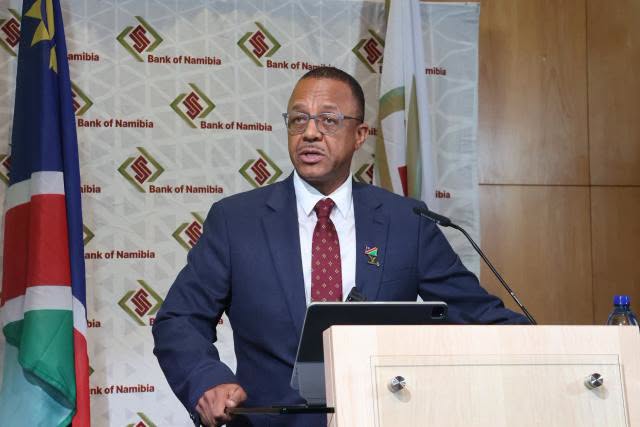
This was said by central bank governor Ebson Uanguta when he addressed members of the national steering committee on the informal economy, which was officially inaugurated by the minister of industries, mines and energy Modestus Amutse last Friday.
Uanguta said the bank would introduce new products to help formalise Namibia’s informal economy to ease the demand for financial statements required by banks when businesses apply for funding.
“Affordable digital payments do more than replace cash. They can create a transaction history and greater visibility of economic activity.
“When you start receiving your money through your business, you won’t need really to record it on a piece of paper, but simply go to Mobile Telecommunications Limited or whoever is the mobile service provider, and get a statement of all the transactions,” he said.
This would show how a business has transacted, as well as prove its viability, he said, adding that digital payments are new ways of doing things that can make businesses more agile.
The governor said the first use of digital money will be for government-to-person transactions, meaning money paid by the government to individuals will be sent directly to their phones and stored there.
“The second part will be person-to-person transactions where you can transfer that money on your phone to another person, and they can also give that digital money.
“The third part will be person-to-merchant transactions where you can now pay for goods in the shops with that money as well,” he said.
“So by next year, I believe that around June, this instant payment solution should be fully functional, and that should help you to keep your record, and also it will enhance economic activities,” he said.
Uanguta did not say how the cash element would be integrated into the instant payment system.
Addressing the same event, Dynamic Informal Traders Association executive director Tangeni Shindondola urged every Namibian to embrace the informal economy, recognise its value, its potential and its contribution to the economy and to society.
“For too long, informal economic activities have been viewed as being marginal, temporary or inferior to the formal economy.
Too often, the informal economy is discussed primarily as a problem that must be regulated, controlled or formalised away,” she said, calling for a change in that mindset.
She said the informal economy can be a powerful engine for bottom-up economic growth – from small traders, market vendors, domestic workers, artisans, food producers and home-based entrepreneurs.
“It can also come from many other Namibians who create economic opportunities with the limited resources available to them,” she said. – matthew@namibian.com.na