THE Omaheke Regional Council of Namibia and the Ghanzi District Council of Botswana last week renewed their standing cooperation in various areas.
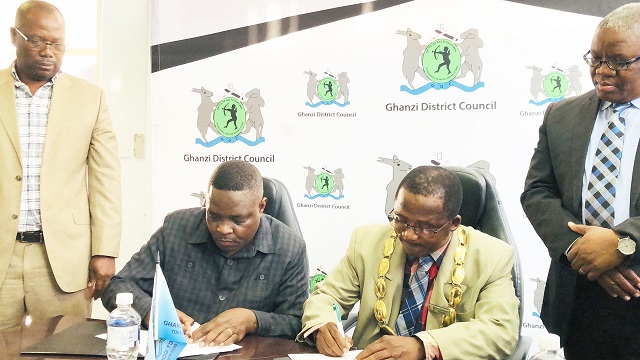
A memorandum of understanding (MoU) entered into by the two parties aims to ease the sharing of experiences and skills in matters related to the social, economic and physical development of the two institutions. A media release issued by the spokesperson of the Omaheke Regional Council, Tauno Iileka, on Friday said the implementation of the MoU will be done through networking and information-sharing sessions, councillors’ and staff study tours, and exchange programmes.
In order to fulfil the MoU, both councils will create a joint technical committee, which will have three members from each council, with the administration heads of both councils among them.
“This committee is tasked to develop its terms of reference and action plans, as well as monitor the implementation of the agreed action plans,” Iileka stated. Because of their geographical locations, the Omaheke region and the Ghanzi district share similar features.
“The regions share cultural similarities with the ethnic groups comprising the Batswana, San and Ovaherero residing in both regions,” he said.
Omaheke Regional Council chairperson Ignatius Kariseb, Ghanzi District Council chairperson Galetlhaole Sixpence, and Omaheke regional governor Festus Ueitele were all in attendance at the signing ceremony on Tuesday last week at Charles Hill in Botswana.
Speaking during the signing ceremony, Kariseb said the renewal of this MoU was long overdue as the previous one expired in March 2014.
Ghanzi District Council chairperson Sixpence hailed the cooperation, noting that it will go a long way in developing both regions.
“These include the development of their local economic development strategy; the processing of natural resources into value-added products; the operation of market stalls; school pupils’ performance; the promotion of cultural activities; and dealing with solid waste management,” he added.
The MoU will remain in effect for five years until 2024, and may be extended for another five years through mutual consent by both parties.
The two councils had a working agreement since 2009.