



It started with a very simple idea: we need to learn how to make our own cured meats. The plan for the implementation of this very simple idea was equally simple: six of us will congregate on the farm for a few days and do our thing.
We figured we would not need much – only sufficient volumes of meat, spices, casings and containers. We agreed that we would not do the typical products (biltong, steaks, boerewors, etc). We wanted more.
Chorizo, coppa, bacon, headcheese, Landjäger, saucisson sec – That kind of more.
How difficult could it be?
A few days before I was due on the farm, I tried to organise our operations. Despite my near half-century on this earth, I do not have much experience in organising things. Anything, really. I just sort of wing it. But this was not going to work here, so I buckled down and started drawing rudimentary sketches of animal bodies.
The idea was that I would use these drawings to identify the various cuts of meat, point my fellow butchers to their location so that we all could find them. Once removed, I would have a plan and an appropriate application for each cut.
I dedicated a few good nights to research. I read sections of books. I read recipes and I looked at pictures and videos online.
I even spoke to some people. Throughout this first stage, I sampled extensively of what is commercially available in town.
I wanted to make sure I could taste the difference between excellent and good and mediocre and bad.
I learnt a whole lot of new interesting things, one of which was that butchering requires sound knowledge and exceptional skill.
These are acquired through experience and extraordinary repetition on factory lines. Our motley crew of home butchers and committed meat eaters had neither. Speed and accuracy were not going to describe our butchering.
We spend four days knee-deep in meat: pig, warthog, oryx, zebra, springbok and lamb. Only on very few occasions did we draw our own blood. Of that I am very proud. We cut like pros, just a great deal slower. Our commitment was true, and no one abandoned the cause, not once. This was our war and the trenches were brimming with confidence.
We wasted nothing, not even our own time.
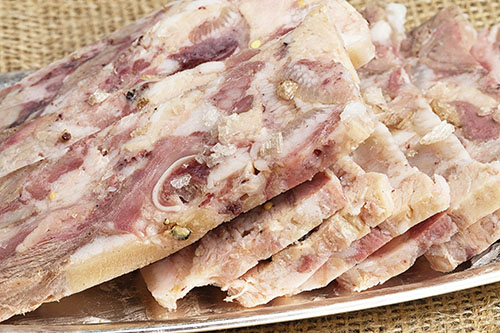
The heads became headcheese and the hearts pastrami.
Meat from the shoulders of different species found their way with fragrant spices into sausages; some with Chinese spices and others with nothing but fresh Thai-style herbs.
Flanks, bellies and butts became chorizo, slab bacon, Landjäger and salami.
I made enough brine to cure an elephant, and every decent sized container hosted meat, salt, sugar and spices in various combinations and ratios.
We giggled a lot. Toasted each other’s health and celebrated life.
We loaded large shreds of pork skin and fat into a willing oven and roasted it until we had crispy crackling. We made stew and consommé. Ate headcheese with salt and mustard.
For some, the pace became too much. They retired with bellies full of meat and heads filled with turmoil and promises never to eat meat again, ever. I even saw one sneak out the back door with nothing but a tomato.
I was reminded once more that the love of life is intimately connected to the love of food. How eating simple, good food puts a smile on everyone’s faces.
I also understood that we are in a special position in this country. It is not difficult for most to have some connection with where their meat comes from. And we have not (yet) lost the urge to eat nose-to-tail.
We have decided to make our get together an annual event. Each would have a theme and we had great fun discussing potential options: canning and preservation, brewing and fermentation, jam-making and so on. The longer we contemplated the next event and the more we consumed of our own bounty, the more the emphasis sifted to the vegetarian or even vegan options.
This made me realise that we are simply looking for an excuse to cook and eat and laugh and cry together. It is not about the meat.
It is about being kind, especially to those who have died for us to eat.
• 1 kilogramme salt
• 500 grams brown sugar
• 10 grams pink curing salt