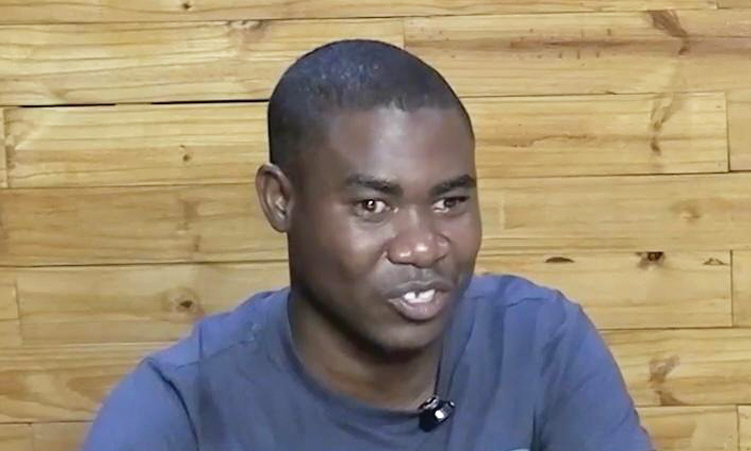
Joshua Hamukwaya was 10 years old when he began losing his sight.
But this diagnosis did not stop him from pursuing his dreams.
His journey took him from a village school in northern Namibia to earning a master’s degree and becoming a vocal advocate for disability inclusion.
Hamukwaya shares his journey with The Namibian’s WeSpeak Podcast, a platform for stories about people with disabilities.
He addresses education, employment, accessibility and the need to include people with disabilities in decision-making processes.
Who is Joshua Hamukwaya?
I am someone who believes in social justice and equal rights. I grew up in northern Namibia and started school at a village called Okana.
Later, I moved to Windhoek because of my disability. I attended a school for visually impaired pupils, then went to Windhoek Technical High School, and later to the University of Namibia, where I completed my honours degree in lifelong learning and community education.
Last year, I completed my master’s degree in adult education. Today, I work as a disability inclusion advocate.
How did losing your sight at a young age affect you?
I got my disability when I was still young, around 10 or 11 years old. At that age, children adapt more easily. I first noticed something was wrong when I could no longer see the board or read books properly.
I stayed out of school for a few years while going to hospitals. In 2007, an eye specialist in Windhoek told me I had glaucoma and nothing more could be done. That is when I was referred back to school.
Did you go through counselling at the time?
No, I did not. I accepted the situation. My family had a positive mindset and encouraged me to continue with school. They believed I could still thrive like any other Namibian child.
What were some of the biggest challenges you faced growing up?
Many people judged me and believed I could not do certain things because I could not see. But blindness only affects sight – it does not remove your ability to think, work or contribute.
School was also a challenge. In mainstream schools, some teachers were not trained to teach pupils with visual impairment. Sometimes they would forget I was even in class. That made learning difficult.
The bigger challenge is attitude. Society often focuses on our limitations instead of removing the barriers that disable us.
Are Namibian schools doing enough for inclusive education?
The government has policies, and that is a good start, but policies must be enforced. Teachers need training to support pupils with disabilities. Schools also need budgets for accessibility, assistive devices, hostels and toilet facilities. Inclusion needs real investment.
Your master’s research focused on transport accessibility. Why did you choose that topic?
I wanted my research to address real issues affecting people with disabilities. Through community discussions and surveys, accessible transport kept coming up as a major challenge. So I decided to study transport in Windhoek and present findings that policymakers can use.
What did your research find?
Some municipal buses are not fully disability-friendly, although a few are wheelchair accessible. Drivers were generally willing to help, but fellow passengers were not always supportive.
Taxi drivers also present many challenges. Public awareness is needed, and city planners must make accessibility a priority.
Do you think people with disabilities are well represented in business and politics?
Not enough. Nothing about us without us means we must be part of decision-making. Too often, decisions are made for us without us.
Some companies hire people with disabilities only to look inclusive, but they do not truly involve them. Many workplaces are still physically inaccessible. We still have a long way to go.
Persons with disabilities make up only 2.3% of Namibia’s workforce. What is your take on this?
It is disappointing. Many qualified people with disabilities are ready to work and contribute. Employment equity requirements should be enforced.
Employment provides dignity and independence and reduces vulnerability. If people with disabilities are excluded from the workforce, we risk failing to achieve inclusive development goals.
You work in the corporate and development sector. What has your experience been like?
Overall, it has been positive. I have been given assistive tools like a laptop with a screen reader. I have felt included and respected.
There are still challenges, such as inaccessible software or people underestimating your abilities, but many organisations are improving because they understand inclusion.
Namibia recently launched the sixth National Development Plan, but it is not available in Braille. What does that mean for inclusion?
It means many people with visual impairment cannot access an important national document. Some people in rural areas do not have smartphones or digital tools either.
The government must provide information in different formats – Braille, radio, summaries and other accessible methods. If people do not receive information, they are left behind.
Do you see disability as a limitation?
No, not at all. I do things differently, but that doesn’t mean I cannot do them. Disability is often created by society when the right environment is not provided.
I always say limitation is in the mind.
What achievements make you most proud?
My education journey is one. Reaching master’s level is something I am proud of.
I am also proud of my advocacy work, especially helping push for disability data to be included in the 2023 census. If we are not counted, we will not be accounted for.
What goals are you still working towards?
I want to continue advocating for disability inclusion in education, health and all areas of life. I also want to inspire young people with disabilities. Further studies like a doctorate is something I am still considering.
What would you say to people who believe relationships with people with disabilities are a burden?
That belief is wrong. We are human beings first. We deserve love, families and relationships like anyone else
And no, we are not a burden. I live independently. I cook, clean and manage my own life. Sometimes assistance may be needed, just like anyone else may need help at times.
What message do you have for young people with disabilities?
I see your struggle, but I also see your strength. Demand your space. Speak up. Stand up for yourself.
Your disability does not define you. You can become a teacher, lawyer, engineer or anything you set your mind to.
Final words?
We are here. Do not forget us. Bring us to the table. Consult us. We are part of the solution. Policies about us should never be made without us.
*This article is produced as part of a partnership between The Namibian and NMT Media Foundation. Check out our Youtube channel for the full interview.