The president attended the following events in May:
Today: Etunda irrigation scheme – Omusati
27 May: Omaludi Agricultural Festival – Ohangwena
23 May: Omagongo Festival – Omusati
4 May: Cassinga Day – Omusati
1 May: Workers’ Day – Kunene
President Netumbo Nandi-Ndaitwah’s absence from yesterday’s national Genocide Remembrance Day events has drawn sharp criticism from political and community leaders despite her active public schedule.
The main event yesterday took place at Shark Island in the ||Kharas region, a site historically known as ‘Death Island’, where thousands of Ovaherero and Nama people were imprisoned and died during German colonial rule between 1884 and 1915.
Additional remembrance events were held in the Khomas, Kavango East, Ohangwena, Oshana, Oshikoto and Omusati regions.
Events in the Ohangwena region were attended by vice president Lucia Witbooi on behalf of the government.
Nandi-Ndaitwah’s absence drew criticism from several political and community leaders.
On Wednesday, the president attended the Omaludi Agricultural Festival at her hometown of Okongo in the Ohangwena region.
Today, she is expected to visit the Etunda irrigation scheme.
Last Saturday, the president officiated the Omagongo (traditonal wine) Festival in the Omusati region and attended a Cassinga Day event in the same region earlier this month.
She also attended a Workers’ Day event at Opuwo in the Kunene region.
Historians estimate that up to 80 000 Ovaherero people, about 75% of the population at the time, were killed during the genocide.
Many died from thirst, starvation, forced labour and exposure in concentration camps at Swakopmund and Lüderitz.
An estimated 10 000 Nama people also died during the atrocities.
‘NOT FOR POLITICS’
Responding to criticism, presidential spokesperson Jonas Mbambo yesterday said Genocide Remembrance Day should not be reduced to politics or personalities.
“The day is about honouring the lives lost, acknowledging the pain carried across generations and standing in solidarity with the affected communities,” he said.
Mbambo said the government’s participation in commemorative activities across the country demonstrated the importance the state attaches to the day.
He said Nandi-Ndaitwah had officially marked the occasion through her public message to the nation.
“This moment should also encourage constructive national reflection on the way forward regarding genocide recognition, apology and reparations for the affected communities,” he said.
“Namibia is a democracy, and differing views and perceptions will always exist . . . We, however, encourage all stakeholders, including the media, to approach this day with the sensitivity, unity and historical reflection it deserves.”
‘UNFORTUNATE’
Elison Tjirera of the Genocide Foundation yesterday described the president’s absence at events yesterday as unfortunate.
“It speaks of disdain toward the historical pain of the Ovaherero and Nama communities,” he said.
National Unity Democratic Organisation parliamentarian Vetaruhe Kandorozu yesterday described it as “the wrong signal” to affected communities and the nation.
He said Nandi-Ndaitwah should have personally attended at least one event.
“It is a completely wrong signal that our president sends to the nation,” he said.
Kandorozu pointed to the historical role played by chief Frederick Maharero, who fled to Botswana during the genocide, and was granted asylum there.
He said Maharero’s connections with international figures such as reverend Michael Scott later helped establish links with chief Hosea Kutako, who petitioned the United Nations and mobilised international solidarity for Namibia’s cause.
“That struggle ultimately led to Swapo being recognised as the sole and authentic representative of the Namibian people,” he said.
He said many Namibians who fled the genocide to Botswana later became instrumental in supporting the liberation movement, as well as leaders such as founding president Sam Nujoma and former politicians Mburumba Kerina and Fanuel Kozonguizi.
“The current president followed in those historic footsteps. This day therefore carries huge personal significance to her, and she cannot afford to be absent from it.”
“Her absence shows a lack of remorse towards the affected communities, including herself,” Kandorozu said.
“The president decided to open the Omagongo Festival and cattle show at her own village, but decided to boycott a national Genocide Remembrance Day commemoration.
Why did she not even choose to attend it in Ohangwena?” he asked.
Meanwhile, Swanu of Namibia president and member of parliament Evilastus Kaaronda said: “I must express our profound appreciation of the attempts at giving the commemoration of this day a national character.”
He said although the president’s absence at yesterday’s events was disappointing, she should be given an opportunity to explain herself.
“I’m confident the president has a valid reason …” he said.
Speaking at Shark Island at Lüderitz yesterday, Hardap governor Riaan McNab said the day is a reminder of what it means to be resilient when facing injustice.
The day was commemorated under the theme ‘Reclaiming Dignity, Restoring Culture, Rising in Unity’.
“Today we must continue the difficulty of healing from the wounds of the past. Our diversity must be our strength,” McNab said.
‘BURY THE HATE’
The paramount chief of one Ovaherero faction, Hoze Riruako, yesterday said: “I’m calling on particularly our Nama and Ovaherero people to bury our deep-rooted hatred. What happened has happened.
We must come together to fast-track the solution and fruition to this issue.”
Riruako said people need to put an end to infighting that further divides the nation.
||Kharas governor Dawid Gertze yesterday said the decision to make the day a national remembrance day was not arrived at lightly.
“The day belongs to all Namibians. Our people participated and communities were given a chance to air their voices,” he said.
Gertze raised concerns over criticism intended to create division.
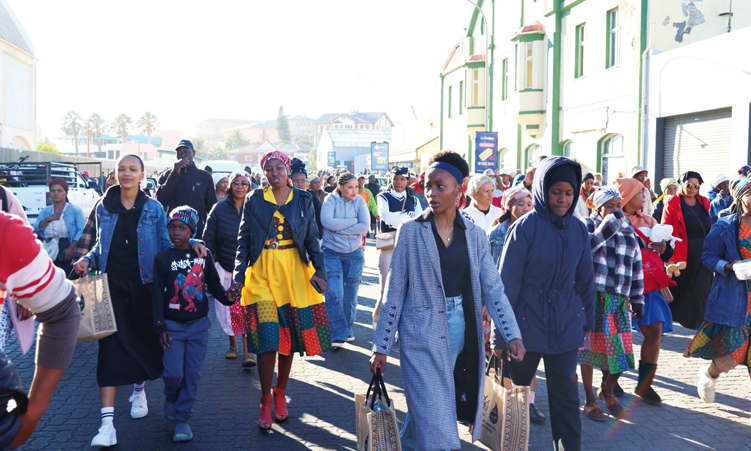
‘REMEMBERING THE PAST’ … Genocide Remembrance Day was yesterday observed in various regions across the country, including Otjozondjupa, ||Kharas and Oshana, with the main event taking place at Shark Island at Lüderitz. The day is commemorated annually to remember the 1904–1908 genocide that saw thousands of Herero and Nama people killed during German colonial rule. This year’s commemoration was held under the theme: ‘Remembering the past, honouring the victims, promoting unity, justice and reconciliation’.
He said destructive criticism only weakens the democracy critics claim to defend.
Gertze called on the German government to arrive at the recognition of guilt, apology and reparation on the matter.
Meanwhile, German ambassador to Namibia Thorsten Hutter said: “I want to assure you Germany is committed to the atonement of reconciliation as per the joint declaration.
Reconciliation is taking responsibility for the past, of healing, and attending to those wounds, and forgiveness,” he said.
He said once the joint declaration process is concluded – before the end of the year – a new chapter in the country’s history will start.