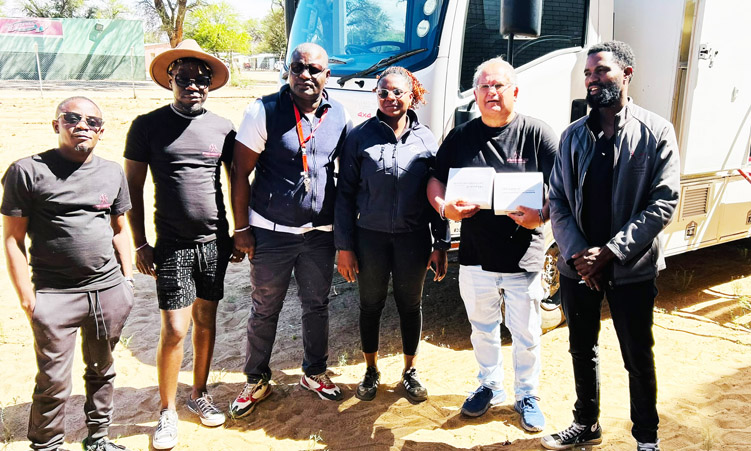






The newly elected council of the Engineering Professions Association of Namibia has been tasked with supporting the finalisation and implementation of the new engineering profession bill.
Over the weekend, the association’s annual general meeting elected Sophia Belete-Tekie as its president. This was also the election of the association’s 44th council since it was established in 1981.
Belete-Tekie at the event said the new council will focus on strengthening the engineering profession, starting with the proposed law.
“Our immediate priorities will include supporting the finalisation and implementation of the new engineering profession bill,” she said.
Belete-Tekie said the council will also support the implementation of the continuing professional development framework in partnership with the Engineering Council of Namibia.
She said the association wants to increase member participation, especially among young engineers and women in engineering, through mentorship, networking and professional development programmes.
Belete-Tekie said the association will strengthen cooperation with the Engineering Council of Namibia, the Association of Consulting Engineers of Namibia, the Federation of African Engineering Organisations and the Southern African Federation of Engineering Organisations.
“We can achieve far more together than we can individually,” she said.
She also called for renewed attention to the recommendations of the 2014 Engineering Needs and Numbers study.
According to Belete-Tekie, the recommendations remain relevant and include improving skills transfer between experienced and young engineers, strengthening cooperation among engineering institutions, promoting engineering careers in schools and expanding scholarship and bursary opportunities.
She said engineers should play a bigger role in advising government and other decision-makers.
“Perhaps the time has come for engineers to become a stronger and more respected voice in our nation,” she said.
Belete-Tekie said Namibia has invested billions of dollars in infrastructure and engineers have a responsibility to maintain those assets.
“Every dollar invested in timely maintenance saves many more dollars in future reconstruction costs,” she said.