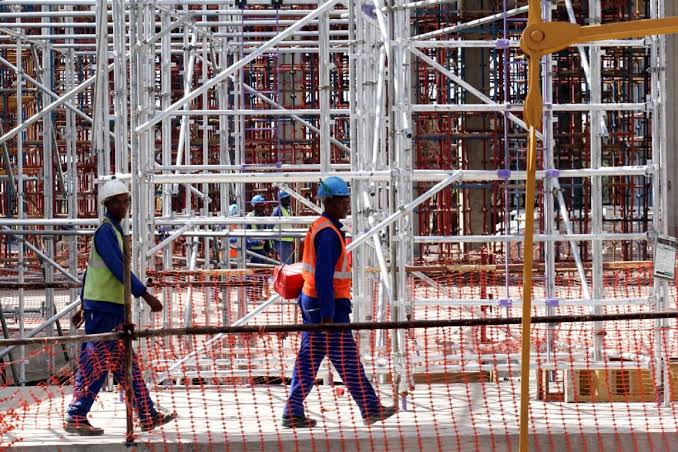
The new minimum wages and employment conditions for Namibia’s construction workers came into force on 1 September and will remain in place for two years.
Under the agreement, labourers and general workers will earn a minimum of N$20.43 per hour during the first year.
Labour commissioner Kyllikki Sihlahla yesterday said the new wages and conditions apply across the construction industry, including employers and workers who were not part of the original agreement.
The agreement was reached between the Construction Industries Federation of Namibia and the Metal and Allied Namibian Workers Union on 29 January.
Sihlahla said from 1 September 2027, the minimum wage for labourers and general workers will increase to N$21.45 per hour, adding that other workers will receive different minimum wages based on their jobs and skill levels.
These include semi-skilled workers and artisans, construction drivers, plant operators, mechanics, storekeepers, timekeepers and clerks.
Sihlahla said the agreement also requires employers to provide workers with protective clothing and safety equipment, including overalls, hard hats and safety boots.
She also said the agreement sets minimum productivity and performance requirements.
Sihlahla said employers cannot simply reduce the pay of workers who fail to meet the required productivity levels and they must first provide additional training before taking disciplinary or incapacity steps.
She said workers who have to work away from their normal workplace and stay overnight are entitled to a living-away allowance equal to 15% of their hourly wage.
Employers must also provide suitable accommodation, washing facilities and access to water.
The agreement provides for a service allowance equal to 155 hours of an employee’s wage, generally paid as part of the December remuneration.
It also covers shop steward training, procedures after retrenchment and pension arrangements.
Sihlahla said employers must apply for eligible workers to join the Namibia Building Workers Pension Fund unless they provide pension or retirement benefits that are equal to or better than those offered by the fund.
She added that disputes over the interpretation or enforcement of the agreement that cannot be resolved through negotiations may be referred for arbitration under the Office of the Labour Commissioner.
Sihlahla called on construction employers and workers to familiarise themselves with the new minimum wages and employment conditions.
Construction Industries Federation (CIF) of Namibia chief executive Bärbel Kirchner says the federation has been waiting for the agreement to be gazetted because it could only take effect once formally published.
“This ensures a level playing field. Responsible employers should not be placed at a competitive disadvantage by implementing higher employment costs while other businesses continue operating on the basis of lower wages and conditions,” she says.
Kirchner says the construction industry’s minimum wage for labourers remains higher than the general national minimum wage.
“This reflects the industry’s commitment to securing the interests and livelihoods of employees through responsible collective bargaining, while also taking account of the economic realities faced by employers,” she says.
Metal and Allied Namibian Workers’ Union (Manwu) representative Sanchez Lukas says the agreement provides workers with improved wages, allowances and employment protections.
He says the agreement also strengthens protections relating to workplace safety, pension benefits and conditions of employment.
The CIF and Manwu, however, stress that the agreement does not mean every construction worker will automatically receive a 5% salary increase.
The increase applies to the minimum wage for each job category.
They say workers who already earn more than the new minimum wage are not automatically entitled to another 5% increase, with any additional increase left to their employer.
The new rates will not be backdated.
The federation and the union have called on labour inspectors to ensure the new wages are enforced across the entire construction industry and not only among CIF members and other organised employers.
They are urging public and private clients to ensure contractors can prove they comply with the new wages and employment conditions.