




Namibia’s ambition to become a major exporter of green hydrogen is facing a longer road to commercial success as oil discoveries and growing petroleum investment reshape the country’s energy landscape.
The latest quarterly economic review by the Institute for Public Policy Research (IPPR) shows that there has been momentum in offshore oil exploration, while large-scale green hydrogen projects continue to face delays in securing financing and buyers.
TotalEnergies has expanded its presence in Namibian waters after receiving ministerial approval to acquire a 40% operating interest in Galp Energia’s Mopane discovery.
The company is also advancing its Venus oil project, where commercial negotiations with the government are ongoing.
During a recent investor earnings call, TotalEnergies chief financial officer Jean-Pierre Sbraire said the company was working towards concluding negotiations, although additional time might be needed.
Norwegian energy company Equinor has also entered the Orange Basin through a farm-out agreement with Harmattan Energy, acquiring a 17.4% interest in Chevron’s petroleum exploration licence 90.
The developments have attracted major international operators and oilfield service providers, including Chevron, Halliburton, Baker Hughes, SLB and Valaris.
However, the IPPR warns that exploration success does not automatically translate into oil production or government revenue.
Major projects still require investment decisions, financing, infrastructure and development work before commercial production can begin.
Namibia’s oil exploration is also extending inland, with Canadian company ReconAfrica reporting that it had brought hydrocarbons to the surface during testing at its Kavango West 1X well. The company describes the event as “the first hydrocarbons ever produced to surface from an onshore well in Namibia”.
IPPR says the result represents an exploration milestone, but further appraisal and development would be needed to establish the commercial viability of any discovery.
Beyond exploration, companies are also pursuing investments in fuel storage and regional supply infrastructure.
TotalEnergies secured a bulk fuel supply tender to deliver 345 million litres of petrol and diesel to Namibia, while Dangote Industries began environmental approval processes for a proposed 1.6-million-barrel fuel storage facility at Walvis Bay.
Dangote has also outlined plans for a regional pipeline network of approximately 2 620 to 2 650 kilometres to supply landlocked countries in southern Africa.
According to the IPPR report, the government has also moved to strengthen its policy framework for the petroleum industry.
The Cabinet approved the National Upstream Petroleum Local Content Policy, which aims to increase Namibian participation in the sector as investment develops.
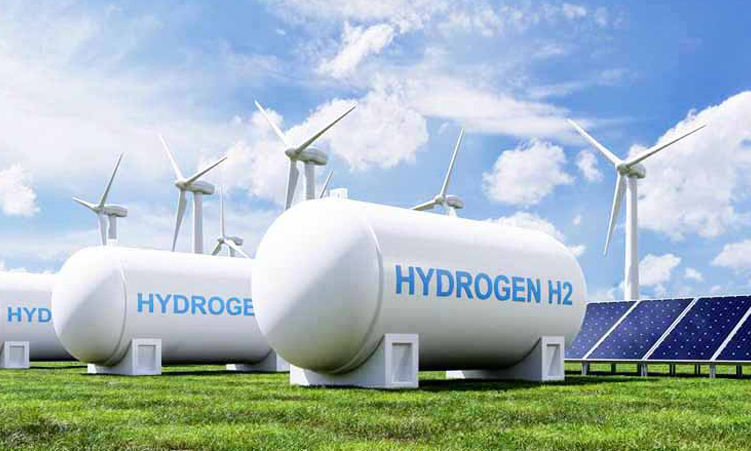
Despite the delays facing large-scale green hydrogen projects, Hyphen Namibia chief executive Marco Raffinetti, in a write up, says the opportunity has not passed.
Raffinetti acknowledges that financing, demand and geopolitical developments have slowed the industry’s progress compared with early expectations.
“The scale-up has been slower than the early hype promised, but the underlying fundamentals that position Namibia as a major emerging supplier remain unchanged,” he says.
Hyphen is developing a proposed large-scale green hydrogen and ammonia project in the Tsau ||Khaeb National Park near Lüderitz.
Raffinetti says Namibia’s strong solar and wind resources could eventually allow it to produce hydrogen at internationally competitive prices as renewable energy and electrolyser technologies become cheaper.
He cites analyst projections that production costs could fall to between US$1.50 (N$24.62) and US$2.30 (N$37.74) per kilogram of hydrogen as projects scale up.
However, the timing of cost parity with fossil fuel-based hydrogen remains uncertain and depends on factors including technology costs, market demand and carbon pricing.
Raffinetti adds that green hydrogen and ammonia could strengthen energy security for Namibia and neighbouring countries that depend on imported fuels.
He says the industry would need government support, financing and long-term buyers to develop at scale, but maintained that these challenges did not invalidate Namibia’s long-term prospects.
“Namibia’s potential has not diminished; the timeline has simply turned out to be longer than first advertised,” he says.