



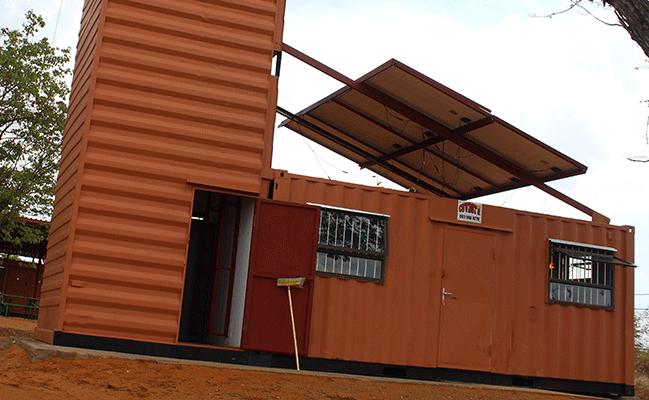
MINISTER of environment Pohamba Shifeta recently inaugurated the Scorpion hill anti-poaching patrol camp at the Etosha National Park.
The patrol camp cost about N$1 million to construct, with co-financing from the Global Environment Facility (GEF) and the UNDP through the protected areas system strengthening (Pass) project as well as contributions by Yahoo Japan.
The camp will enable the deployment of law-enforcement personnel, and will also act as a strategic point of command and coordination of anti-poaching activities.
The minister highlighted anti-poaching because the authorities aim to stop poaching, hence need to act in advance and prevent the crime.
“Yes, poaching is a challenge, and significant resources are needed to fight the scourge. But we will not be able to do everything at once, and we have to take progressive steps towards the implementation and realisation of our anti-poaching strategy,” he noted.
“I would like to inform our part ners that this contribution is highly appreciated, and there is no doubt that it will make a significant impact in the fight against poaching in the Etosha National Park,” Shifeta said.
He added that the illegal hunting of rhinos and elephants can have negative impacts on the populations of these animal species, and may drive these magnificent animals into extinction.
“Rhinos and elephants are arguably the most significant animals and high-value species, both ecologically and economically. I am happy to say that the poaching of rhinos and elephants has been reduced with the strategies we have been putting in place,” he said.
The minister stated that wildlife is the driver of the tourism economy, and tourism has major socio-economic benefits for the country through employment-creation, poverty alleviation, and national development at large.
However, all these benefits are on the brink of collapse, owing to the ongoing poaching, which is a big threat to Namibia, hence the need to stop the ongoing poaching as soon as possible, he reiterated.
Namibia has been a beneficiary of substantial and catalytic investment from the GEF and other development partners whose support has resulted in the expansion and improved management effectiveness of the protected areas system.
The protected areas funding gap remains, though, mostly due to the recent expansion of the protected areas estate and emerging management challenges, especially the poaching of high-value species.
The project was commissioned by Pass with a total allocation of US$4 million (N$50 million).
Shifeta continued: “I have been informed that 70% of the project budget has been spent on law-enforcement and anti-poaching activities, which includes the provision of water for anti-poaching personnel in different forms such as the drilling of boreholes, water tanks and trailers.
“The funds have also been used on the provision of camping equipment, sanitation facilities, communication devices (radio networks and satellite phones), crime investigation equipment in the form of metal detectors, the construction of the anti-poaching training centre at the Waterberg National Park, which I inaugurated earlier this year, and the training of prosecutors and investigating officers, just to mention but a few.”
UNDP resident representative Anita Kiki Gbeho said Etosha is Namibia’s flagship national park and hosts a rich diversity of wildlife, yet it is one of the areas most seriously affected by poaching.
The Etosha National Park,which covers a total surface area of about 2,227 million hectares with a boundary fence of about 850 kilometres, makes activities such as patrolling and anti-poaching operations challenging.
Gbeho announced that the newly-built patrol camp, equipped with a water provision system and a solar power generator, will house game patrol units, rangers and community members who participate in anti-poaching patrol activities.
The improvement in camping facilities will strengthen the ability of patrol teams to prevent further poaching, she added.