NEDBANK Namibia has rolled out a new small and medium enterprises (SME) division to all their branches across the country.
Introduced in July last year, the division aims to empower SMEs by providing them with financial loans so that they can finance their operations and buy stock in order to progress.
The initiative also equips aspiring SME owners with skills, including finance management and marketing, among many other topics.
At the launch for the Erongo Region at Walvis Bay on Thursday, head of SME Banking at Nedbank, Nelson Simasiku said there is now an SME banker in each of their branches in Namibia.
This excludes Kavango West and Omaheke as the bank does not have branches there yet.
Simasiku said the SMEs qualify for a loan of N$100 000 as start-up capital, which is repayable over five or 15 years.
“Our SME offering is firmly aimed at providing services that address more than just banking. Internally, we aligned policy, processes and our service model to ensure that we provide a holistic banking offering that is delivered according to specific business needs,” Nedbank’s managing director, Lionel Mathews, said in a statement read on his behalf.
On his part, Erongo governor Cleophas Mutjavikua said the division will make it easy for the SMEs in the region to access funds and knowledge, and to grow.
He said SME development is a tool to achieve Vision 2030, thus needs serious support.
“Let us be serious as citizens of this country if we want to arrest poverty,” Mutjavikua said.
He said when the bank gives out loans, they should monitor the progress of those who take out the loans.
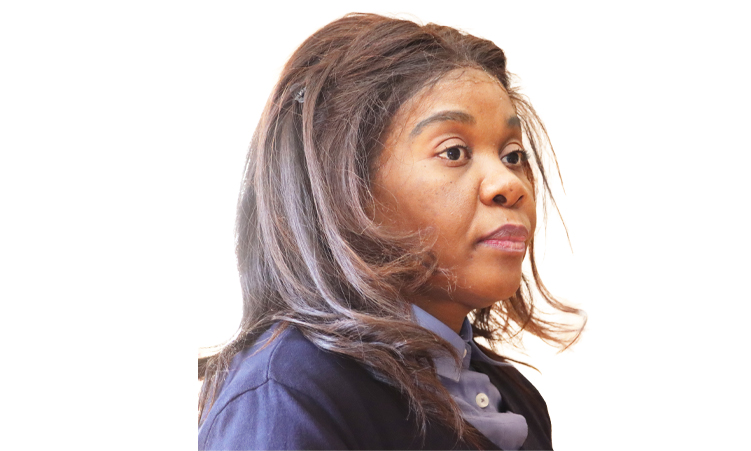
Also speaking at the event was Nedbank SME ambassador, businesswoman Twapewa Kadhikwa, who said SMEs are the backbone of the economy.
She said unlike the government and big companies, SMEs create jobs fast and easily. Empowering them is thus a wise choice.
She also encouraged entrepreneurs to adopt a mindset of seeing opportunities instead of challenges.
Kadhikwa said Namibian business people should build businesses which can be carried on by younger generations so that the economy can remain powerful.
She explained that currently, when an entrepreneur dies, their business also dies. Businesses should instead be passed on so that young people do not have to start from scratch.