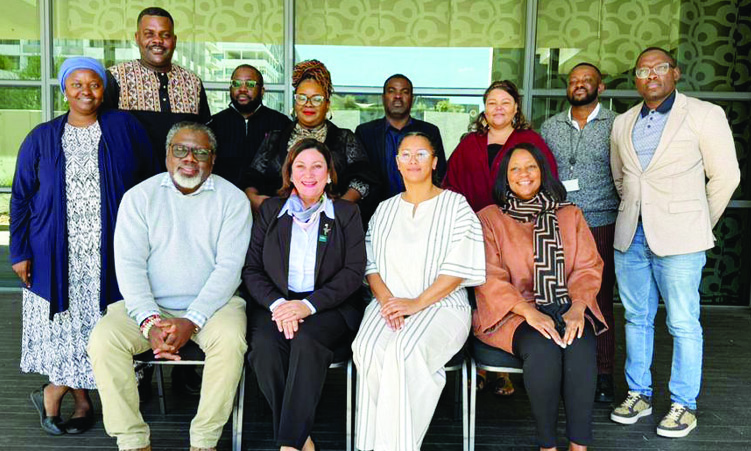





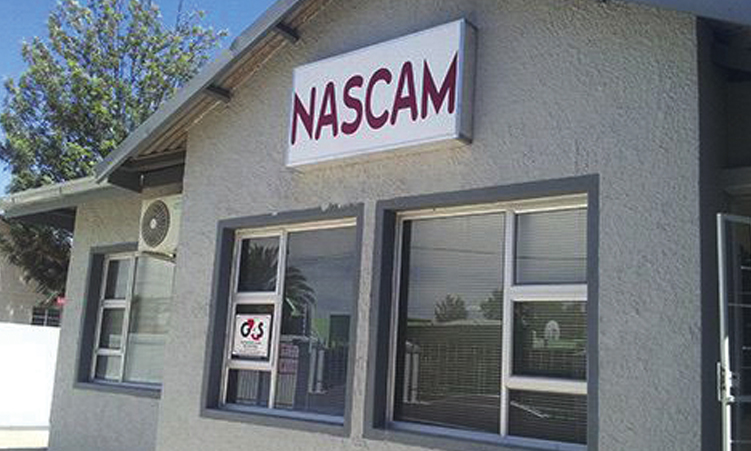
The Namibian Society of Composers and Authors of Music (Nascam) is headed towards its elective annual general meeting (AGM) on 27 June.
This comes amid intensifying internal debates over institutional transparency, digital voting infrastructure and a major leadership overhaul.
The upcoming vote follows a turbulent period for the collective management organisation, which includes the recent termination of its chief executive following an independent disciplinary investigation.
The institution is currently overseen by a 12-month interim board, appointed in August 2025 to stabilise operations and steer constitutional reforms.
Former Nascam board member Mac-Donald Vihanga has issued a call to action, urging Namibian artists to move away from external rumour and directly shape the body’s future governance.
“Nascam belongs to its members. It is not merely an office or a structure reserved for a few individuals in leadership positions,” Vihanga says.
“Every songwriter, composer, publisher, performer and rights holder with an interest in the institution should understand that the AGM is the highest decision-making body under our Constitution, and their presence matters.”
Vihanga emphasises the participation of regional creators, such as Oviritje musicians, who remain heavily reliant on live event licensing and direct royalty tracking for their livelihoods.
He highlights the limitations of the current legislative environment, noting that Namibia’s copyright framework dates back to 1994 and fails to reflect the modern digital economy.
“One of my core ambitions is to contribute meaningfully towards the finalisation and enactment of modern copyright legislation that is fair, relevant and responsive to the realities of the digital age,” Vihanga adds, rejecting allegations that his candidacy is motivated by financial incentives or sitting fees.
Responding to these governance concerns, Nascam interim board chairperson Joseph Ailonga defends the leadership’s 10-month performance record, pointing out that the board successfully met its primary mandate by securing the adoption of a revised constitution on 28 February.
This newly updated framework formally incorporates neighbouring and sound recording rights into Nascam’s mandate.
Addressing administrative changes and the removal of the chief executive, Ailonga clarifies the board’s structural interventions.
“The board has been looking into defective policies and a strategic plan which is conservative regarding collections,” Ailonga says.
“We also managed a critical governance issue regarding the chief executive, who was suspended pending an independent investigation. Following a formal disciplinary process, his contract was terminated.”
Ailonga says a comprehensive review of Nascam’s licensing structures exposed severe underperformance in collection streams, noting that out of 31 statutory tariffs, only 10 are actively generating revenue.
High-performing sectors like broadcasting, retail, live events and hospitality currently carry the institution, while revenue from restaurants, bars and educational institutions remains below 40% of market potential.
To rectify these financial imbalances, the interim board has restructured its budget, establishing a new revenue target of N$14.8 million alongside a separate N$16 million milestone target.
The organisation has also forged a reciprocal agreement with the South African Music Performance Rights Association, granting Nascam administrative mandates over 10 million international works.
Ailonga acknowledges members’ long-standing frustrations regarding the high ratio of administrative operational costs relative to distributed royalties, a common point of friction within the local industry.
“Under standard collective management organisation principles, the benchmark is a 70% allocation for royalty distribution and 30% for administration – a threshold Nascam currently struggles to meet,” Ailonga says.
“Our strategy is to hold operational expenses steady while driving revenue up to the N$16 million mark.”
In line with digital modernisation demands, Ailonga confirms that the board successfully utilised online voting systems during its recent special general meeting and is working to refine these platforms to support secure, secret digital balloting for the upcoming 27 June elective assembly.