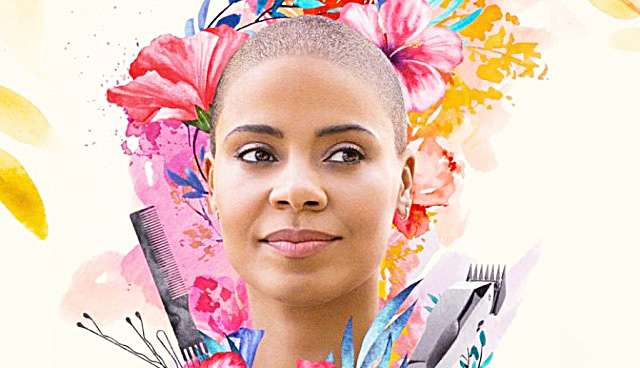
‘;Nappily Ever After’; is the kind of film you decide to root for because it’;s so rare. A black women takes centre stage. She’;s smart, successful and has a complex internal and emotional life and ultimately doesn’;t need a man to lead a happy and fulfilling life.
This is a portrayal we’;d like to see more often and which we can commend citing sheer existence, but the truth is. ‘;Nappily Ever After’; – directed by Haifaa al-Mansour based on the Trisha R Thomas novel of the same name – is a bit of a mess.
Starring an always wonderful Sanaa Lathan as Violet, an equal parts effective and gorgeous advertising executive who thinks her doctor boyfriend (Ricky Whittle) is going to propose on her birthday, the film finds its protagonist unravelling after her gift is more puppy than princess cut.
Having been groomed to strive for perfection, wear her hair straight as a bone while avoiding wetting it like the plague, Violet has grown to be a black woman obsessed with being flawless. Inasmuch as being flawless means meeting traditional standards of beauty and feminine conduct.
Cut to the proposal that wasn’;t and Violet dumps her boyfriend and starts switching up her hair which oddly also changes her personality.
When it’;s blonde, she’;s a party girl and drunken sex kitten. When it’;s light brown, she’;s a little edgier and when it’;s a flat ironed pixie cut, she’;s the demure girlfriend trying to impress her fiancé’;s parents. And naturally, when she shaves it all off, she is free and enlightened with the sound of the clippers akin to “Harriet Tubman calling you to freedom”.
That last bit is from her hotep hairdresser-slash-fling played by Lyriq Bent.
Serving up a problematic equivalence between natural hair and authenticity, freedom, self-confidence and a true sense of self-worth, ‘;Nappily Ever After’; reduces the complexity and spectrum of black womanhood to how we choose to wear our hair.
Though the choice to shave one’;s head can be a pretty big deal whether you are black, brown or white, for black women, our hair is seen as a measure of our self-esteem, appropriateness, employability and our pride.
Completely ignoring the idea that black hair is often used as a form of expression and art, ‘;Nappily Ever After’; is a sometimes condescending and diminishing coming-of-age story that means well but misses the mark.
In an age of information overload, Sunrise is The Namibian’s morning briefing, delivered at 6h00 from Monday to Friday. It offers a curated rundown of the most important stories from the past 24 hours – occasionally with a light, witty touch. It’s an essential way to stay informed. Subscribe and join our newsletter community.

The Namibian uses AI tools to assist with improved quality, accuracy and efficiency, while maintaining editorial oversight and journalistic integrity.
Stay informed with The Namibian – your source for credible journalism. Get in-depth reporting and opinions for
only N$85 a month. Invest in journalism, invest in democracy –
Subscribe Now!