Every year on 3 May, Namibia takes its place among the countries the world points to when it wants evidence that press freedom in Africa is possible.
The rankings confirm it. The rhetoric celebrates it.
And there is genuinely something worth celebrating: a Constitution that makes freedom of expression justiciable and enforceable, courts that have repeatedly rejected executive overreach, no systematic pattern of state violence against journalists, and a civil society that has fought for over a decade to deliver landmark access to information legislation.
These are real achievements, and they should be named as such.
But World Press Freedom Day is not only a moment for celebration. It is, by design, a moment for honest reckoning, and this year that reckoning carries particular weight.
The year 2026 marks the 35th anniversary of the Windhoek Declaration, adopted in this city in May 1991 at a United Nations Educational, Scientific and Cultural Organisation (Unesco)-sponsored seminar of African journalists, which gave World Press Freedom Day its meaning, and last year was inscribed into Unesco’s Memory of the World Register.
Its 30th anniversary produced the Windhoek+30 Declaration, updating those founding principles for the digital age and affirming something of which the significance extends well beyond media policy: that information is a public good, not a commodity, not a privilege, but an entitlement of every person.
For Namibia, these are not abstract anniversaries. The declaration was born here and shaped by journalists who understood from the lived experience of Africa’s liberation struggles what it costs when the press is controlled and what it makes possible when it is free.
To mark this anniversary without an honest account of how Namibia’s own media environment measures up against its principles would be to honour the symbol while evading the substance.
As the rapporteur of the 2026 African Media Barometer (AMB) Namibia report, I am not willing to do that.
The AMB is the continent’s most rigorous home-grown media assessment tool.
Rather than relying on external observers or perception surveys, it convenes panels of in-country experts, including journalists, editors, lawyers, civil society practitioners and academics, who interrogate the evidence indicator by indicator against internationally recognised standards.
The 2026 Namibia report was facilitated by the NMT Media Foundation.
Its value lies precisely in what no global index can provide: an account of how a media system functions from within, not merely how it appears from the outside.
What the 2026 assessment finds is a media environment marked by a deepening gap between law and lived reality.
The recurring finding is not the absence of frameworks. It is the consistent failure to give those frameworks operational force.
The most striking illustration is the Access to Information Act of 2022. After more than three decades without dedicated access to information legislation, the act was passed, signed, and gazetted.
It remains, more than three years later, entirely inoperative, its information commissioner unappointed, its proactive disclosure obligations and fee protections without legal force.
Beneficial ownership information, once publicly accessible, has since been quietly removed from public reach.
The act was treated as an endpoint. It was only ever a beginning, and the principle that information is a public good remains, in practice, unenforceable.
The pattern repeats across the report.
Criminal defamation has not been abolished, and its coexistence with civil liability creates a cumulative chilling effect without requiring active prosecution.
Source protection has no statutory basis, while SIM card registration, mandatory data retention, and the absence of a data protection law create structural conditions for surveillance without independent oversight.
The draft data protection bill of 2021 remains unpromulgated, and Namibia’s cybercrime framework has been in draft since 2013.
Sedition remains part of the retained legal risk environment.
These are not minor gaps. They are structural vulnerabilities that accumulate.
The Namibian Broadcasting Corporation operates without an editorial independence clause, without ring-fenced funding, and outside the Communications Regulatory Authority of Namibia’s regulatory jurisdiction entirely.
Two private groups dominate commercial broadcasting and the daily newspaper market, state advertising is allocated without transparent criteria, and community and indigenous-language media remain structurally fragile.
Investigative reporting is largely absent as an institutionalised practice from mainstream newsrooms, and inside those newsrooms self-censorship is not the exception but a rational response to economic precarity and the absence of consistent protection for those who challenge power.
None of this erases what Namibia has built: There are no internet shutdowns, journalists are not routinely arrested, and courts have affirmed press freedom in landmark rulings.
But the AMB does not grade on a regional curve.
It measures Namibia against the standards set by the 2019 Declaration of Principles on Freedom of Expression and Access to Information in Africa of the African Commission on Human and Peoples’ Rights – an instrument that shares with the Windhoek Declaration a common normative commitment to a free, independent and pluralistic media environment.
Measured against those standards, the form of media freedom in Namibia is more secure than its substance.
Thirty-five years on from Windhoek, and with that declaration now inscribed into the memory of the world, the question this anniversary demands is not whether Namibia has a press freedom story to tell. It does.
The question is whether it has the political will to make that story true all the way down – in its newsrooms, in its regulatory institutions, in its public broadcaster, and in the daily experience of every citizen for whom information is not yet the public good it was declared to be.
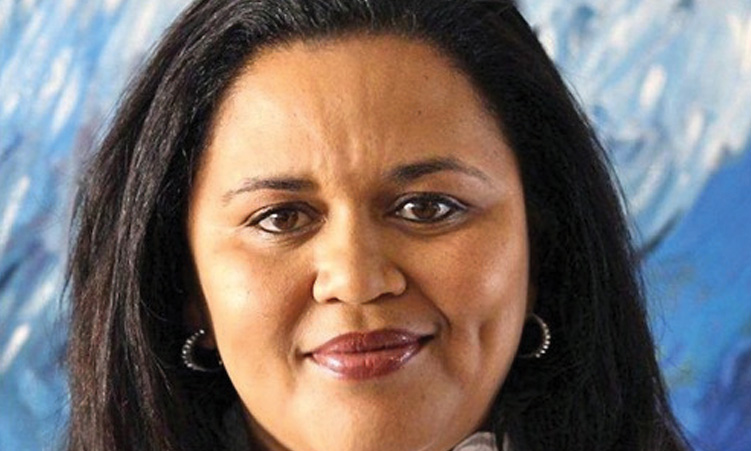
- Zoé Titus is the executive director of the NMT Media Foundation and served as rapporteur for the 2026 African Media Barometer Namibia report, facilitated by the foundation and implemented across the continent by the Media Institute of Southern Africa and DW Akademie.