





“A critical, independent and investigative press is the lifeblood of any democracy.” – Nelson Mandela
The African Commission on Human and Peoples’ Rights, through its special mechanism freedom of expression and access to information in Africa, joins the international community in commemorating World Press Freedom Day, which is celebrated annually on 3 May.
This important commemorative day was proclaimed by the United Nations General Assembly in December 1993, marking the date of the adoption of the Declaration of Windhoek – a milestone document which was adopted during a Seminar on ‘Promoting an Independent and Pluralistic African Press’.
The Declaration of Windhoek established a number of key principles in relation to the freedom of the press, including that “the establishment, maintenance and fostering of an independent, pluralistic and free press is essential to the development and maintenance of democracy in a nation, and for economic development”.
Freedom of expression is indispensable for freedom from tyranny, is the foundation to freedom for justice, democracy and sustainable development.
Without freedom of expression, we would not know who is funding the devastating wars that are raging on the continent, nor the extent of displaced civilians and refugees, or the pilferage and theft of resources on the continent by a number of actors, with international accomplices.
These principles were also buttressed in Resolution ACHPR/Res.54 (XXIX) 01 on freedom of expression in which the commission recognised that “freedom of expression in an essential attribute of human existence in all spheres of life and that there is now widespread international recognition of the cardinal role of freedom of expression in human progress”.
Despite gains, however, press freedom is increasingly threatened worldwide.
In the United Nations Educational, Scientific and Cultural Organisation’s 2025 World Trends Report on Freedom of Expression and Media Development it was observed that “the global freedom of expression index has dropped by 10% since 2012”.
There are a number of factors worldwide which have had a negative impact on press freedom, including legal restrictions, such as laws which curtail the work of the media, strategic lawsuits against public participation which have the effect of silencing or intimidating journalists, a broad range physical attacks, arbitrary arrests and detention, in addition to digital attacks which are becoming an increasingly prevalent trend of attacks against the media, including harassment, doxxing, and disinformation campaigns, among others.
Another rising concern is the use of internet and social media shutdowns to curtail press freedom. As noted by Befeqadu Hailu, an Ethiopian journalist and a member of the Zone 9 blogger collective: “The internet for journalism is now like the air you breathe […] Without the internet, modern journalism means nothing.”
Whereas internet and social media shutdowns have a detrimental effect on human rights for the population, they strike at the very core of press freedom.
SHUTDOWNS DURING UNREST
Internet and social media shutdowns are increasingly being used during periods of unrest and protest, during national examinations and often during electoral cycles. One justification which is often used is the protection of national security.
However, internet disruptions not only affect journalists, media workers and media operations from providing verified information and news, they also severely impact the provision of public information to the people.
Internet shutdowns have serious consequences for journalistic work given that lack of access to the internet impacts the ability to access information, in addition to impeding the means through which information is conveyed.
This situation is magnified in situations of armed conflict where the internet and social media become an increasingly indispensable communication tool.
In this regard it is important to refer to the principles articulated in the Declaration of Principles on Freedom of Expression and Access to Information in Africa which was adopted by the Commission in 2019 to give effect to Article 9 of the African Charter on Human and Peoples’ Rights.
Specifically, Principle 38 on non-interference provides that: “States shall not interfere with the right of individuals to seek, receive and impart information through any means of communication and digital technologies, through measures such as the removal, blocking or filtering of content, unless such interference is justifiable and compatible with international human rights law and standards.”
The declaration goes on to highlight that: “States shall not engage in or condone any disruption of access to the internet and other digital technologies for segments of the public or an entire population.”
CALL TO RECOMMIT
As we commemorate World Press Freedom Day, the commission calls on states in Africa to recommit to the principles on the right of access to information and the right to express oneself, which are both crucially important as a whole, and specifically for journalistic work.
Key in the fulfilment of these rights, particularly during the digital age, is unrestricted access to the internet at all times, but particularly before, during and after elections.
Brute force and blanket internet shutdowns must give way to the free flow of dialogue, to ensure peace.
Another pressing issue affecting press freedom is that of information integrity. Information integrity, which is the accuracy, consistency and reliability of information, is increasingly under threat as a result of misinformation and disinformation.
In response to this, the commission adopted the following resolutions: Resolution 620 on promoting and harnessing data access as a tool for advancing human rights and sustainable development in the digital age on the right to access data; Resolution 630 on developing guidelines to assist states to monitor technology companies in respect of their duty to maintain information integrity through independent fact checking.
Noted was the recent regress by technology companies with regard to information integrity and online protection of expression, access to information, and commitment to work with state parties to inform the efforts to advance information integrity online, including the role of independent fact-checking in the African context; and Resolution 631 on working towards the assessment of public interest content in this digital era and developing guidelines to ensure a public interest element for all platforms operating in Africa on the accountability of digital platforms to human rights on the continent.
In addition, next year, the commission will start the work of reviewing the model law on access to information for Africa, to make it fit for purpose in an age where control of the digital infrastructure is the key to power.
PERSECUTION AND PROSECUTION
As the world celebrates World Press Freedom Day, this provides an opportunity to highlight the situation of journalists in detention.
While there have been numerous reported cases which can be highlighted, including that of Sandra Muhooza, who was provisionally released in March after two years in prison, the commission notes with deep concern that 2026 marks the 25th anniversary of the arrest of 18 journalists in Eritrea, who were arrested between 21 and 23 September 2001.
These 18 journalists, who are listed by name in the Communication 275/03: Article 19 v. Eritrea, were arrested, not charged nor tried before the national courts, and were held in incommunicado detention.
The persecution and prosecution of people who are criticising governments should cease.
Platforms should protect their users from the misogynistic intimidation of trolls and must introduce age-appropriate design for children, in line with what they are doing in other parts of the world.
In addition, the commission, through the special rapporteur on freedom of expression and access to information in Africa, calls on states to uphold the fundamental principles on press freedom in Africa.
The commission takes this opportunity to commend all journalists who assiduously speak truth to power, often in difficult situations.
The commission reaffirms “the key role of the media and other means of communication in ensuring full respect for the right to freedom of expression, promoting the free flow of information and ideas, assisting individuals in making informed decisions and facilitating and strengthening democracy,” as stated in the Declaration of Principles on Freedom of Expression and Access to Information in Africa.
Let us, on this occasion, come together as a continent to affirm our birthright to be in charge of our destiny and, to that end, to advance with respect and realisation of our right to freedom of expression as set out in the African Charter.
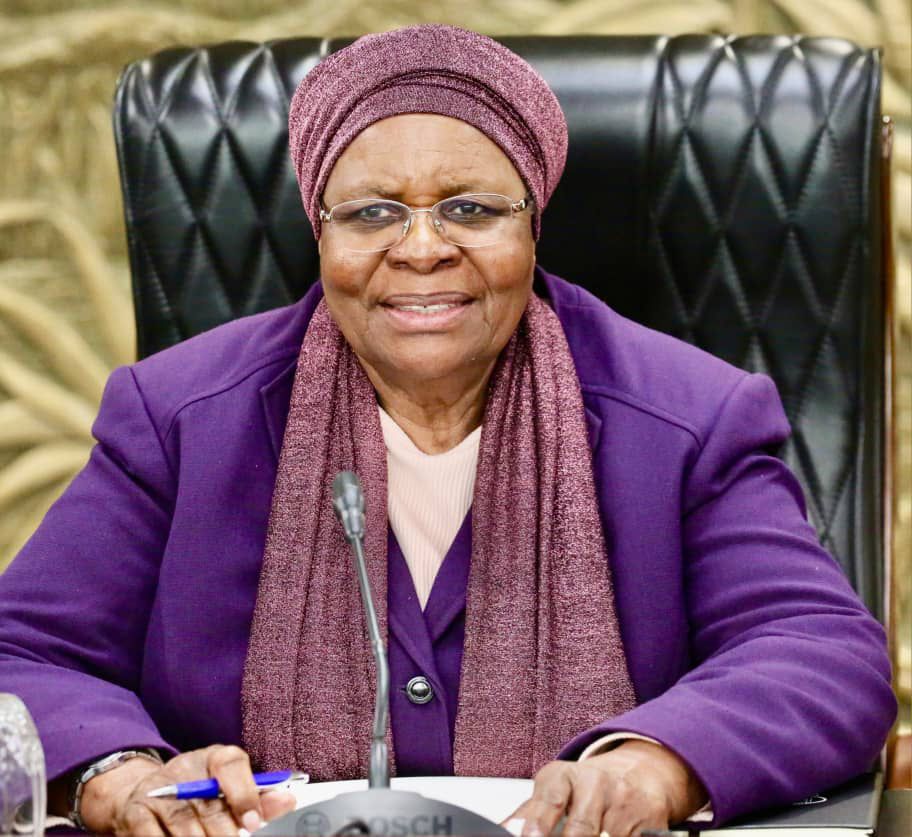
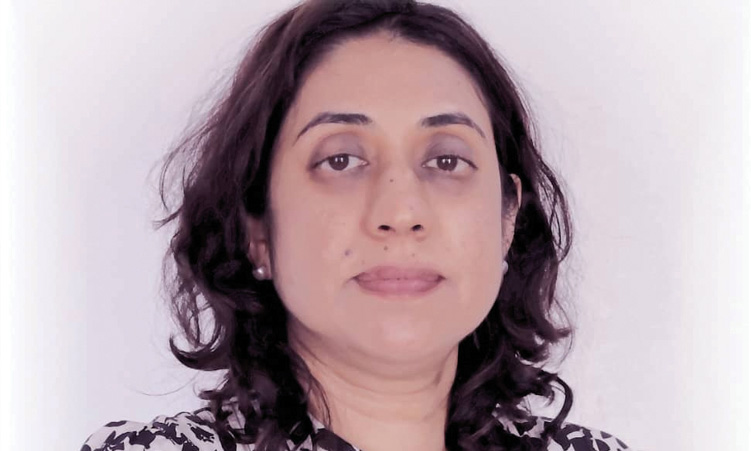
- Ourveena Topsy-Sonoo is the special rapporteur on freedom of expression and access to information in Africa.