



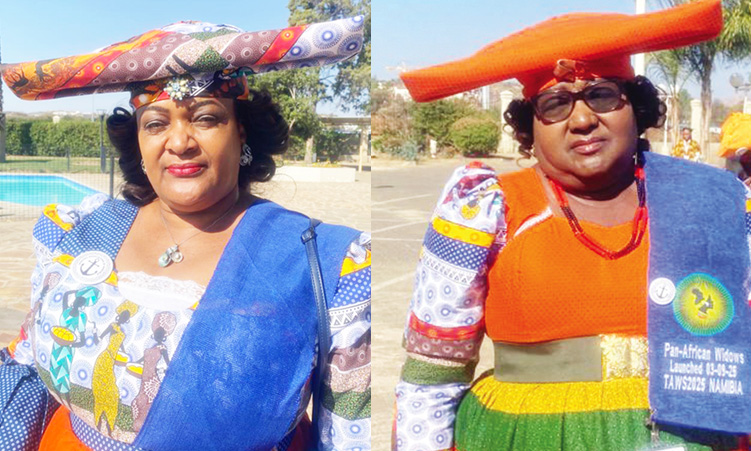
When her husband of 13 years died of Covid-19 on 30 June 2021, Verivi Kahuure-Katjiuanjo never imagined she would lose her marital home of 21 years only a week after his death.
Kahuure-Katjiuanjo and her husband were married traditionally.
A week after her husband died, his family started fighting for her property.
The judiciary system did not rule in her favour as they were only married traditionally.
“The system rules that when two people are married traditionally, the wife gets the same share as the children,” she told The Namibian.
“Sometimes, the children are the ones deciding on how much the widows get. It is not right. The law needs to change in favour of widows,” she says.
Her house and cars were sold.
“Emotionally, you are drained. But I try to stay strong for my children,” she says.
Inheritance laws in Namibia differ for marriages in community of property versus those out of community of property, with the existence of children or other direct descendants significantly affecting the distribution.
While laws such as the Communal Land Reform Act of 2002 were designed to protect widows’ rights to land, they continue to face harsh realities.
Former first lady Penehupifo Pohamba has in the past called on traditional leaders and law enforcement agencies to ensure women and orphans no longer fall prey to property and land grabbing.
At the time, a study by the Food and Agriculture Organisation in Namibia found that around 44% of widows and orphans had lost cattle, which represent both wealth and status, while 28% had lost livestock and 41% had been forced to part with farm equipment.
Sylvia Hambeka is one such statistic.
She and her husband were married for 46 years before he succumbed to Covid-19 in 2021. On Saturday, she will be celebrating her 70th birthday.
“Two weeks after we buried him, the in-laws took the cattle while I was in Windhoek,” Hambeka says.
She says over the years, she and her husband had amassed 161 cattle, but she has since lost more than 37.
She says she has reached out to the traditional authority and the court for help, and the family was given a restriction order of three years.
“I have been at peace since the restriction order. It was emotional and I could not sleep,” she says.
Similarly, Ripanga Muundjua and her husband were married for 44 years before he died of Covid-19 in 2021.
Soon after his death, her in-laws fought over the land she shared with her husband.
She says she now lives in fear of them.
“They want to take away the land me and my husband built up together. I also put in some money as a partner; it is not just my husband’s land,” she says.
The widow has asked for help from the High Court and was granted a restraining order in 2021, which lapses this month.
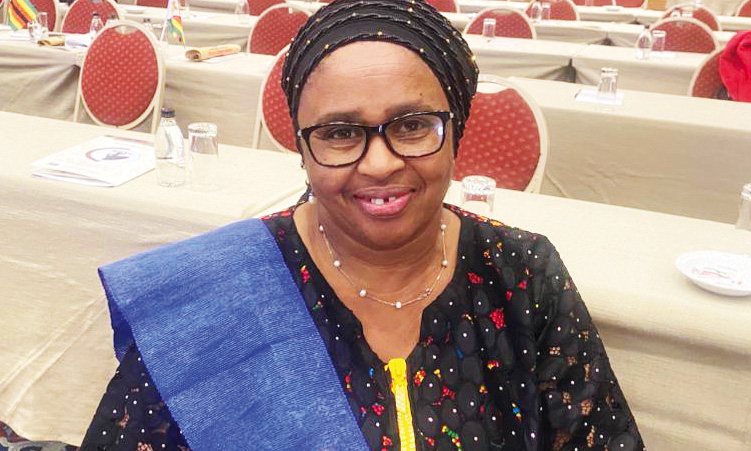
She says initiatives such as the widow summit help in addressing societal issues and widows claiming their rights after the deaths of their spouses.
African Widows Summit country representative Janet Kuhanga told The Namibian current laws are not doing enough to protect widows.
She says widows are losing too much even with the laws in existence.
“The challenges are many. The estate administration process is cumbersome and it strips widows of their assets instead of securing them,” she says.
She says the law is sometimes challenged when the spouses do not leave wills behind, making it difficult to allocate the benefits fairly and equally.
“If you are a widow who has lived in a house for decades, the law still demands that all heirs, even children in their 50s or 60s, must claim their share,” she says.
However, lawyer Norman Tjombe argues that while laws protecting widows exist, their implementation may not be good enough.
“For instance, look at this woman in the north who was fighting her husband’s family. There the law protected the widow.
It’s not the law that’s the problem. It’s maybe the chief or the headman or the family of her husband. We have a law against rape, but does it stop rapists?”
The Oshakati High Court recently ordered that Windhoek City Police deputy chief Eliaser Iiyambo return land and property taken from Aili Iilende, a widow in the Ongandjera communal area.
The brothers were accused of evicting Iilende from her matrimonial home at Olundjinda and a farming unit at Etunda shortly after the death of her husband, Daniel Uutoni, in 2019.
Ongandjera traditional authority spokesperson Shiimi Shangula told The Namibian the rightful people to inherit assets are the wife and children of the deceased.
He says the extended family does not have the right to the properties.
Shangula says the authority can only intervene in land inheritance issues.
“Issues of cattle, houses and cars are handled by the police alone,” he says.
He adds that the traditional authority’s position in inheritance cases is to observe and advise.
“The traditional authority only advises on the procedures of land allocation and not on property allocation,” he says.
The traditional authority leads in the presence of both the widow and family of the spouse.
He calls for formal training for traditional leaders on gender equality and human rights for them to be aware of the customary and common laws.
Meanwhile, deputy minister of gender equality and social welfare Linda Mbwale says widowhood is often viewed as a social sentence rather than a personal loss, adding that many widows face stigma in society.
She emphasises the need for spaces where policy culture can rewrite this narrative to create a supportive environment for widows.