






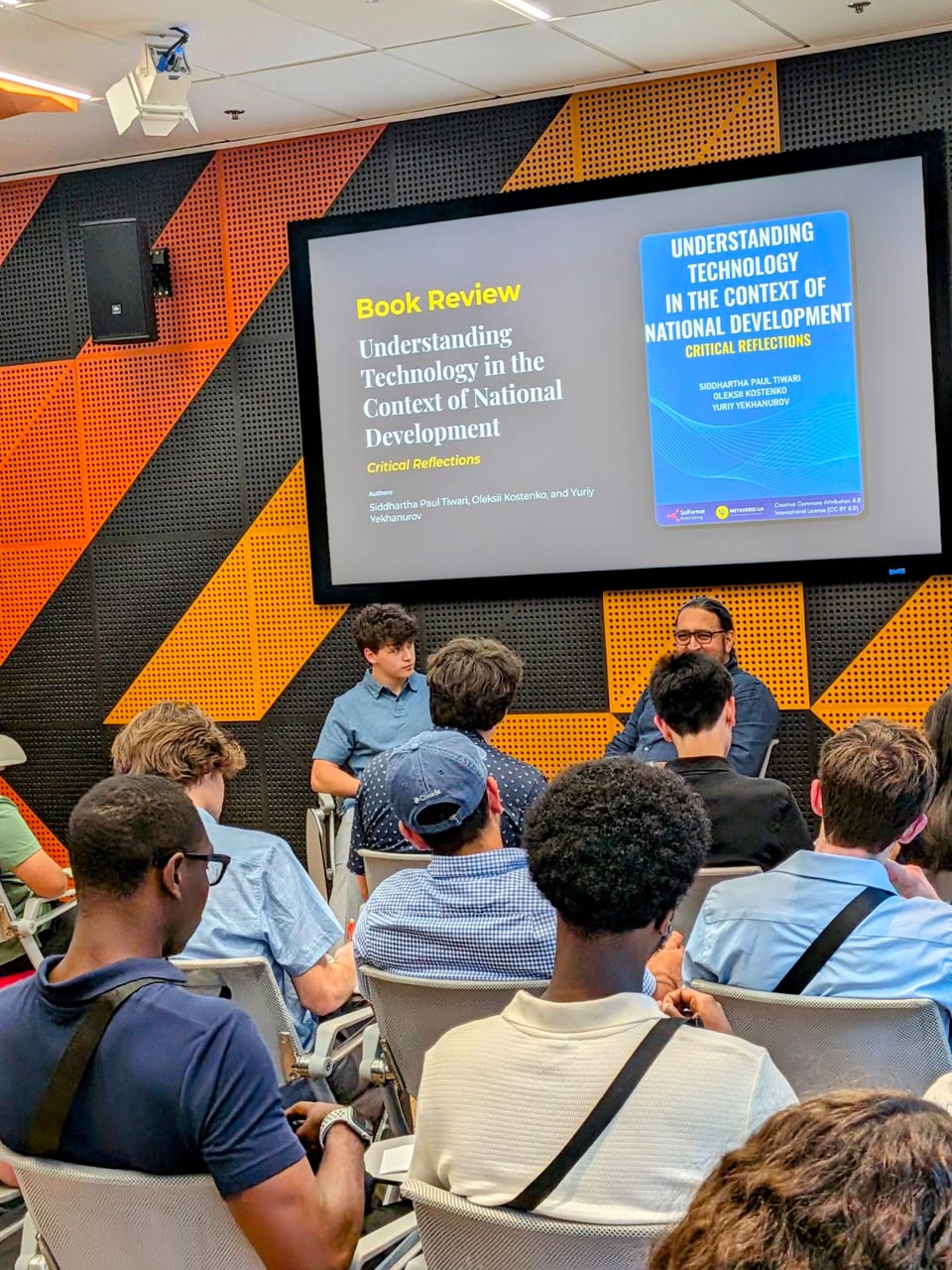
Namibian universities, researchers and government agencies should strengthen local expertise in satellite data, crop monitoring and digital mapping to reduce long-term dependence on foreign technology providers, according to author Siddhartha Tiwari.
Tiwari, an academic, technologist and researcher, is one of the authors of ‘Understanding Technology in the Context of National Development: Critical Reflections’, which examines how technology can support development while creating new challenges for countries.
He argues that governments should look beyond the cost and performance of technology when making procurement decisions, paying greater attention to skills, ownership, data and long-term dependence.
“Namibian universities, researchers and government agencies could build stronger skills in satellite data, crop monitoring and digital mapping. Foreign companies could still play an important role. But local institutions would be in a better position to judge what they were buying and how it should be used,” he says.
The issue has gained relevance in Namibia following the government’s cancellation of a $2.4 million agreement with United States agricultural technology company 6th Grain Corporation.
The project was expected to use satellite imagery, geospatial analysis and other digital tools to monitor crops including maize, millet, sorghum and wheat.
Tiwari says the potential benefits of such technology were clear, particularly for agricultural planning and food security.
“Better information can help a country understand what is happening on its farms. It can improve crop estimates and support drought planning. It can also help the government respond earlier when food production is under pressure,” he says.
However, he says the controversy surrounding the agreement reflects a broader concern raised in the book: countries can acquire advanced technology without developing the capacity to manage it independently.
“A country can buy an advanced system and still remain dependent on the company that supplied it. It can collect large amounts of data but lack the people needed to analyse it. It can own the equipment while having little control over the knowledge behind it,” Tiwari says.
The book argues that technology investments should contribute not only to solving immediate problems but also to building local skills and knowledge.
Agricultural data, for example, can help track cultivated land, anticipate possible shortages and support decisions involving food, water and investment.
The authors do not argue that countries should reject foreign technology. International companies can provide specialist knowledge and solutions that local institutions may not yet have the capacity to develop.
Instead, the book raises questions about what remains in a country after a technology contract ends.
Tiwari says governments should consider whether local specialists are trained to operate systems, whether agencies can access and analyse data independently, and whether projects can continue if the original supplier withdraws.
The review argues that these considerations are particularly important for government procurement, where price must be weighed against maintenance, security, training and data access.
While Namibia cannot realistically develop every technology domestically, the challenge is identifying areas where building local expertise is strategically important.
Agriculture is one such area, given the role of reliable information in planning for production and drought.
The book’s central argument is that technological development should not be measured only by what a country can purchase, but also by what its institutions and citizens can understand, manage and improve.