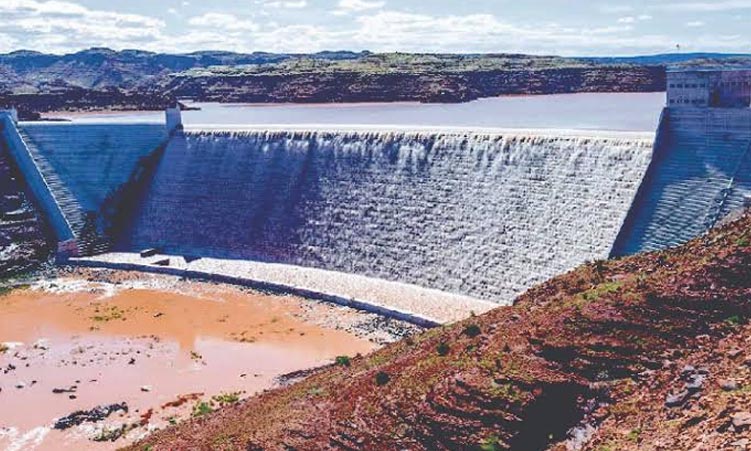
Keetmanshoop and ||Kharas leaders have questioned the progress of the Neckartal Dam, saying the project was expected to unlock agricultural opportunities, strengthen water security and stimulate economic development in the south.
Keetmanshoop mayor Emrico Blaauw says the municipality is looking forward to water from the Neckartal Dam becoming available to strengthen water security at the town and the wider ||Kharas region.
Keetmanshoop currently receives its water supply from NamWater, while the municipality also maintains backup reservoirs to cushion the town during supply interruptions.
However, Blaauw says the existing reservoirs are not sufficient to meet the full demand of a growing town.
He says the municipality is also exploring other water sources, as population growth and future economic development places increasing pressure on existing infrastructure.
In 2025, the municipality and the University of Namibia’s Southern Campus signed an agreement to investigate underground water resources in and around Keetmanshoop.
Blaauw says the study is expected to determine the availability, sustainability and quality of groundwater resources, which could play an important role in future urban agriculture and other water-dependent economic activities.
“The council does have backup water reservoirs, which provide an important buffer during interruptions in supply. However, these reservoirs currently cannot meet the full demand of the growing town,” he says.

This makes investment in additional water sources, storage capacity and sustainable water-management systems increasingly important, he says.
Beyond water security, Blaauw says the Neckartal Dam is expected to play a broader role in agricultural development in the region.
However, he indicates that further development around the dam has been slowed by administrative processes, including land-related matters.
Blaauw says information presented during a community meeting indicated that authorities were still dealing with negotiations involving landowners around the dam.
“What we heard the last time we had a community meeting, we were told that they are now negotiating with the owners around the dam to buy the land,” he says.
Once those processes are completed, agricultural projects such as vineyards could begin taking shape around the dam.
“After that process is finished, maybe then only we will see the erection of vineyards and all the things that come next to an agricultural dam,” Blaauw says.
At regional level, ||Kharas Regional Council chairperson Gerrit Witbooi says communities must be kept informed about developments regarding the Neckartal Dam.
Witbooi says regional leaders had already facilitated engagements between the government and communities over the project.
“We are not against development, but we want to be included for the sake of our communities,” he says.
Community advocate Gert Titus, however, warns that the success of Neckartal should not be measured only by the economic activity created during its construction.
Titus says the construction phase generated jobs and increased spending at Keetmanshoop and surrounding areas, but he wants to know how much permanent economic development remains once construction activity slowed.
“You know what the Neckartal project did? It brought economic activity. It did not bring economic development,” Titus says.
– This publication was produced with the financial support of the European Union. Its contents are the sole responsibility of The Eco Dialogue Collective consortium partners (DW Akademie, NMT Media Foundation, the Institute for Public Policy Research, and the Legal Assistance Centre) and do not necessarily reflect the views of the European Union.