



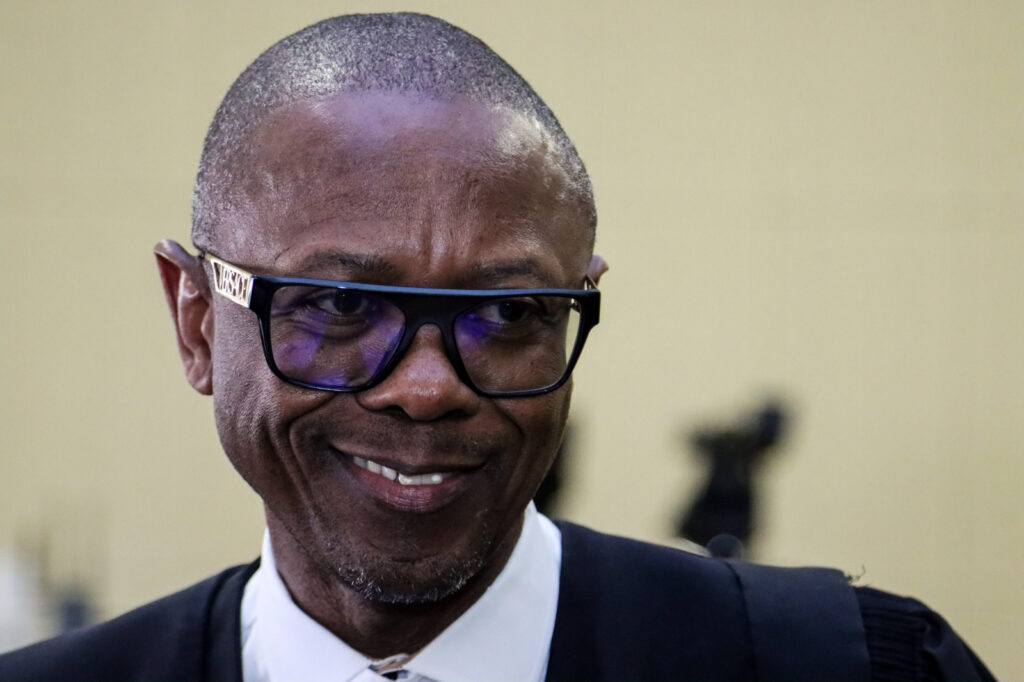
Fake news masquerading as free speech must be abolished by society, lawyer Sisa Namandje says.
Speaking at a public lecture at the International University of Management’s Ongwediva campus on Friday, he called on Namibians to reject the growing culture of misinformation, gossip and the deliberate abuse of social media.
Namandje acknowledged that freedom of thought and expression remains indispensable to the discovery and dissemination of political truth in a democratic society.
However, he said such freedoms must be exercised responsibly and balanced against other fundamental rights, including the protection of human dignity and privacy.
“Fake news styled as free speech must just be anathema to all of us.
We must, as a nation, abhor it,” Namandje said.
He said freedom of expression is an essential component of political hygiene and a normative value necessary for the development and preservation of a democratic culture.
Suppressing legitimate expression can breed repression, while repression can in turn generate resentment and hatred, ultimately threatening social stability, he said.
The challenge, he said, is, therefore, to strike an appropriate balance between the fundamental right to express views freely on matters of national interest and the obligation to respect the rights and dignity of others.
Namandje warned that some individuals deliberately exploit constitutional freedoms to manufacture and disseminate false information while simultaneously violating, challenging and attacking the dignity of other people.
He drew attention to the distinction between the constitutional protection of human dignity and the fundamental freedoms contained in Chapter 3 of the Constitution.
He argued that dignity, protected under Article 8, should not be treated in the same way as the fundamental freedoms under Article 21, which are expressly subject to limitations.
“The arrival of social media provided an opportunity for robust exchange of ideas for the good of our people,” Namandje said.
However, he said the speed and reach of social media had also created fertile ground for what he described as “gossip and fake news entrepreneurs”, individuals who continuously harvest and spread unverified or false information about others.
Namandje said these individuals were not necessarily motivated by principles of public interest or constructive democratic debate, but in some cases by a desire for power and control over others.
He further accused some people of using vulgar language, inflammatory rhetoric and even calls associated with violence as tools to demean, marginalise and undermine the dignity of others.
The problem, he said, extends beyond reputational harm.
Social media users can also violate the right to privacy by intruding into the personal lives of others and spreading information that has no legitimate public-interest justification.
“These gossip entrepreneurs work day and night with a great measure of industry to harvest and spread toxic gossip and fake news,” he said.
Namandje warned that the consequences of such behaviour should not be underestimated.
Speaking at the same event, lawyer Kadhila Amoomo said the right to dignity is one of the most important rights in the Namibian Constitution.
“Without dignity, you are unable to enjoy your life. Without dignity, all other rights in the Namibian Constitution are meaningless, which is why our right is so sacrosanct,” he said.