




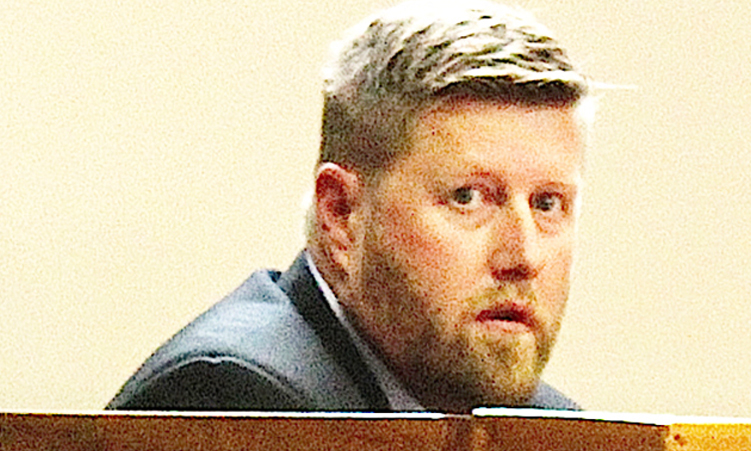
The precedent-setting murder convictions and sentence of a driver who was involved in a fatal road collision near Henties Bay at the end of 2014 will remain in place, after the Supreme Court decided not to hear an appeal on the matter.
In an order issued by the Supreme Court last week, deputy chief justice Petrus Damaseb and acting judges of appeal Dave Smuts and Theo Frank refused a petition in which the driver Jandré Dippenaar asked the court to allow him to appeal against his convictions and sentence.
A first appeal by Dippenaar (43) against his convictions and sentences was dismissed in the High Court in December last year.
Dippenaar was sentenced to an affective prison term of 15 years on six counts of murder at the end of his trial in the Swakopmund Regional Court in August 2024.
He was the driver of a vehicle that was involved in a horror collision that claimed the lives of six people, including three members of a German family that was visiting Namibia, near Henties Bay on 29 December 2014.
Dippenaar’s case was the first in Namibia’s legal history in which a road accident led to a prosecution and conviction on murder charges, rather than on a count of culpable homicide.
In their judgement on Dippenaar’s appeal against his convictions and sentence, High Court judges Naomi Shivute and Philanda Christiaan found that the evidence in Dippenaar’s trial showed he was driving in a dangerous manner on the day of the fatal collision.
Shivute, who wrote the appeal judgement, said the trial court correctly found that Dippenaar subjectively foresaw the death of the passengers in the vehicle he was driving and of other road users when he overtook another vehicle on a rise in the road between Swakopmund and Henties Bay and crashed into an oncoming vehicle in which a family of German citizens was travelling.
Three members of the German family and three passengers in the car Dippenaar was driving were killed in the collision.
Shivute remarked in the appeal judgement: “The evidence shows that the way he drove that day alarmed other road users to the point that they felt compelled to report him to the police.
Even after being warned to drive responsibly, the appellant [Dippenaar] did not stop. He foresaw the consequences of his dangerous driving, factored them into the bargain, and proceeded regardless.”
Shivute also said: “Although there is no evidence that he was suicidal, there can be no doubt that, given the dangerous way he drove that day and the fact that he was warned by the police of his dangerous driving that could be harmful to other road users and himself, he must have been indifferent as to whether he would live or die.
He had taken his possible death into the bargain.”
Shivute, with Christiaan agreeing, concluded that the trial court’s verdict that Dippenaar was guilty of murder committed without a direct intention to kill was appropriate.