





THE Namibia Integrated Landscape Approach for Enhancing Livelihoods and Environmental Governance (Nilaleg) project, which was launched last Friday, will receive N$161 million from the Global Environment Facility.
This was said by environment minister Pohamba Shifeta during the project launch in Windhoek. He said the project was conceived during the Harambee Prosperity Plan period.
“Testimony to our commitment to have a positive impact on the livelihoods of our people is that the majority of the funding for this project will be allocated to initiatives and interventions that support on-the-ground actions.
“This will include support to the restoration of degraded land, support to agro-forestry and sustainable crop and rangeland management as well as nature-based enterprise development,” Shifeta said.
He detailed that the project has three focus areas – the improvement of environmental governance, sustainable management of the country’s natural resources and the enhancement of livelihoods to aid the eradication of poverty in rural areas through nature-based enterprises.
Shifeta said the project will directly support five sites in the Omusati, Ohangwena, Kavango West, Zambezi and Kunene regions.
“At these sites, the project will seek to achieve a significant reduction in deforestation, while enhancing agricultural productivity, biodiversity conservation, sustainable management of natural resources and the income of small-scale food producers living in these landscapes,” he said.
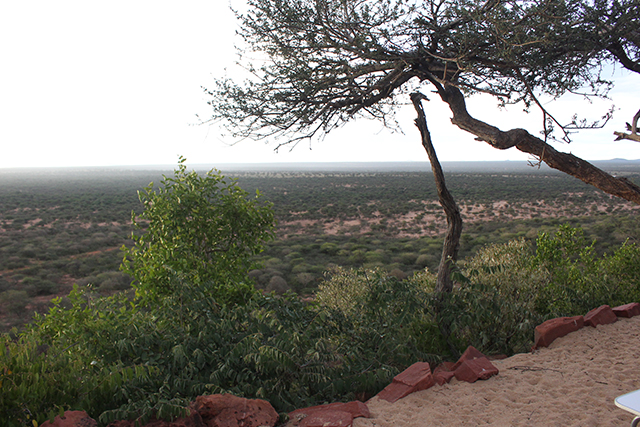
The minister explained that the project will aid in preventing and reversing land degradation in these pilot landscapes which are considered hotspot areas and extremely vulnerable to land degradation.
“Specifically, the project targets that at least 10 000 hectares of woodland and savannah are restored; 3 000 hectares are better managed in community forests; 15 000 hectares are placed under new sustainable crop/rangeland management or agro-forestry and 10 000 hectares are prevented from biodiversity loss through the establishment of regional forest reserves,” he noted.
Shifeta further said one of the project’s main priorities is to assist and empower people and communities in these hotspots and around the country.
“Coordination structures will be established at the landscape level to ensure that at least 20 000 people across the five focal landscapes [sites] benefit directly from the project’s interventions.
“The project will enhance access to financial and technical assistance for communities from across the country so that they are able to scale up the integrated landscape management approach and sustainable nature-based enterprises,” he said.
According to Shifeta, at least 50% of the project beneficiaries will be women.
At the same event, Nilaleg national project manager Jonas Nghishidi, said one of the challenges of integrated landscape management is to link agricultural practices, institutions and policies with other landscape-scale activities.
Nghishidi explained that the project presents a basic framework for balancing competing demands and integrating policies for multiple land uses within a given area.
The Ministry of Environment, Forestry and Tourism, the Environmental Investment Fund (EIF) and the University of Namibia will be working in collaboration to implement the project, which has a duration of five years. They will be working in partnership with the United Nations Development Programme (UNDP).