





NAMIBIA has partnered with the Food and Agriculture Organisation, and made available N$10 million for the agriculture input scheme to address the effects of the devastating drought.
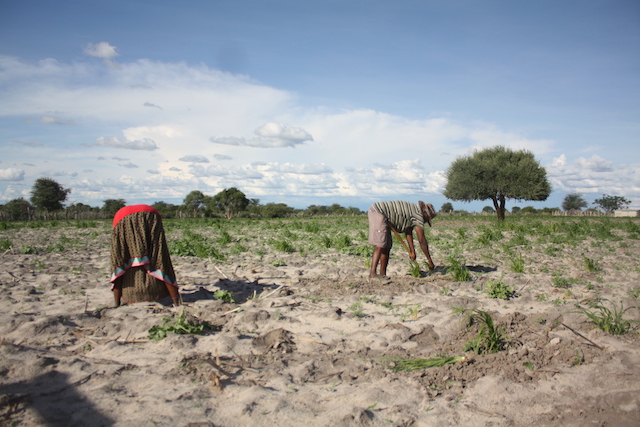
The programme is expected to run for the next six months, and will tackle challenges faced by farmers in Namibia’s seven regions, who have lost crops and livestock as a result of the extreme drought conditions.
Agriculture executive director Percy Misika said yesterday at the launch of the funds that the initiative would create other alternative agricultural projects for farmers including hydroponics fodder production, irrigation and so forth.
Misika said Namibia is one of the countries that have been hit hard by climate change in the southern African region, and Namibian farmers are the most affected.
“Urgent remedies are needed to avert the problems inflicted on the farmers by the drought,” he said, adding that the initiative would also include the provision of veterinary services to farmers who are into animal husbandry.
According to the executive director, agricultural investments are vital in shielding farms from more losses as a result of the drought.
The agriculture organisation also mentioned that they are looking forward to working with farmers. The project would include the Namibian National Farmers Union (NNFU) and Namibia Emerging Commercial Farmers’ Union (NECFU).
According to FAO country representative Farayi Zimudzi, the project funded by the United Nations Central Emergency Response Fund (CERF), aims to reach a total of 3 250 households (approximately 14 300 people) affected by the drought during the 2018/2019 agricultural season.
“Initially, when the project was formulated in late December 2019, it was meant to target five regions – Ohangwena, Omusati, Kunene, Hardap and Omaheke. However, based on the fact that there are areas where the rains have still not come as expected, Erongo and //Kharas regions were also included.
“The project focuses on providing life-saving support for livestock owned by the project beneficiaries – aiming to provide feed produced from the non-mechanised hydroponic fodder production systems, and provide essential veterinary support to the targeted households,” she said.
The country representative noted that this support comes after other similar support in 2019 valued at around N$9 million, to provide hay, multi-nutrient blocks and the rehabilitation of boreholes and traditional wells in Kunene, Omusati, Erongo and Omaheke regions.
FAO’s other forms of support provided in response to the drought was training on livestock in emergencies guidelines which targeted extension staff from the agriculture ministry.
Zimudzi noted that the FAO support builds the continued support by the Namibian government since the declaration of the drought emergency last May.
She said: “While the project focuses on providing emergency life-saving support over a very short duration, there is no escaping the fact that climate change is taking a toll on agriculture in the country – especially smallholder agriculture that is so dependent on rainfall.
“In the light of this, there is a need to step up resilience building measures that buttress smallholder farmers’ shock-absorbing capacity through a whole suite of measures: be they improved water harvesting, in-field water harvesting techniques to improve soil moisture retention, use of drought-tolerant crop varieties, fodder production, to name a few,” she added.
– charmaine@namibian.com.na