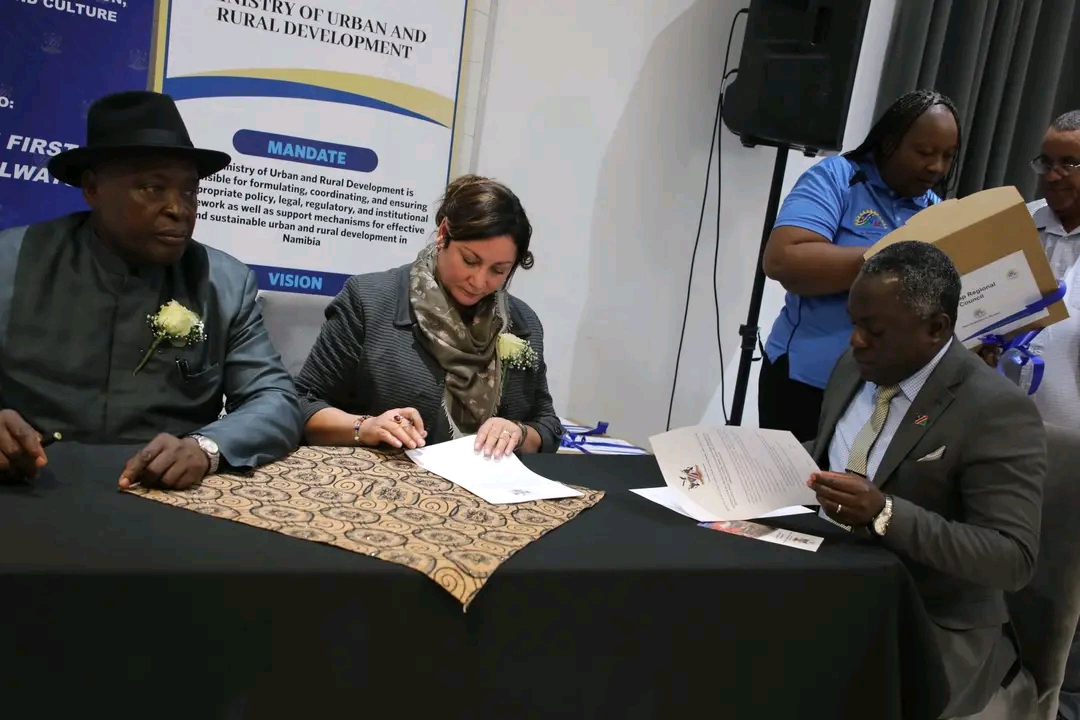
THE New Equitable Economic Empowerment Framework (Neeef) was welcomed as long overdue and commendable by both ruling and opposition parties in Parliament on Wednesday.
Prime Minister Nahas Angula tabled the policy last week, and is now before Parliament for debate and adoption before it will be translated into law. Angula said the primary purpose of the proposed policy is to promote equitable, inclusive and shared economic development, to narrow income disparities between rich and poor over the next 25 years – from 2011 to 2036. ‘The empowerment initiatives are not like social grants,’ cautioned Angula. ‘[Neeef] is not a form of Father Christmas. The success of empowerment initiatives shall depend on personal efforts and individual entrepreneurship acumen.’Under Neeef, previously disadvantaged Namibians will be given assistance through State-owned financial institutions like the Development Bank of Namibia (DBN) and the SME Bank to buy into existing businesses on commercial or near-commercial terms. Swanu MP Usutuaije Maamberua felt Agribank should be included as one of the financial institutions to be stacked for assistance to the previously disadvantaged. Similarly, he proposed that the National Planning Commission and Agribank should be among the Government agencies that forms the commission that will administer Neeef. The Neeef policy document proposes that the commission consists of representatives of Government, business, trade unions ‘and other organisations’ including the Employment Equity Commission, the National Training Authority, the DBN, SME Bank and the Ministry of Trade and Industry. Maamberua said the definition ‘equitable’ – which according to the policy document means ‘a fair redress and redistribution action’ – should spell out what is to be distributed. ‘What is being distributed? Is it land or wealth?’ he queried. He suggested that the definition ‘social’ – which is defined as ‘how human beings relate to each other in production, class, gender and generational relations’ – should include ethnic and regional divides. Maamberua said the defined ‘previously disadvantaged’ – which according to the policy means ‘victims of Apartheid policies’ – should include victims of the 1904 to 1908 German colonial genocide victims. Despite the fact that the Neeef policy states that it will be based on ‘voluntary’ business practice, it further states that non-compliant companies will not be eligible to tender for Government or State-owned Enterprise contracts. Maamberua questioned if there is legal grounds for excluding any company from tendering for public works. Nudo’s Arnold Tjihuiko suggested that Namibian whites – the formerly advantaged – should also be able to access loans for job creation and economic growth. He said Members of Parliament should also be assisted to venture into business. ‘Every Namibian must have the right to own a business,’ said Tjihuiko. Minister of Environment and Tourism Netumbo Nandi-Ndaitwah argued that no amount of legislation would effect empowerment if the previously disadvantaged sell out their stakes in business to the formerly advantaged as is currently the trend across sectors. DTA MP Philemon Moongo said special attention should be spared for the empowerment of communities in villages and small business enterprises.