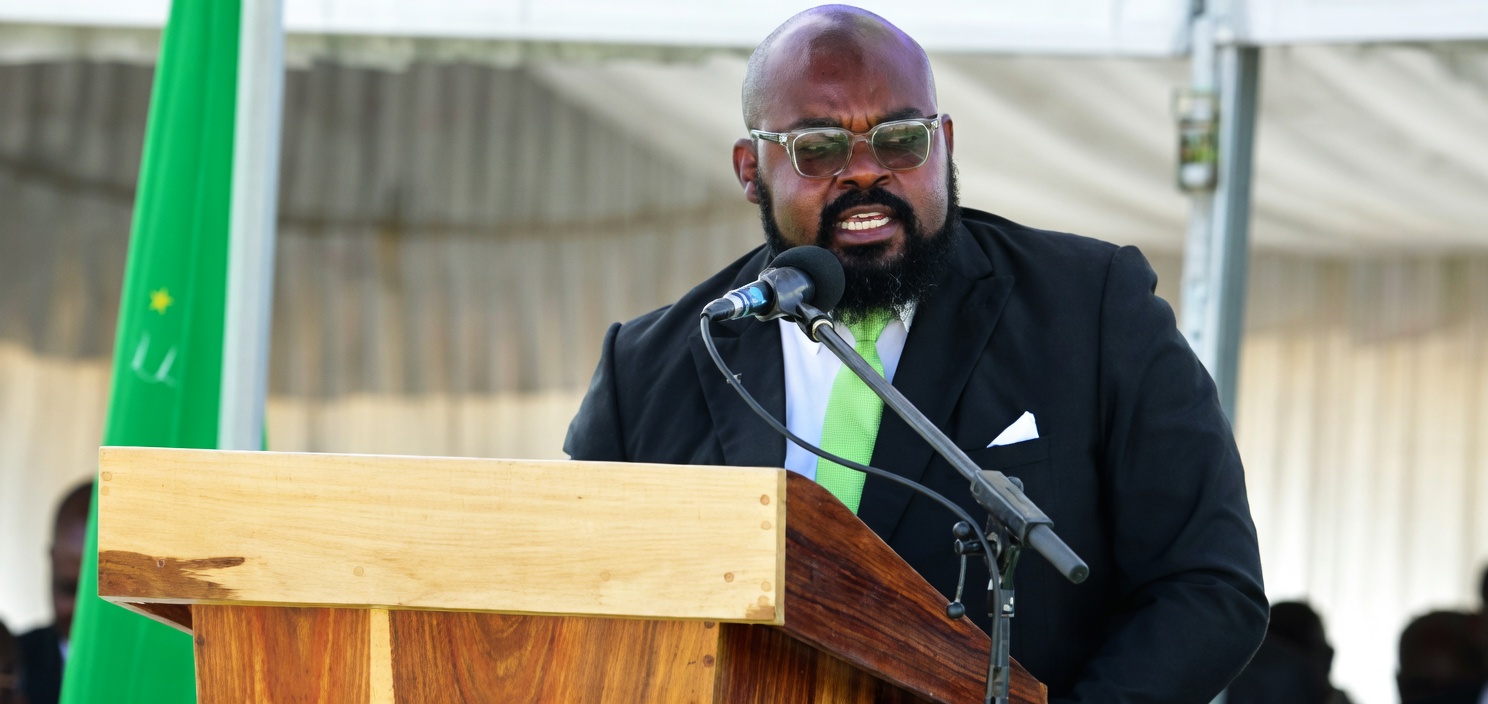




I WOULD like to pay tribute to the life of a man I am in no way hesitant to call a champion of emotional intelligence.
Mose Penaani Tjitendero journeyed through life with a passion for emotional intelligence. I am by no means qualified to give an in-depth biographic overview of his life, but over the past decade I was fortunate to be exposed to his way of thinking.We would often sit down and engage in intense dialogue about life; the past, present and future; about the self, community, society and the nation at large.In retrospect, I realise that I was receiving invaluable lessons in emotional intelligence.As a way of thanking him, I would like to synthesise these teachings through the filters of Danah Zohar and Ian Marshall’s book on emotional intelligence, entitled ‘Emotional Intelligence: The Ultimate Intelligence’.They use a conceptual framework of six paths (duty, nurturing, knowledge, transformation, brotherhood, and servant leadership) towards emotional intelligence and, argue that, if these paths are walked with utmost dedication and deep commitment, the most rewarding and fulfilling life can be achieved.In my opinion, Mose achieved that life.He was very passionate about duty, and particularly duty towards community, a virtue described by scholars of emotional intelligence as “… about belonging to, co-operating with, contributing to and being nurtured by the community”.This sense of community was the source of Mose’s everyday life, as illustrated by his intimate interest in the affairs of the nation at large, right up until his last days, as well as the ‘apparently mundane’ affairs of his village community of Okomakuara.He treated dogmatism, prejudice and small-mindedness with the same contempt as he did narcissism.His favourite medicine for those suffering from these negative energies were “… go, this country belongs to you as much as it belongs to any other Namibian.If you believe you can get something, go and get it and do not allow anyone else to prevent you from getting it.”How he walked the path of nurture has touched me deeply.Sitting in front of him was an exhilarating experience.His ability to listen deeply to you and his willingness to be open, to be exposed and risking disclosing himself to others, set him light years apart from those harbouring hate and revenge.How better can I demonstrate his heightened sense of love, nurture, protection and stewardship than to point out the tens of children, and sometimes even couples, he took under his care during exile as well as back in Namibia? Dr Mose Tjitendero’s Ph.D in philosophy is a testimony of his love for learning and a deep need to understand things.He believed in knowledge that solves real problems.”Don’t just get educated for the sake of showing off your degrees.Get educated to solve real problems,” he frequently warned, echoing Hage Geingob’s maxim: “Education is the greatest equaliser”.Mose never discouraged philosophising as a pursuit to deeper knowledge and understanding.In fact, judging from his imposing statements on the fruitfulness of youth, and his untiring lectures on how to live an exemplary life, I’m convinced he reflected deeply about the largeness of life and his inevitable demise, similar to the personality portrayed by Danah Zohar and Ian Marshall as follows: “It may be the case, for instance, that I have a serious illness.My first task would be to reflect on how I became ill, and then on the ways and means of cure, including consulting experts.But it may be that I have a fatal disease.Here understanding would cause me to see my illness in the larger context of life and death, to see my life in the context of its finiteness.This would lead to still deeper reflection on how I want to spend the time left to me, and how I want to ‘live’ my death.This would lead inevitably to further reflection on what I truly value in life, on what the meaning of life has been for me, on what of myself I would hope to leave behind when I am gone, on what going means to me.If I am able, through this process of reflection, to gain a sufficiently large perspective of my death, I may acquire wisdom and, with it, peace.”A typical example of Mose’s walk towards the path of transformation was when he nominated a candidate for Namibia’s Presidency against a candidate nominated by the incumbent at a congress of the ruling party.True to the virtues of transformation, he knew that going against the candidate of the powerful incumbent would cost him a lot, but he was willing to sacrifice his ego, self and persona in order to bring forward some treasures that will heal the rest of us.He held high the principle that all views must be treated fairly.A TRUE COMRADE Mose was a comrade, a Tanganyika man of distinction who loved his group, his compatriots and his sense of brotherhood ran deep.”Nothing would come between us, period”, was his response if you ask him how strong that group actually was.His strongest path to Emotional Intelligence, in my opinion, was through servant leadership.Here, I’m tempted to compare Mose’s leadership style to that of famous servant leaders of our time – Gandhi, Martin Luther King, Nelson Mandela and the Dalai Lama.He has served, healed and enlightened so many of us through submitting himself to the highest power in the country – the will of the people.Putting him in charge of the country’s highest lawmaking organ for 15 years was most appropriate, given his exceptional ability to subject himself to the rule of the people.I count myself as extremely lucky to have shared some space and time with him, to have tapped into his engaging mind and to have had him as a mentor.Before I say ‘good night, my father, see you in the morning’, may I leave you, the readers, with this quote: “None of us is really complete, really whole, really enlightened, until we have to some extent walked all the spiritual paths – until we have found a creative way to live convention, known how to love deeply and without selfishness, known how to understand, found something we can create, serve our fellows, and known the servant leadership that serves God.”I am by no means qualified to give an in-depth biographic overview of his life, but over the past decade I was fortunate to be exposed to his way of thinking.We would often sit down and engage in intense dialogue about life; the past, present and future; about the self, community, society and the nation at large.In retrospect, I realise that I was receiving invaluable lessons in emotional intelligence.As a way of thanking him, I would like to synthesise these teachings through the filters of Danah Zohar and Ian Marshall’s book on emotional intelligence, entitled ‘Emotional Intelligence: The Ultimate Intelligence’.They use a conceptual framework of six paths (duty, nurturing, knowledge, transformation, brotherhood, and servant leadership) towards emotional intelligence and, argue that, if these paths are walked with utmost dedication and deep commitment, the most rewarding and fulfilling life can be achieved.In my opinion, Mose achieved that life.He was very passionate about duty, and particularly duty towards community, a virtue described by scholars of emotional intelligence as “… about belonging to, co-operating with, contributing to and being nurtured by the community”.This sense of community was the source of Mose’s everyday life, as illustrated by his intimate interest in the affairs of the nation at large, right up until his last days, as well as the ‘apparently mundane’ affairs of his village community of Okomakuara.He treated dogmatism, prejudice and small-mindedness with the same contempt as he did narcissism.His favourite medicine for those suffering from these negative energies were “… go, this country belongs to you as much as it belongs to any other Namibian.If you believe you can get something, go and get it and do not allow anyone else to prevent you from getting it.”How he walked the path of nurture has touched me deeply.Sitting in front of him was an exhilarating experience.His ability to listen deeply to you and his willingness to be open, to be exposed and risking disclosing himself to others, set him light years apart from those harbouring hate and revenge.How better can I demonstrate his heightened sense of love, nurture, protection and stewardship than to point out the tens of children, and sometimes even couples, he took under his care during exile as well as back in Namibia? Dr Mose Tjitendero’s Ph.D in philosophy is a testimony of his love for learning and a deep need to understand things.He believed in knowledge that solves real problems.”Don’t just get educated for the sake of showing off your degrees.Get educated to solve real problems,” he frequently warned, echoing Hage Geingob’s maxim: “Education is the greatest equaliser”.Mose never discouraged philosophising as a pursuit to deeper knowledge and understanding.In fact, judging from his imposing statements on the fruitfulness of youth, and his untiring lectures on how to live an exemplary life, I’m convinced he reflected deeply about the largeness of life and his inevitable demise, similar to the personality portrayed by Danah Zohar and Ian Marshall as follows: “It may be the case, for instance, that I have a serious illness.My first task would be to reflect on how I became ill, and then on the ways and means of cure, including consulting experts.But it may be that I have a fatal disease.Here understanding would cause me to see my illness in the larger context of life and death, to see my life in the context of its finiteness.This would lead to still deeper reflection on how I want to spend the time left to me, and how I want to ‘live’ my death.This would lead inevitably to further reflection on what I truly value in life, on what the meaning of life has been for me, on what of myself I would hope to leave behind when I am gone, on what going means to me.If I am able, through this process of reflection, to gain a sufficiently large perspective of my death, I may acquire wisdom and, with it, peace.”A typical example of Mose’s walk towards the path of transformation was when he nominated a candidate for Namibia’s Presidency against a candidate nominated by the incumbent at a congress of the ruling party.True to the virtues of transformation, he knew that going against the candidate of the powerful incumbent would cost him a lot, but he was willing to sacrifice his ego, self and persona in order to bring forward some treasures that will heal the rest of us.He held high the principle that all views must be treated fairly.A TRUE COMRADE Mose was a comrade, a Tanganyika man of distinction who loved his group, his compatriots and his sense of brotherhood ran deep.”Nothing would come between us, period”, was his response if you ask him how strong that group actually was.His strongest path to Emotional Intelligence, in my opinion, was through servant leadership.Here, I’m tempted to compare Mose’s leadership style to that of famous servant leaders of our time – Gandhi, Martin Luther King, Nelson Mandela and the Dalai Lama.He has served, healed and enlightened so many of us through submitting himself to the highest power in the country – the will of the people.Putting him in charge of the country’s highest lawmaking organ for 15 years was most appropriate, given his exceptional ability to subject himself to the rule of the people.I count myself as extremely lucky to have shared some space and time with him, to have tapped into his engaging mind and to have had him as a mentor.Before I say ‘good night, my father, see you in the morning’, may I leave you, the readers, with this quote: “None of us is really complete, really whole, really enlightened, until we have to some extent walked all the spiritual paths – until we have found a creative way to live convention, known how to love deeply and without selfishness, known how to understand, found something we can create, serve our fellows, and known the servant leadership that serves God.”
In an age of information overload, Sunrise is The Namibian’s morning briefing, delivered at 6h00 from Monday to Friday. It offers a curated rundown of the most important stories from the past 24 hours – occasionally with a light, witty touch. It’s an essential way to stay informed. Subscribe and join our newsletter community.

The Namibian uses AI tools to assist with improved quality, accuracy and efficiency, while maintaining editorial oversight and journalistic integrity.
Stay informed with The Namibian – your source for credible journalism. Get in-depth reporting and opinions for
only N$85 a month. Invest in journalism, invest in democracy –
Subscribe Now!