







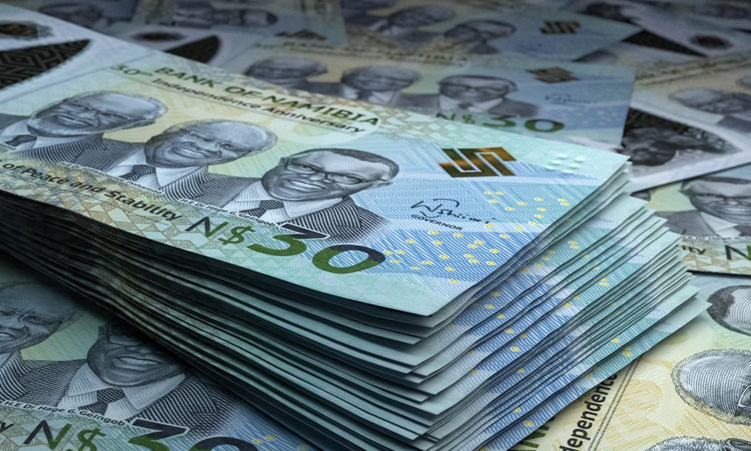
A Loophole in Namibia’s financial system is causing the country to lose about N$16.7 billion per year.
This is equivalent to about 9% of the country’s nominal gross domestic product (GDP).
The estimated annual leakage is about 16% of the government’s total budget and more than the allocation made to the Ministry of Health and Social Services, which is N$13 billion.
This money is lost through tax evasion, trade incorrect invoicing, corruption and the proceeds of crime.
These figures were revealed by the country’s first comprehensive assessment of illicit financial flows shared by the Ministry of Finance yesterday.
The assessment, approved by the Cabinet for publication and submission to the United Nations Statistics Division, also estimates that Namibia lost an opportunity to collect about N$2.7 billion in tax revenue over the assessment period.
MAJOR MISINVOICING
The findings provide the first consolidated estimate of money illegally earned, transferred or used across Namibia’s borders,
Trade misinvoicing is identified as one of the major channels through which illicit funds leave the country.
This includes companies overpricing imports to move additional money abroad, underpricing imports to reduce customs duties and value-added tax (VAT), or manipulating export values to reduce taxable income or improperly claim incentives.
In some cases, exporters may also fail to declare the full value of goods sold abroad, leaving foreign currency outside Namibia’s financial system.
The assessment was produced by a 14-agency technical working group chaired by the Bank of Namibia, with technical assistance from the United Nations Conference on Trade and Development (Unctad).
GOVT TARGETS 5% BY 2030
The scale of the flows has prompted the government to set a target under the Sixth National Development Plan (NDP6) to reduce illicit financial flows from the estimated 9% of GDP to 5% by 2030.
Minister of finance Ericah Shafudah says the flows were undermining the resources available for national development.
“These flows diminish the resources available for public investment, service delivery, and economic growth,” she says.
Shafudah says combating illicit financial flows had become increasingly important as Namibia expands its international trade and develops new sectors such as renewable energy, green hydrogen and petroleum.
“Combating the same requires a coordinated, multidimensional response involving all relevant stakeholders,” she says.
The government says its efforts have already resulted in significant revenue recoveries.
The authorities recovered more than N$28 million in taxes during 2025, while a single investigation in 2026 resulted in the recovery of more than N$45 million.
Since 2023, the government has also strengthened legislation dealing with financial crime and illicit flows, including amendments to the Financial Intelligence Act and Prevention of Organised Crime legislation, as well as the introduction of legislation governing virtual assets and payment systems.
The government says the new estimates will be used to identify vulnerable sectors and trading activities, strengthen enforcement, recover lost revenue and improve the monitoring of cross-border transactions.
Over the past five decades, Africa has experienced an estimated loss exceeding US$1 trillion in illicit financial flows.
This amount is roughly equivalent to the total official development assistance received during the same period.
According to the Financial Intelligence Centre’s (FIC) 2025/26 annual report, it produced 482 financial intelligence reports during the year to support criminal investigations, tax audits and prosecutions.
The FIC also issued 20 account restriction orders covering 46 bank accounts and temporarily froze an estimated N$61 million in suspected proceeds of crime.
Its intelligence supported N$29 million in tax collections, N$11 million in new tax assessments, 10 preservation orders worth N$9 million and 12 civil forfeiture orders valued at N$25.27 million.
The FIC also conducted 772 compliance assessments among institutions under its supervision and imposed N$19.91 million in financial penalties for non-compliance, including failures involving enhanced due diligence, beneficial ownership information and suspicious transaction reporting.
Namibia has previously been identified as a source and transit point for illicit financial activity involving international networks.
The FIC’s latest annual report identifies South Africa as Namibia’s main foreign financial-intelligence exchange partner, accounting for eight of 15 requests for information sent to foreign financial intelligence units.
The FIC also highlights a Brazil-South Africa-Namibia corridor in connection with transnational narcotics trafficking and associated funds.
Other countries involved in financial intelligence exchanges with Namibia during the period under review included Poland, Lithuania, Bahrain, the United Kingdom, Seychelles, Burundi and Pakistan.