





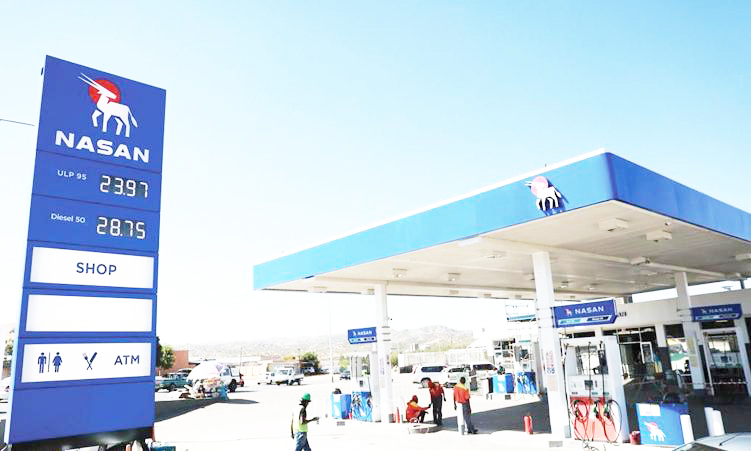
Nasan Energies has been given the greenlight to buy fuel from Vitol after the minister of industries, mines and energy overturned the competition commission’s decision to prevent such purchases.
Nasan bought 42 service stations from Vivo Energy in May.
As a condition of approving the sale, the Namibian Competition Commission prohibited Nasan from buying fuel from Vitol – Vivo’s parent company – for a period of five years due to concerns that this would reduce competition in the fuel sector.
In a Government Gazette released on Friday, energy minister Modestus Amutse suspends these conditions placed on Nasan’s merger “until further notice”.
Energy analyst Gawie Kanjemba says the minister’s decision was made against the background of the immense financial burden of importing fuel to the country.
“The National Energy Fund is running on fumes after absorbing massive under-recoveries, and this arrangement stops the financial bleeding by saving the state premiums without adding a sovereign guarantee to our national debt,” he says.
The reversal of the merger conditions is not permanent, according to the gazette.
It will remain in place until the minister decides otherwise.
Kanjemba says the minister will only be able to revisit the merger conditions once the National Energy Fund is recapitalised and the state has built independent bulk storage.
“But when you zoom out, you see the long-term structural cost.
We are trading long-term energy sovereignty for short-term balance sheet aesthetics.
It is also worth noting this is not a new player entering our space. Vitol already controls about 75% to 85% of our wholesale fuel supply in any way.
“The real shift now is that the state has just legally cemented this dependency,” he says.
Kanjemba says the decision would save Nasan and serve Namibians as the company is a new local player fighting to enter a competitive market.
“While there definitely seems to be something operating in the background, because the synergy between the state’s actions and Nasan’s needs is a little too perfect, Nasan is probably not orchestrating the whole thing.
“But it is also fair to say they are probably not innocent bystanders either. One thing is for sure:
There is a very thin line between being a victim of circumstance and being a highly opportunistic player who knows exactly which political winds to ride,” Kanjemba says.
“The commission determined the merger on the basis of the factual and commercial circumstances prevailing when its investigation was concluded. However, subsequent developments have materially altered those circumstances,” the minister says.
The commission’s decision was made on 12 March. Since then, war in the Middle East has disrupted oil supply routes and caused instability in the fuel market.
The government in May announced it would appoint a single fuel supplier to the country for three months to reduce the cost of importing fuel.
That single supplier is Vitol.
“At national level, the government has adopted interim fuel security measures, including the appointment of a single bulk supplier pending finalisation of the new bulk petroleum procurement framework,” Amutse says in the gazette.
Although the commission could not have known about this at the time, the bulk fuel supply agreement makes the conditions imposed by the commission impractical, he says.
“Fuel security constitutes an important component of Namibia’s national economic security.
I am required to balance competition policy against wider public interest considerations.
Instead of promoting effective competition, the conditions may significantly restrict the ability of a new Namibian entrant to compete effectively in the downstream petroleum market while not materially reducing market concentration at wholesale level,” the minister says.
Amutse has suspended the conditions imposed by the merger “until [he] determines otherwise”.
The Fuel and Franchise Association of Namibia (Fafa) yesterday welcomed the minister’s decision.
“The lifting of restrictions on whom Nasan may purchase from should eliminate any remaining excuses for delayed deliveries.
This development is positive for Nasan dealers,” Fafa chairperson Michael Ludeke said.
Nasan Energies did not respond to requests for comment by time of going to print.