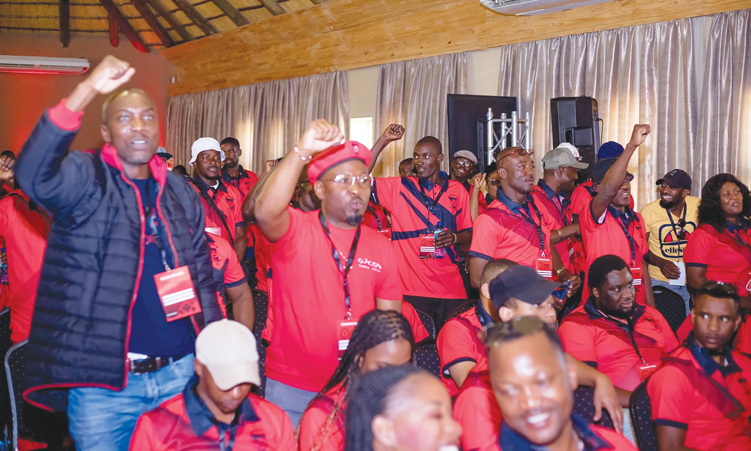
Every payday for nearly three decades, Ndumba Kayundu paid his monthly dues to the Mineworkers’ Union of Namibia (MUN).
Although he has often wondered where that money ends up, he knows the answer has little to do with him.
“Whatever belongs to the union is ours,” says Kayundu (64), who represents current and former members who are beneficiaries of the union.
“Some 28 years down the line and zero benefit to ourselves.”
His monthly contributions, like those of thousands of other mineworkers and those in the electricity supply industry, have, however, built something much larger than a union.
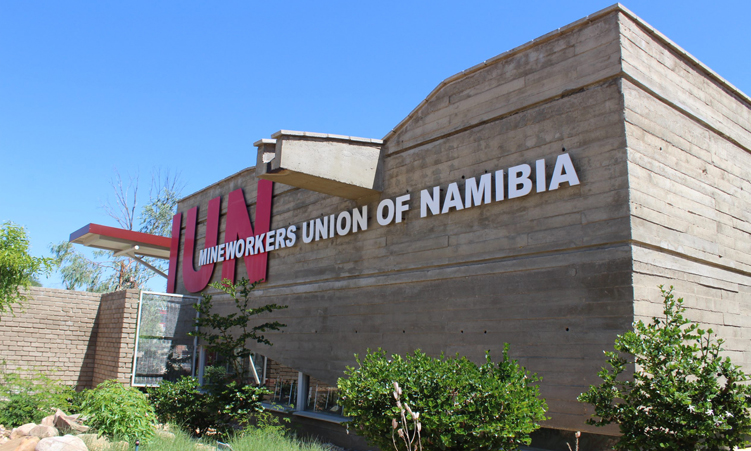
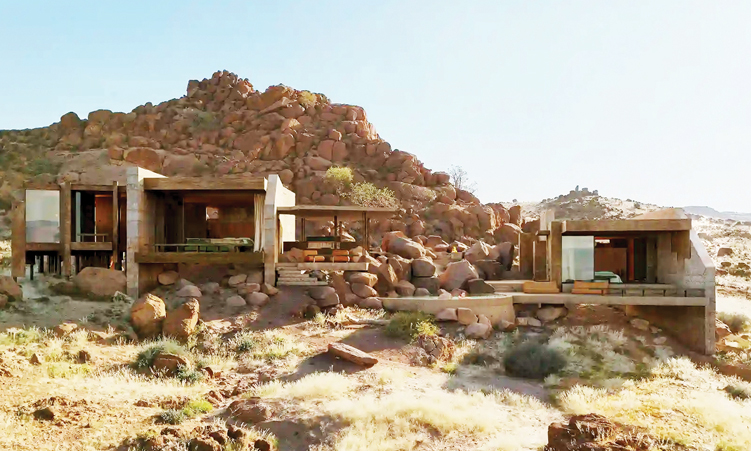
LUXURY … Sorris Sorris lodge is one of four lodges partially owned by the union through Namibia Exclusive Safaris.
MUN channels those dues through the Namibia Miners Investment Trust (Namit) and its investment arm Nam-Mic Holdings.
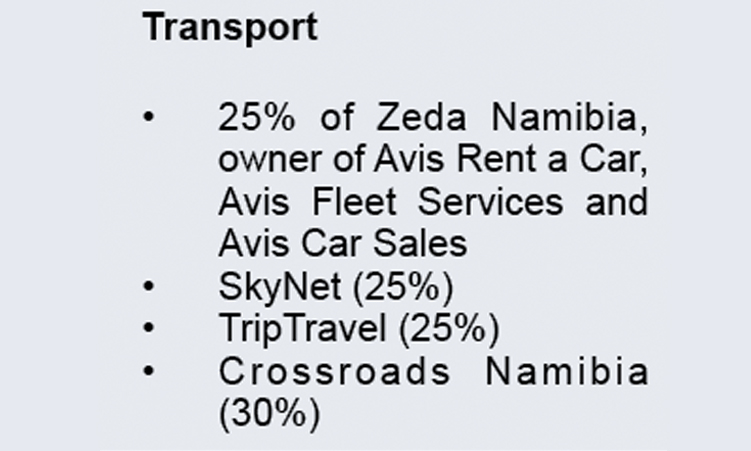
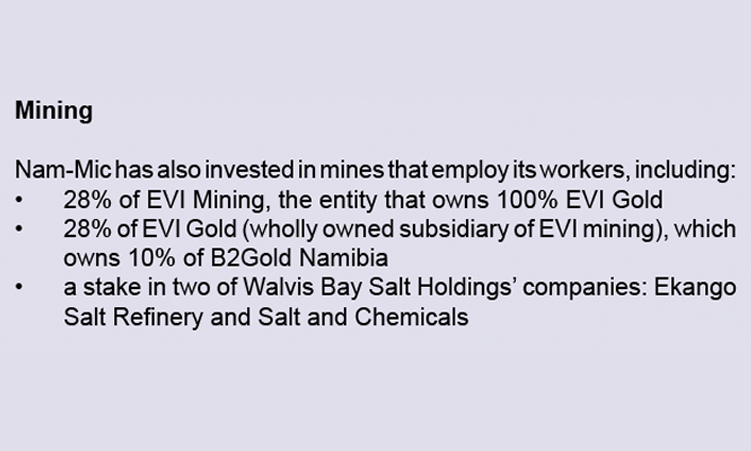
Grown from seed capital of just N$600 000 in 1997, it is now a N$900-million empire with stakes in banks, gold mines, hotels, medical aid schemes and a car rental company.
Nam-Mic Holdings spokesperson Aina Kwayo yesterday confirmed the value of the assets were over N$900 million as of 2024 and may have increased.
Behind the booming business lie allegations of a lack of transparency, power struggles, financial irregularities and ordinary members saying they don’t benefit from the wealth created by their contributions.
Kayundu, who chairs the Association of Mineworkers Beneficiaries Namibia (Ambena), says annual reports show millions of dollars paid out in dividends each year, “but zero benefit to us, the owners”.
Labour expert Herbert Jauch, who recently launched a book on Namibia’s worker struggles, says the role of trade unions investing in businesses is a conflict of interest.
“This contradiction has led to several conflicts of interest in the past, for example, when union leaders called on members to avoid strikes at companies where the union was a shareholder and/or where union leaders served on the board of directors,” he says.
Jauch says in most cases the income from board fees for union leaders was sometimes more than the wages of union members at the company.
“This is an inherent contradiction to the fundamental trade union role of protecting workers rights and interests and to ensure workers are getting a fairer and larger share of profits in the form of better wages and benefits,” he says.
Jauch says when unions become investors they have competing interests.
“On the one hand they want to improve working conditions, but on the other hand they want to increase profits as shareholders.”
Jauch says unions as workers’ organisations should operate on the basis of workers’ mandates at all times.
“When a union’s main source of income is no longer the membership fee but rather the dividends from its investments, this undermines workers’ control.
“It can also shift the focus onto the union investment arms, and people working there are usually paid more than union leaders.
This can lead to a shift in priorities away from the core functions of trade unions.
“Ideologically, this contradicts the core mandate and outlook of unions as workers-controlled organisations,” he says.
THE INTERVENTION
The stand-off in the biggest mining union in the country has spilled over to State House.
Former president Nangolo Mbumba in documents seen by The Namibian in 2024 instructed former mines and energy minister Tom Alweendo to meet with Ambena.
The workers were requesting an audience regarding their benefits and grievances surrounding the union.
This later led to the then Ministry of Mines and Energy launching a formal inquiry into complaints similar to Kayundu’s.
In a letter dated 12 December 2025, which was made public as part of The Namibian’s investigation, deputy mines minister Gaudentia Kröhne asks the union for a full register of beneficiaries, records of payments made, details on how beneficiaries were selected, and clarification on unclaimed or outstanding benefits.
Kröhne in the letter says the ministry continues to receive concerns from former mineworkers, “many of whom are elderly or financially vulnerable”, who claim that for years they have not received benefits or proper communication.
“These individuals allege that despite the passing of many years, they have yet to receive benefits or clear communication on their status as beneficiaries,” she says.
“The information was needed to ensure transparency, restore trust among affected individuals, and enable the government to determine whether additional oversight or corrective measures may be required,” she writes in the letter.
Mun responded on 5 January this year, with MUN secretary general George Ampweya saying a formal meeting had been convened in 2025 with then mines minister Alweendo and other stakeholders.
“That engagement culminated in the drafting of proposed joint communication intended to bring clarity and closure to the issues raised,” he says.
But he says Ambena declined to co-sign, despite having participated in the process.
The union also proposed a face-to-face meeting with the ministry, trustees and technical representatives to discuss the matter.
THE WEB
Founded in 1986 and with over 10 000 members, the Swapo-affiliated union negotiates with some of the country’s biggest mining companies, such as Rössing Uranium, B2Gold, Namdeb Diamond Corporation, Swakop Uranium, and the Namibia Power Corporation as well as regional electricity distributors on workers’ behalf.
The union’s real financial muscle, however, lies within Namit, which owns Nam-Mic Holdings, the investment arm founded in 1997.
Profits from its investments are channelled to Namit to fund worker programmes and union activities.
Former MUN president and Nam-Mic founder John Shaetonhodi, in an interview with The Namibian at Nam-Mic Holdings’ 20th anniversary in 2018, said the business arm was born as “a good vehicle for workers’ participation in the economy as part of the struggle for economic emancipation”.
“Nam-mic Holdings is a broad-based black economic empowerment investment company established by Namit to create a sustainable asset base for mine and energy workers and their dependants,” he said.
“It is a viable black-owned value investor that drives broad-based transformation and provides a sustainable dividend flow to support the social and development programmes of its sole shareholder, Namit,” he said.
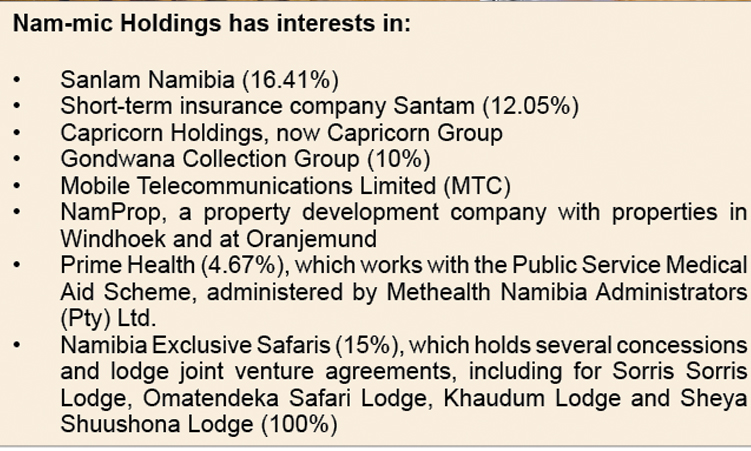
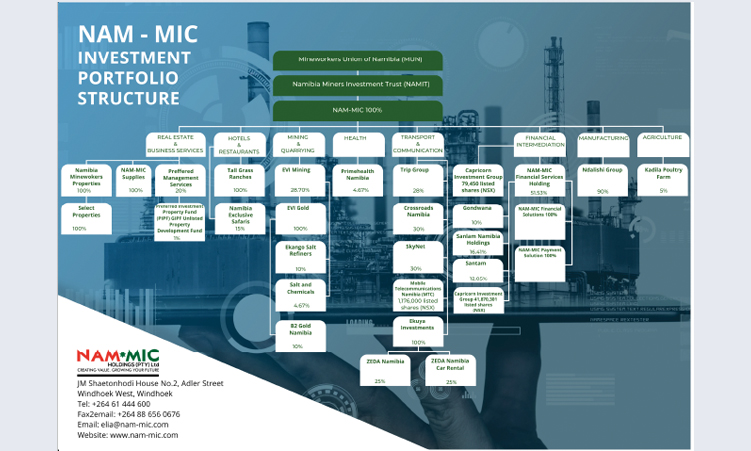
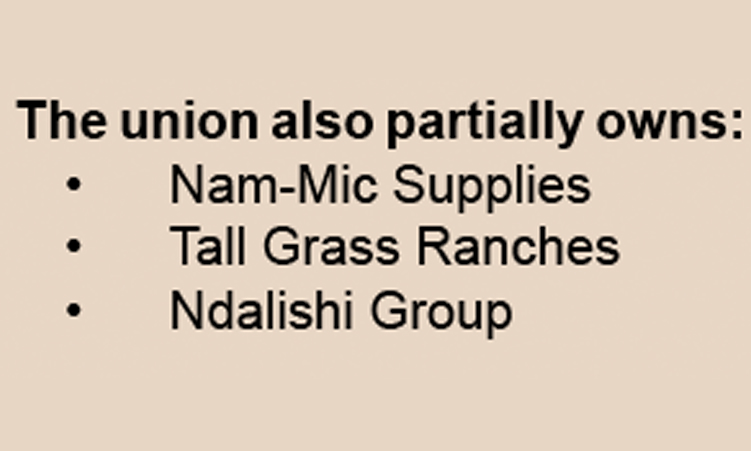
NAM-MIC’S INVESTMENT PORTFOLIO
In 2000, the Namibian Mineworkers’ Investment Holdings Company resolved to create Nam-mic Financial Services Group.
It was formed through Nam-Mic Financial Services Holdings (Pty) Ltd (NFSH), which wholly owns Nam-Mic Financial Solutions and Nam-Mic Payment Solutions.
TROUBLE IN PARADISE
Sackey Aipinge, an architect and the union’s managing director, has defended the model’s existence.
“If Nam-Mic Holdings wasn’t here, many workers would still be in excessive debt today,” he told The Namibian last year.
“MUN has been able to assist them financially, save their assets from repossession from loan sharks and improve their lifestyles,” he said.
But much of the dysfunction described by members stems from internal fights between union leaders, trustees and company directors over who controls Nam-Mic.
That has triggered internal division, allegations of conflicts of interest, and disciplinary action against members aligned to rival factions – conduct the union’s western region branch, through its chairperson Abiud Kapere, condemned in 2024 as “a serious breach”.
A charge sheet dated 7 August 2024 issued by MUN acting president Mathew Mberiuana against a union member shows the scale of the fallout.
“On 29 April 2024, you attended a defective and purported Nam-Mic general meeting, whereby you unlawfully, unprocedurally and unethically removed Nam-Mic directors and elected/appointed new ones,” the memo seen by The Namibian says.
The member was also accused of authorising a N$250 000 transfer from the Investment Trust.
“Your action on the above-stated offences is perceived to have created mistrust, which is counterproductive to MUN’s objectives, thereby making the continued relationship intolerable and irreparably broken,” the document further says.
The crisis emerged after the removal of former MUN president Ismael Kasuto and vice president Desley Somseb through a vote of no confidence in April 2024.
An extraordinary congress to resolve the leadership dispute has yet to take place, as rival factions vie for control of the investments.
“No annual general meeting or consultations are held, and benefits do not reach us,” Kayundu says.
“We have established Nam-Mic as our business arm, and all that was done for our own benefit.
If one looks at the annual reports, millions of dollars were paid in dividends and apparently also to the needy, but zero benefit to us, the owners,” he says.
UNACCOUNTED FOR FUNDS
Underlying the leadership disputes are audits stretching back a decade that exposed widespread financial control weaknesses inside the union.
Documents seen by The Namibian show that N$18 million in funds could not be clearly accounted for within the union’s structures.
Auditors could not verify membership income, regional expenses, investments, loans, value-added tax (VAT) balances and liabilities.
The pattern has been repeated over years.
For 2015, auditors said internal controls over membership fees were “inadequate”.
In 2016, a mismatch between the fixed asset register and the accounting system resulted in a discrepancy of N$312 444.
The 2017, auditors said documentation was missing for a N$350 498 Namprop loan.
In other years, auditors found:
– no documentation for N$8.1 million in expenses, while VAT discrepancies topped N$405 922,
– unsupported expenses of N$2.5 million and VAT discrepancies of N$266 577,
– unsupported expenses worth N$2.1 million, and a shortfall of N$736 969 in fees owed to the National Union of Namibian Workers,
– investments of N$2.1 million without bank statements and supporting schedules,
– trade payable statements with discrepancies exceeding N$2.3 million and a further N$499 669 in unsupported transactions,
– VAT concerns that amounted to N$4 million and N$3.3 million, and
– missing documents for N$4 million in expenses and employee liabilities worth N$1.1 million.
“Since its inception, the trust has never held annual meetings to oversee the overall performance and dividends declared to its beneficiaries,” the ousted Somseb has said.
“The trustees appoint themselves as directors and go attend annual general meetings and approve their own financial statements,” he added.
NEC RESPONDS
The MUN national executive committee (NEC) strongly denies that Kasuto and Somseb were removed to stop investigations into the union’s finances.
In a memorandum dated 14 May 2024, the NEC says the union remained committed to a forensic audit by PricewaterhouseCoopers covering 2015 to 2022, as directed by congress resolutions.
“It is, therefore, futile and misleading to insinuate that the former president and vice president were removed from their positions because certain NEC members are attempting to hinder the conclusion of this process,” the memo states.
The NEC accused Kasuto of illegally withdrawing N$250 000 from a Namit account a day after his removal from office and transferring the funds to a local law firm.
It accused Somseb of changing the Namit trust deed to list himself, rather than the union, as founder – calling it “tantamonunt to commercial fraud and theft”.
CONFLICT OF INTEREST

Kayundu says all trustees and directors with a conflict of interest should be investigated.
The Namibian has reported that Nam-Mic board chairperson John Ndeutepo received N$2 million for a database project.
Namit says the payments came from an approved budget for work that he and 12 staffers conducted.
But Ndeutepo reports to the same union that hired him for private work.
“The N$2 million paid to Ndeutapo should be explained and repaid to the fund as we were not informed about this payment,” Kayundu says.
“The current MUN office-bearers must stop the corrupt activities practised in the MUN and its business arm Nam-Mic and remove all the corrupt people who are deploying themselves as directors and trustees,” he says.
Ndeutepo has since denied the allegations.
A separate audit dated 28 June 2021, which The Namibian has seen, raises similar concerns about a Nam-Mic/Namprop project to build houses at Osona village in the Otjozondjupa region.
The report says the mineworkers’ company will lose N$1.5 million due to the “noticeable mishandling of funds and unconcealed neglect”.
“The evident conflict of interest, as it relates to the appointment of an unqualified project manager who also serves on the board of the parent company, in more ways than one compromised the ethics and integrity of the entire operation,” it says.
A former MUN leader has told The Namibian that the leadership feuds had little to do with members’ welfare.
“The majority of the board positions, both at Nam-Mic and its subsidiaries, are being used to reward for factional loyalty instead of appointing directors based on capacity,” he says.
“That is why people fight to dominate the Nam-Mic directorship at any cost. It’s no more about the MUN members but serving themselves and lining their pockets under the disguise of unionists,” the former leader says.