




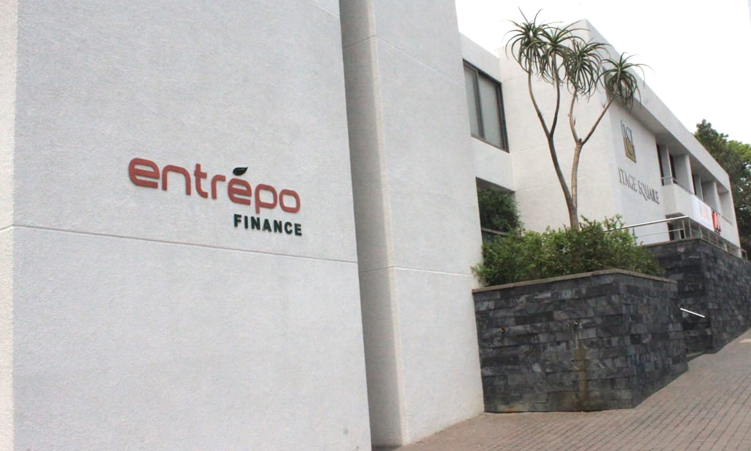
Microlender Entrépo, which had a payroll deduction arrangement for civil servants, is weighing its future after the government ended the deductions on which its business mainly depended.
This comes as a result of a decision the Ministry of Finance made last year to end the government’s payroll deduction management system (PDMS) in November.
The company, 55.5% owned by Capricorn Group, extends loans to government employees only.
As at the first quarter of the year, Entrépo was the second-largest term lender in the country, accounting for 28% of the N$7.3-billion sector.
Entrépo Finance has confirmed it is no longer granting new loans, while its majority shareholder, Capricorn Group, says the company is under pressure to adapt to a new operating environment.
The developments have fuelled speculation that the microlender could eventually close, although Capricorn insists the business remains profitable and sustainable.
A notice on Entrépo’s website states: “We would like to inform our valued customers that Entrépo Finance is no longer granting new loans, but we are still here to support you. The agreements with all existing customers stay unchanged.”
LENDING FROZEN,
STAFFING CUT
Sources familiar with the matter say the company has retrenched close to 20 employees, with further job cuts expected later this year.
As of last year, the company had 54 employees as reported in the Capricorn Group annual results, and sources say it has not approved a new loan in more than six months as its traditional lending model has become unworkable.
According to sources, the lender is looking at either selling the ownership of the debts or selling the servicing rights and shutting down the company.
The company has not responded to questions sent by The Namibian by the time of publication.
However, Capricorn Group, this week confirmed it is aware of the developments.
“The operating environment became materially more challenging following the government’s decision . . . to discontinue the use of deduction codes through the payroll deduction management system,” said Capricorn spokesperson Marlize Horn.
She said the decision has directly affected Entrépo’s long-established business model, which relied on payroll deductions for loan collections and onboarding new clients.
The phasing out of payroll codes means lenders are now required to conduct proper affordability assessments and carry more risk themselves.
This is because the system allowed lenders to deduct loan repayments directly from clients’ paychecks.
RESTRUCTURING
“Capricorn Group remains engaged with Entrépo’s board and management and is working with the business to adapt its operating model to the evolving regulatory and operational landscape of Namibia’s microlending industry, with a focus on positioning it for sustainable performance,” the company says.
Although the Ministry of Finance has introduced a manual process for onboarding new borrowers and maintaining existing deduction-code business, Capricorn says the process is inefficient and has significantly constrained new lending.
Despite this, the group maintains Entrépo remains profitable.
“Entrépo delivered profit growth during the reporting period, demonstrating the resilience of its underlying business, and is expected to remain profitable for the foreseeable future,” Horn said.
Over the past two years, Entrépo contributed between 10% and 12% of Capricorn Group’s profit after tax, she said.
Capricorn has declined to disclose current financial figures ahead of the release of its annual results on 17 September.
On reported retrenchments, it says staffing decisions fall under Entrépo’s board and management.
“As a shareholder, Capricorn Group has requested that any transition be handled responsibly and with due care for employees.”
CREDIT ACCESS AND RISKS
The company says it is working with management to redesign the lender’s operating model by strengthening operational efficiencies and adapting to a market where payroll-based lending has fundamentally changed.
Capricorn has dismissed concerns that the changes would trigger a spike in bad debts.
It says the finance ministry has indicated that all existing loans loaded onto the PDMS before its discontinuation would continue to be honoured until maturity.
Instead, the group warns that government employees who can no longer access regulated credit could increasingly turn to unregulated payday lenders.
“There remains a significant need for regulated microfinance that gives government employees responsible access to credit and protects them from unregulated lenders,” Horn said this week.
LEGAL BATTLE
The uncertainty surrounding Entrépo comes as the legal battle over the PDMS continues.
The company is seeking leave to appeal to the Supreme Court after the High Court dismissed its application to have finance minister Ericah Shafudah held in contempt of court.
Entrépo argues the ministry has failed to comply with an earlier court order requiring the continued operation of a functional payroll deduction system that would allow lenders to onboard new government employee borrowers.
Judge Lotta Ambunda has dismissed the application, finding that the ministry had maintained the PDMS and that Entrépo had failed to demonstrate that the system was non-functional to the extent alleged.
This all comes after the microlender launched an urgent Windhoek High Court lawsuit against the finance minister and prime minister after the government moved to discontinue its system last year.
Operated since 2003, the automated PDMS allows approved microlenders to deduct loan repayments directly from government employees’ salaries. It acts as an automated affordability check, automatically blocking new loans if a worker’s take-home pay would drop below 35% of their basic salary.
Entrépo argues this keeps interest rates low (capped at 16.5% compared to loan sharks charging up to 30%) and prevents predatory lending.
The finance ministry has issued a directive to freeze new discretionary deductions and phase out the system, claiming that direct payroll deductions for third-party loans violate the Labour Act without strict individual written agreements or court orders.
MARKET SIZE
The problems facing Entrépo reflect wider pressures in Namibia’s microlending sector.
The Namibia Financial Institutions Supervisory Authority recently reported that the industry’s loan book declined by 3% during the first quarter of 2026 to N$7.3 billion, largely because of reduced term lending following the disruption of the PDMS.
Despite the downturn, Entrépo remained one of the country’s biggest term lenders, accounting for 28.1% of the market during the quarter, behind Letshego Micro Financial Services at 28.8%, while Old Mutual Finance held 22.3%.
Together, the three institutions controlled nearly 80% of Namibia’s term-lending market.