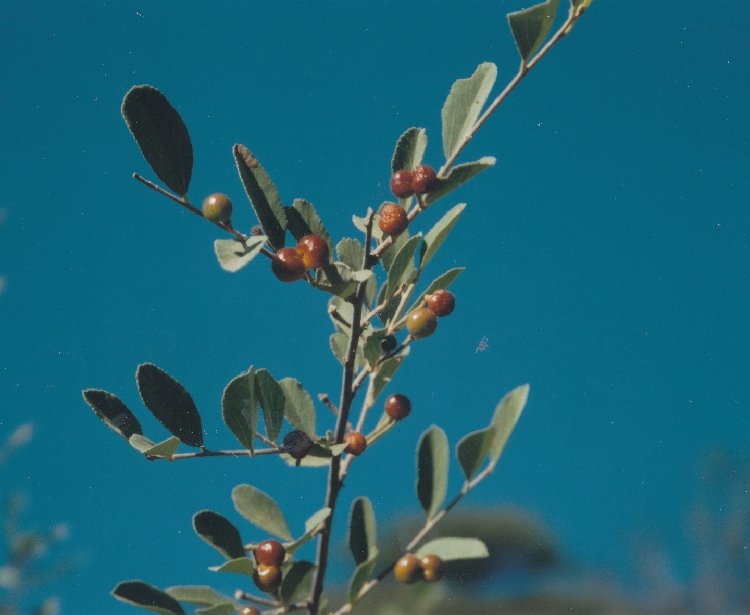
THE most obvious characteristics of this raisin bush are the velvety grey-green leaves borne upright and the bright yellow star-shaped flowers with bright yellow sepals longer than the petals.
The flowers develop into yellowish brown, edible berries consisting of one or two seeds surrounded by a thin layer of sweet but fairly dry fruit flesh.
Names: G. Gelber Rosinenstrauch: A.rosyntjiebos, fluweelrosyntjiebos; H. omuvapu (plant), omandjembere (fruit); N.-D. ‡ãun/s; Nd and Ky: ehonga.
The genus is named after Nehemia Grew, a London physician who wrote a book on the anatomy of plants in 1682. Flava means ‘bright yellow’ and refers to the bright yellow flowers.
The brandy bush, also known as the velvet raisin, is found widely distributed all over Namibia with the exception of the Namib and the southwestern parts of the country.
It is very common on the sands and the limestone soils of the Kalahari.
It is a many-stemmed, much branched shrub with slender, round branches covered by grey bark and may reach a height of four metres.
The leaves of the brandy bush are velvety on both sides. They are held erect and close to the branches, the leaf base is almost symmetrical and the flower stalk only produces one flower or fruit. The ball-shaped fruit, however, may be two-lobed, i.e. it may have two round seeds on one stalk.
The ripe fruits are yellow brown to reddish brown.
The fruits are eaten fresh or dried for later use and formed a valuable part of the diet of the hunter-gatherer tribes. The dried fruits of the brandy bush contain 64% sugar and about 4% protein as well as 30 mg Vitamin C per 100 g. A strong alcoholic drink, known as “Mampoer” in South Africa, is distilled from the sweet fruit.
In the Kalahari the finely powdered root of the shepherds’ tree (Boscia albitrunca) is added to give the drink a sharp, peppery flavour.
The dried powdered fruit is eaten together with dried locusts. The fruits are also much sought after by birds. The very elastic branches of the brandy bush are fashioned into bows for hunting or for musical instruments. To maintain their elasticity they are rubbed with oil extracted from the roasted sour plum (Ximenia americana).
The branches are also used to make arrow shafts. Long elastic branches, tied together until long enough and fitted with a sharp hook at the tip serve to extract springhares from their underground burrows.
Chewed pieces of branches are used as toothbrushes. Pieces of branches driven into the ground around huts are believed to protect them from being struck by lightning. The strong fibres of the bark are made into rope and the elastic branches of several raisin bush species are woven in and out among the stronger branches to stabilise huts, while the bark is also used to tie together branches for this purpose.
In Botswana bark of the raisin bush is tied around the wrist of a deceased person and his or her children to strengthen the spiritual bond between them.
Raisin bushes in general are decorative garden shrubs that sprout green foliage early in the season, flower for a relatively long period and attract birds to the garden.