



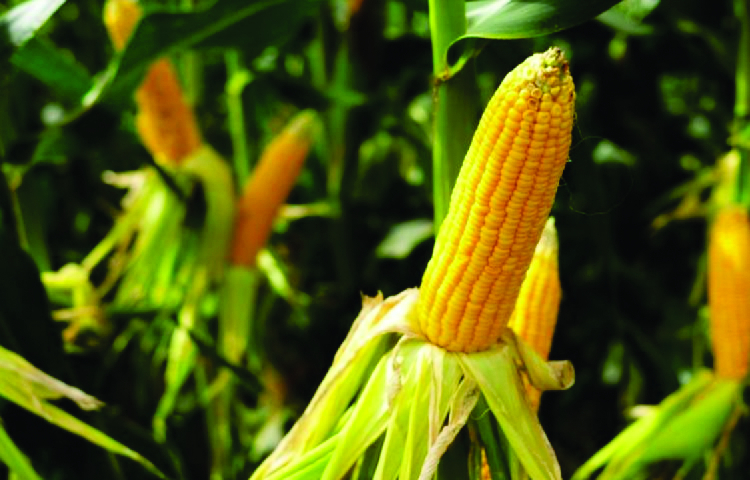
NAMIBIA imported over N$100 million worth of maize in January this year.
Some 96% of the maize imported came from South Africa, and 4% from Zambia.
This was reported by the Namibia Statistics Agency (NSA) in its recently released national trading account data for the month.
It is argued that the balance could have been less if Namibian maize companies did not source from their parent and related companies in South Africa only.
Zambian maize is cheaper, but the uptake from this is less, as no Zambian firm has shops or trading partners in Namibia.
According to the report, Namibia is a net importer of maize, with monthly imports averaging N$55,6 million.
Overall trading in the country during the first month of the year was at N$19,3 billion, exports at N$7,6 billion, and imports at N$11,7 billion, leaving a deficit of N$4,1 billion.
Exports decreased by 24% in January from N$10 billion recorded in December 2021, while exports increased by 22% compared to the N$6,2 billion registered in January 2021.
Import value declined by 6% and increased by 25% when compared to its level of N$12,5 billion in December 2021 and N$9,4 billion in January 2021, respectively.
With international wheat prices shooting up during the year due to the war in Ukraine, Michael Thikusho, a junior researcher and economist in the Ministry of Finance, said there may be an expected demand for maize products in the coming months.
Thikusho said if local markets feel the pinch, consumers are likely to ditch food items such as pasta and opt for maize products instead.
Simonis Storm Securities analyst Theo Klein last week said imports from Russia and Ukraine are minimal.
Imports from Russia are less than 1%.
Namibia’s top import products from Russia in recent years included wheat, ammonium nitrate (used in high-nitrogen fertiliser for farmers), frozen chicken and frozen sardines.
Namibia’s main exports to Russia in recent years included oysters, fresh grapes, collectors’ items, frozen crab, and dates.
The main products imported from Ukraine into Namibia include poultry meat, malt, seed oils, wheat, engine parts, packaged medicaments, refined petroleum, and electric batteries.
Trade between Ukraine and both Namibia and South Africa comprises about 0,07% of total Southern African Customs Union (Sacu) member state imports.
“Therefore, in light of the war in Ukraine and reduced exports to Sacu members as a result of economic disruption, we do not see a material impact on Sacu revenue received by Namibia,” Klein said.
TRADE DATA
China emerged as the country’s largest export destination, with a share of 32,3% of all goods exported, followed by South Africa with a share of 18,3% in January.
Furthermore, Zambia, Spain and France formed part of Namibia’s top-five export markets.
The demand side saw South Africa maintaining her first position as the country’s largest source of imports, accounting for 29,9% of total imports into Namibia, followed by Zambia in the second position with 24,9% of the market share.
The Democratic Republic of Congo, United Arab Emirates, and Bulgaria also formed part of Namibia’s top-five sources of imports.
The analysis of exports by commodities revealed that copper blisters had the largest share (26,6%) in Namibia’s total exports ahead of uranium with 12,8%, followed by non-monetary gold with a market share of 11%, fish at 10,7%, and precious stones (diamonds) at 8%.
In terms of imports, copper blisters were the most imported commodities with a relative share of 29,6% of total imports, followed by petroleum oils with a share of 15% in the second position, whereas copper ores and concentrates came third with a share of 3%.
Moreover, ores and concentrates of precious metals, and precious stones (diamonds) contributed 2,6% and 2,4% to Namibia’s total imports, respectively.
Namibia’s trade by mode of transport revealed that in January 2022, the majority of goods exported, left the country by sea, accounting for 55,8% of total exports, followed by road transport with 24,3%, and air transport with 19,8%.
On the demand side, most commodities that entered the country came in by road, accounting for 68,5% of total imports, followed by sea (28,7%) and air (2,7%).
Namibia exported most of its goods to the rest of the world via the port of Walvis Bay (53,5 %), Eros Airport (14,4%), the Wenela border post (8,8%), Trans-Kalahari (6%), and the Hosea Kutako International Airport (5,2 %).
In the case of imports, Namibia’s importation mostly came in through Wenela (30,6%), Walvis Bay (28,6%), Ariamsvlei (16,1%), Trans-Kalahari (11,3%), and Noordoewer (6,4%).