Former Witvlei Meat employees desperately awaiting abattoir’s reopening
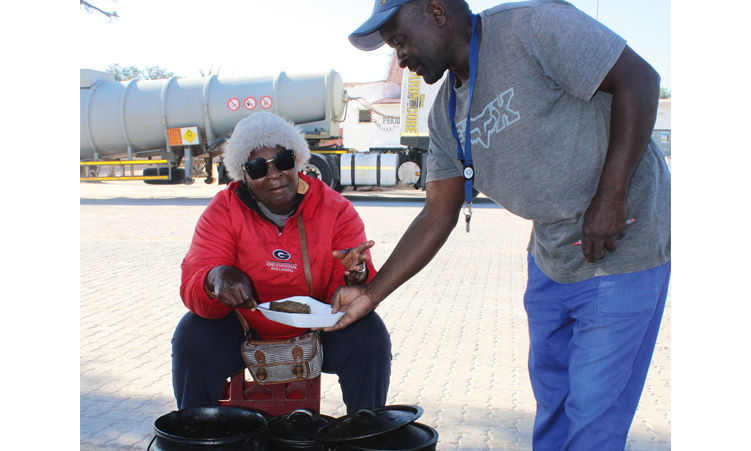
The smell of meat fills the air as vendors huddle behind three-legged pots and braai stands along the B6 road at Witvlei.
Many residents who once earned a steady income at Witvlei Meat are now selling kapana to make ends meet after the abattoir shut its doors in 2016.
The abattoir used to serve as the village’s largest employer and taxpayer, with over 200 workers.
Its closure has left many with no income.
“Life was good,” says Else Kaete (51), who lost her job when the abattoir closed.
She says she worked in the kitchen and was responsible for cleaning the abattoir’s showers for three years. Her salary of N$2 500 per month was enough to support her family, she says.
Kaete’s husband was also employed at the abattoir.
“We felt like we were thrown away when it closed,” she says.
The workers received benefits such as social security and funeral cover. They also received animal bones from the abattoir at no charge.
Mbenaije Ngangane (51), one of the kapana sellers, says many workers were devastated when they heard the abattoir was closing down.
He worked in the deboning department from 2007 to 2014.
“We felt like we were being taken care of. We lived great,” he says.
He says the abattoir used to support vulnerable families by providing them with meat.
“There was less crime. Now people are stealing and some have turned to prostitution,” he says.
Petrus Tjombe (44) says he has struggled to find stable employment since the closure. After leaving the abattoir, he has tried working on a farm, but says he had been abused and eventually left.
“We were never hungry. I was healthy with a big tummy. Now I have lost weight,” he says.
The father of five worked in the slaughtering department for three years. He says some marriages also broke down because the men could no longer provide for their families.
Maria Oaes (61), who worked in the deboning department, is now struggling to care for her two children, including one with a disability, and three grandchildren.
She says she was once able to pay her bills without difficulty and provide for her family.
“There was life at the abattoir. Sometimes we sold the meat we got from the abattoir to make extra money. Life was different,” she tells The Namibian.
Oaes hopes the abattoir would reopen so that they can enjoy the opportunities it once provided.
HOPE
Witvlei Village Council chairperson Immanuel Koiseb last month said a meeting with Agribank held earlier this year revealed that a company has shown interest in buying the abattoir, and that it will become operational soon.
He said Agribank still pays the council tax, although he could not confirm the amount.
“We are battling high youth unemployment, stock theft, crime, and teenage pregnancy, because they have nothing else to do since the abattoir closed down,” he said.
Koiseb himself worked at the facility in 2003.
LEGAL DISPUTES
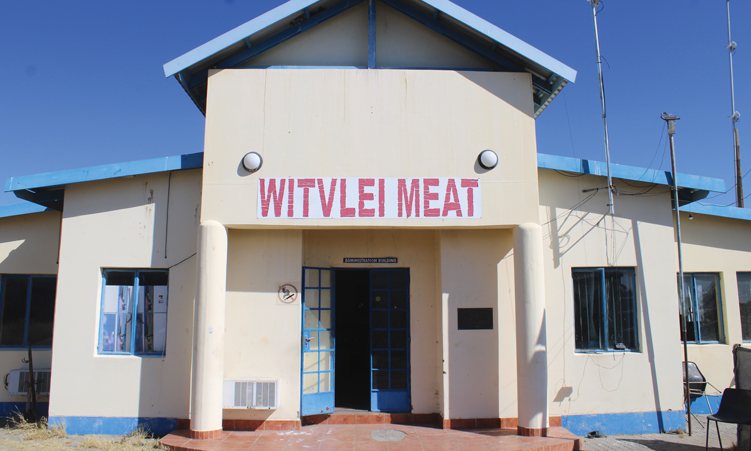
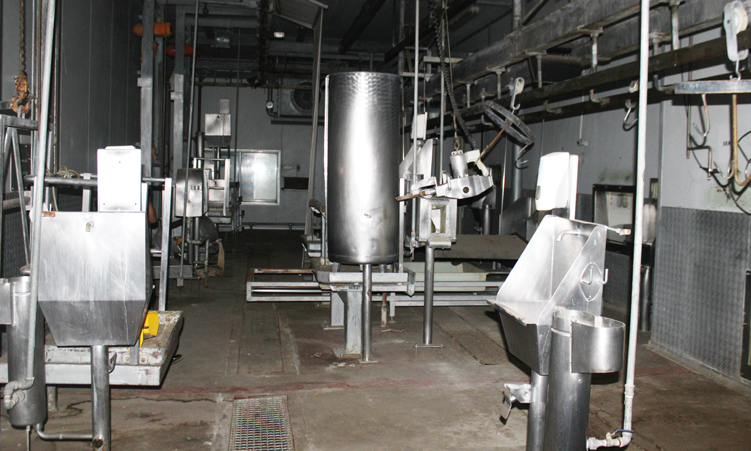
Witvlei Meat closed down in 2016 after a series of legal disputes over its ownership and sale.
Agribank, which took over the facility in 2003 after the liquidation of !Uri !Khubis, leased it to Witvlei Meat in 2006 with the option to buy.
However, in 2011, the Cabinet ordered that the property be sold at market value, leading to years of court battles. A failed purchase agreement, disputes over rental payments and a High Court ruling in favour of Agribank in 2019 resulted in the eviction of the facility which was leased to Sidney Martin at the time.
The facility has remained dormant since then.
In 2025, Agribank put the abattoir on the market for N$51.7 million, hoping to dispose of the idle asset.
Witvlei is a village in the Okorukambe constituency in the Omaheke region, with a population of 1 638 residents.
It is situated on the B6 150km from Windhoek and 53km to Gobabis.
Agribank chief executive Robert Eiman says the bank has readvertised the abattoir and has received expressions of interest from prospective investors, although no reopening date or selling price has been set.
He says the facility is being sold through a competitive bidding process, with the final price to be determined during the sale.
“An initial call for expressions of interest in 2021 attracted several bidders, but the sales could not be finalised because preferred investors failed to provide proof of funding within the required time frames,” he says.
Eiman says plans to sell the abattoir were delayed after the Witvlei Village Council leased adjacent land to a copper smelter in 2022, raising concerns about potential health risks. The parties later agreed to relocate the smelter.
The bank says it is finalising discussions with a prospective investor, but if the sale is not concluded, it will launch a new competitive expression of interest process.
Eiman says Agribank is committed to a transparent disposal process to secure a financially capable investor and restore the facility to operation as soon as possible.